WTF is runner's face?
Happy weekend, friends!
I feel like I (Megan) have been pretty clear, here and elsewhere, that I don’t spend time in the gym to pursue intentional weight loss. If you do, that’s a fantastic journey for you, and all power to you.
Nor do I have aesthetic goals. I am not interested in a snatched waist, or a butt shelf, or “toned” shoulders.
Which is not to say I have never wanted those things. I have lived through enough fashion cycles to feel like Cassandra, running through the streets shouting “YOUR BODY IS NOT A TREND.” I know what it feels like to long for a body that is socially acceptable and desirable to some amorphous group of taste arbiters. (Let’s face it, that group is heterosexual men and their ilk.) I spent my 20s and 30s dieting, exercising, and jumping through hoops so people would stop looking at me and diagnosing my body as a problem.
It sucked, and it was ineffective. The ROI on doing crunches to make my belly smaller was terrible.
On the downhill slide to my fifties, I find myself caring less and less when heterosexual men think about my body. I know that there are billions of dollars tied up in making us want to hate ourselves so we will jump on whatever money making trend is doing the rounds on social media now. And I know that exercising for aesthetics is a sure fire way to end up spending a fortune on a pilates membership and never actually going.
It’s not entirely true to say I don’t have aesthetic goals. I do. I want to look jacked. I want my traps to frighten small children and for my quads to intimidate people from across the road. When I wear leggings these days, you can see my calf muscles through the fabric. I want my hamstrings and pecs to do the same thing.
We’ve talked before about my glutes and how spectacular they are. I want shoulders and biceps and forearms that inspire the same awe. (Even if it’s only for me.) But as fun as my glutes are to look at, being able to use them to get up off the floor or climb stairs is so so so much more important.
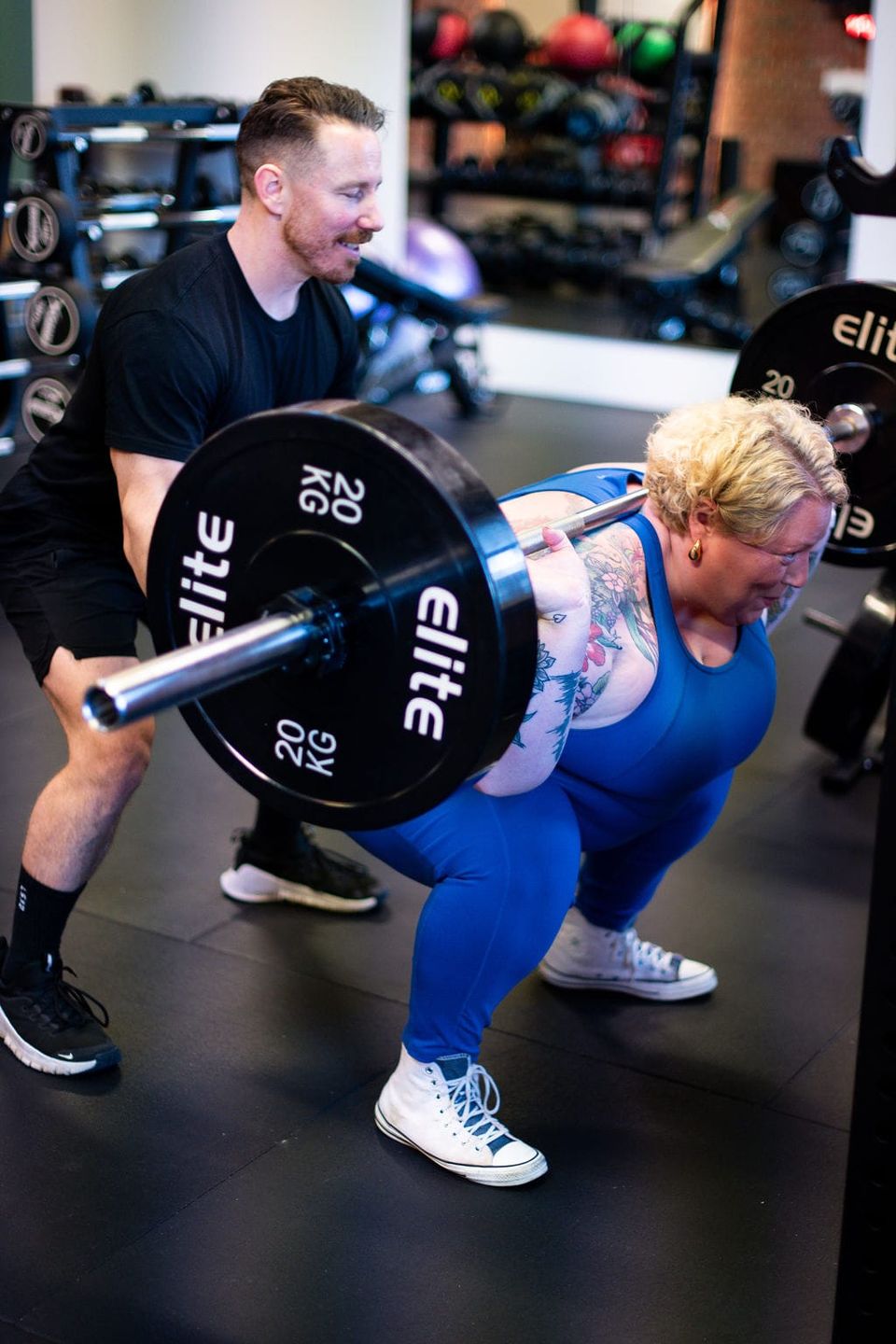
You will occasionally see me and Carl in the gym, posing our biceps in the mirror. We’re the bros in our gym. So, I get the aesthetics goals. I am not against them. But I have never done even one rep with those goals in mind.
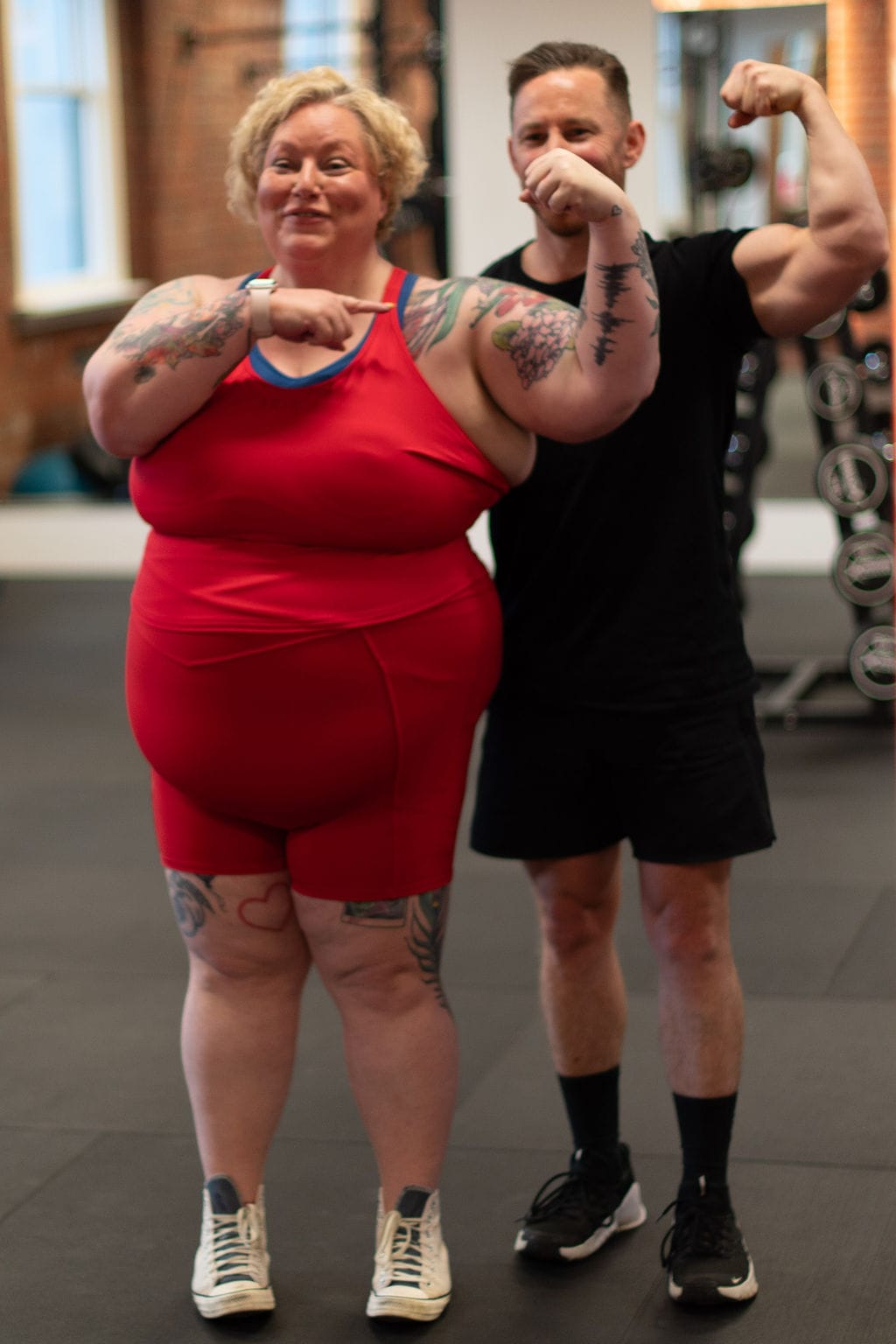
(Except for when I spent 8 weeks growing my shoulders to make my terminator Halloween costume work better.)
Turns out I'm not the only one running through the streets. Exercise NZ put out a news release this week that could have been written by Cassandra herself: Your Body Isn't A Trend: Latest Social Media Crazes Make Women Fear Exercise.
On the one hand, I have done so much work that when a video of, for example, a young blonde woman saying “you should do everything you can to be skinny” makes its way into my feed, I am mostly confused as to how the hell my algorithm thought this would be of interest to me.
And then I am confused that in the year of our lord 2026, women are still worried that lifting weights will make them bulky, rather than celebrating that lifting weights will mean they are less likely to break a hip when they fall down in their sixties. I am bemused by “pilates arms,” instead of “pilates is so good for my mobility and core strength.”
I laughed out loud reading Exercise NZ’s release, that apparently we’re worried about “cortisol face” from exercise and not about managing the stress that living in a dystopian hellscape is giving us all. Pretty sure that’s doing some damage to my face too.
If I could go back in time to my twenties, I would tell my former self to exercise. Not because it would have made me more desirable or socially acceptable, but because 25-year-old Megan loved moving her body. She felt great when she got to sweat and stretch and leap.
I would implore her to not listen to a fitness industry and a medical system that placed arbitrary measurements like BMI and the scale above how she felt in her body. I would show her research about bone density and muscle mass and myokines and endorphins.
And she probably wouldn’t listen to me, because I would be one voice, in amongst thousands shouting at her.
So I’d show her my glutes. That’d probably do it.
Carl here
We had a fun day this week. We were honoured to join the team at Sweet As Podcast as the Gains and Brains duo, spreading the good word. More on this in a couple of weeks.
One of the things I had the chance to point out is that the first responsibility of anyone entrusted with another person's wellbeing is to do no harm. It’s a generally accepted tenet of modern medicine that the purpose of health care is to help, or at the very least to do no harm.
Unfortunately, it has been quietly forgotten in the fitness industry. The pull to use fear to sell has grown along with social media
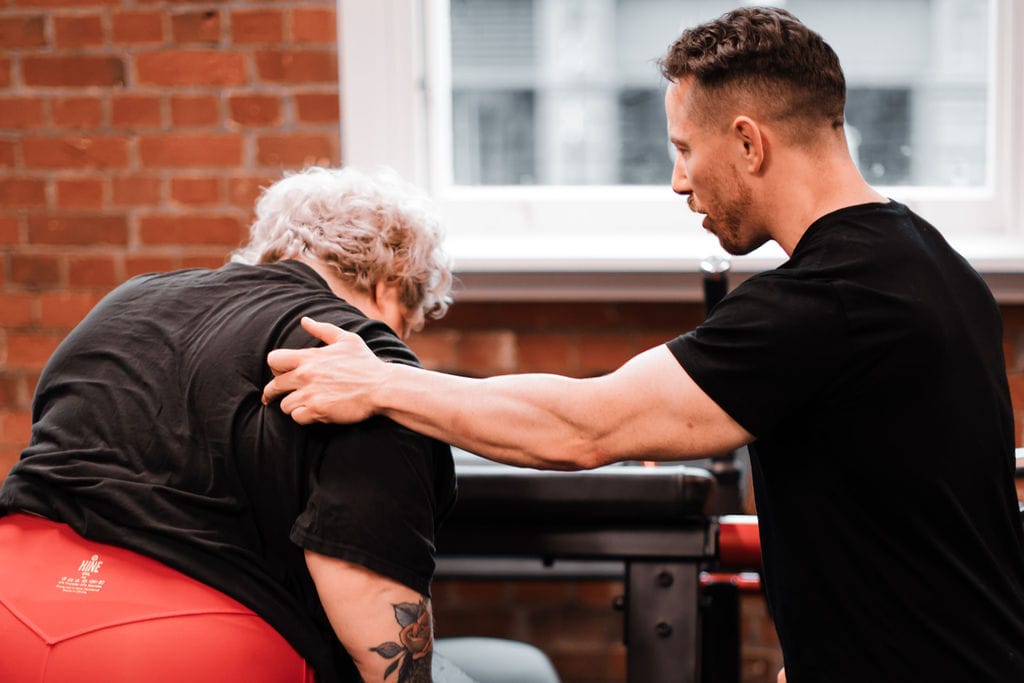
To be fair, some of the people who get this wrong are sincerely wrong rather than cynical - maybe under-informed, or just assuming their own experience applies to everyone.
The reason I raise it is the obsession with a certain look, or even a certain number on the scale. The best available evidence tells us that how we look is a surprisingly poor standalone measure of health, as long as the right lifestyle factors are in place. A 2024 systematic review and meta analysis of nearly 400,000 people in the British Journal of Sports Medicine found that cardiorespiratory fitness, not body weight, was the stronger predictor of both cardiovascular and all cause mortality.
Fit people had a similar risk of death across every BMI category, while unfit people carried a two to three fold higher risk regardless of their weight. More simply put, you can carry more weight and still be genuinely healthy if you are fit and active.
There is a harder edge to this. Chasing an aesthetic through fear does not just fail to help, it actively harms. A growing body of research shows that weight stigma damages health independently of body weight itself, and is linked to raised stress markers, disordered eating, avoidance of exercise, and higher mortality. In other words the fear based approach breaks the do no harm principle twice over. It misleads people, and the shame it creates makes their health worse.
Exercise NZ points to appearance driven trends like "runner's waist" and "cortisol face", along with the tired myth that lifting weights makes women bulky, and warned that these crazes are pushing young women away from the very activities that improve their health.
It lands close to home, because it is exactly the gap Gains and Brains exists to fill. University of Otago researchers published work this same week reviewing common online claims aimed at women and found that most are not backed by robust evidence, and that the overcomplicated messaging simply makes it harder for women to stay active. Its really not that complicated, people will benefit from moving often, then we can add the layers and personal nuance.
So here is where I have landed, our job is not to sell people a body. It is to help them build a healthier, stronger, more confident life, and at the very least, to do no harm.