Protein...
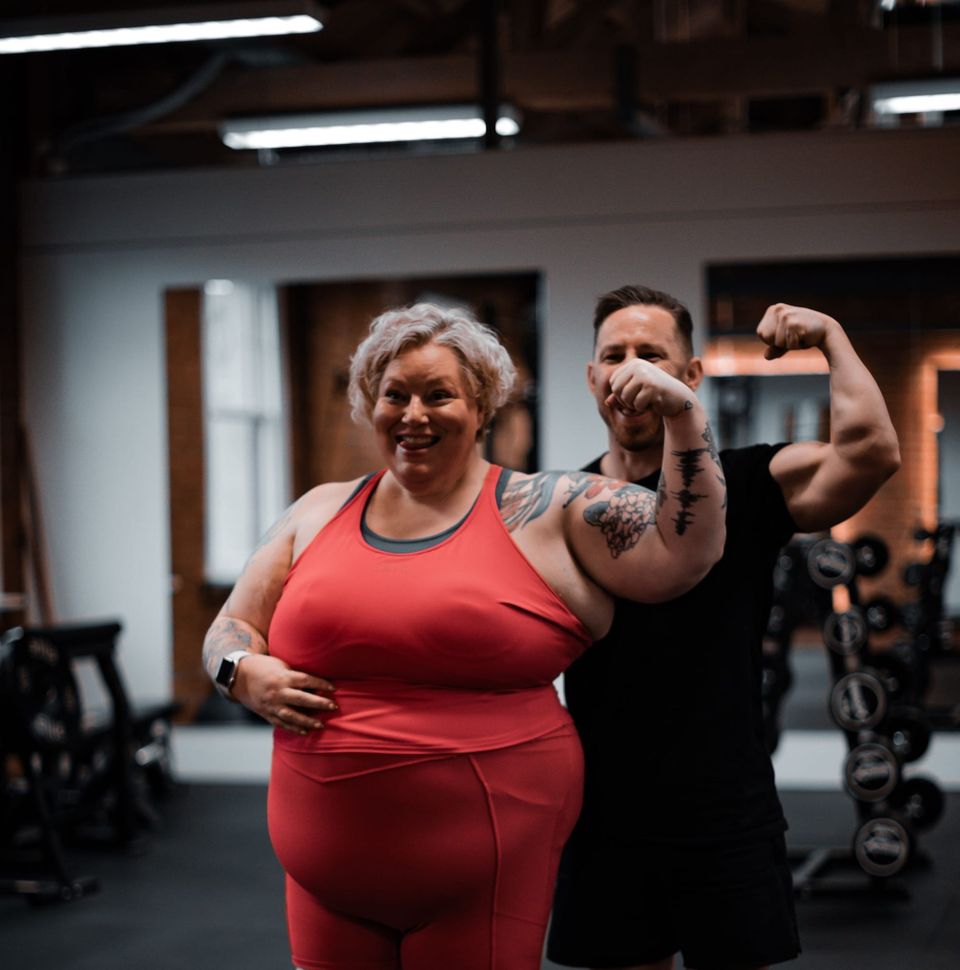
Happy weekend, whanau. Megan here! A while ago we asked on Instagram what exercise/fitness topics you’d like us to cover, and a bunch of people asked us to look into protein.
Protein is Having A Moment.
And as is the case when any food group becomes a fad, many of the claims are misleading.
A while ago my partner brought home some sliced bread from the supermarket. Emblazoned across the bag was “high protein.” We compared the nutritional info to a normal loaf of sliced bread, and found that the “high protein” had one gram of protein more per serving than the normal one.
When you’re trying to get around 150 grams a day, one gram doesn’t really constitute high protein. The GOAT, Casey, has a great breakdown of this.
I can absolutely see why people are confused about this. We’re all so swamped with nutritional information and “30-minute-high-protein–two-ingredient-meal-prep” recipes and “you won’t believe what happens when you mix together a banana and egg whites” (nothing good) and shirtless dudes yelling about ultra-processed foods in the supermarket aisle.
But, protein is one of those things that does matter. (As, in fact, do both carbs and fat.)
So, here’s my basic understanding. Protein is important because it
- Is the building block for muscle (what we care about round here), skin, bones, hair and other bits of your body
- Helps with the hormonal functions of your body, like managing blood sugar
- Is really important for recovery. (I find that if I am sore after a big workout, the answer is often that I didn’t eat enough.)
- Makes you feel full longer, so you eat less, if that’s your jam.
I am going to let Carl dig into how much (and when) you need, and remind you that we don’t give nutritional advice around here, because that’s not our expertise, but we can talk about science, and what works for us personally.
When I first started lifting, I spent some time tracking my macros. That entailed weighing all my food and figuring out how much protein/carbs/fat was in any given food. I…did not like this. I find tracking problematic for my brain, so I don’t do it anymore. But that early tracking has given me a pretty decent understanding of what are good protein sources and what aren’t.
I try to get around 30-40 grams per meal, which means that a three egg omelette (6g per egg) on its own is not enough. Instead, my morning smoothie, which has milk, berries, chia seeds, almond or peanut butter and protein powder has 43 grams. The brothy chicken rice bowl situation I make also has about 40. (Sorry to the vegans and vegetarians. I am in awe of you.)
I try to not have too much of my protein come from red meat sources, although as I wailed to my doctor when we had a conversation about cholesterol “there’s only so much canned tuna one woman can eat.”
(Canned tuna is my ride or die.)
I eat a lot of chicken thighs, a metric f*&ktonne of greek yoghurt, I have tried every single cottage cheese variation in existence, and some of them are great. For a while, cucumber salads were a massive trend, and the variety with smoked salmon got me through a whole summer. (And I don’t even like cucumber.)
I like to cook, and I like to experiment with food, so I am pretty lucky, but I feel like the key to getting good protein is to try a bunch of things, look up the macros (I use a NZ/Aus app called Easy Diet Diary) which is much less on the extreme weight loss train than My Fitness Pal and its ilk), and see how it makes you feel.
If the weights keep going up, you’re probably on the right track. Once you’ve found some things that fit your macros, keep them in the rotation. If you’re not a professional athlete or bodybuilder, you probably don’t actually need to be thinking that hard about all this.
Other than that, here’s my tips
- Roasted chick peas are a bloody good snack for taste, let alone being high in both protein and fibre.
- Make sure, if you can, that what you’re eating is a complete protein source - or that you’re combining the vegetarian sources
- I find getting a decent amount at breakfast sets me up for the day - getting 30-40 grams at lunch and dinner is much easier.
- Protein powder can be added to a lot of things. Smoothies, overnight oats, milkshakes, cake batter.
- That said, literally none of them taste good, no matter the marketing claims. I think I have tried virtually every protein powder on the market in Aotearoa. None of them are delicious. There is a scale of “inedible → fine, if I squint.” Make your peace with that.
- Same for every variety of protein bar.
- Seriously, please chill out about this. Eat a variety of foods and regular meals, and you’re probably doing great. You probably don’t need to be downing raw egg whites every morning.
- If all else fails, parmesan has more protein per hundred grams than either chicken or steak. Keep a block in the fridge, whack off a chunk and call it your protein snack of choice.
Carl here…
As Megan said we are not dieticians, so please note that we fully recommend seeing a dietician for nutritional advice, this is based on our current understanding of the research. I have some recommended people to refer to if you are interested.
Megan's right, protein is having a moment. For me, protein culture feels nostalgic, back to my canned tuna and chicken breast bodybuilding days (not healthy or recommended, by the way). Also, our industry loves absolutes, and I've heard everything from "you can't eat enough protein" to "the more protein you eat, the more damage to your arteries." Here's what it actually is, what it does, and where the hype gets ahead of the evidence. I'll weigh in on where I've landed on it at the end.
What protein is, and what it does
To build on what Megan said, protein is a chain of amino acids, twenty in total, nine your body can't make itself and has to get from food (called essential amino acids). Digestion breaks that chain apart and releases the amino acids into your bloodstream, which your body uses to build and repair tissue. Here is what it does:
- Building material for muscle, skin, hair, and the collagen in your joints and tendons
- Builds enzymes and hormones, including the ones that manage blood sugar and appetite
- Central to tissue repair, so under eating it often shows up as slower recovery and lingering soreness, not just smaller gains
How much you actually need (based on recent research)
Worth knowing: these numbers use total body weight as a simple stand in for muscle mass, since that's how the underlying research works. It's not a perfect match for everyone, body composition varies a lot from person to person, so treat the top of the ladder as a loose guide rather than a number to calculate down to the gram.
This is not a magic number and does not consider individual variability:
- 0.8g/kg a day, the bare minimum to avoid deficiency, not a target for anyone active, essentially what you need not to fade away
- 1.2 to 1.6g/kg a day, the current national dietary guideline range, the sensible default for most adults
- 1.4 to 2.0g/kg a day, from the International Society of Sports Nutrition, for anyone training regularly
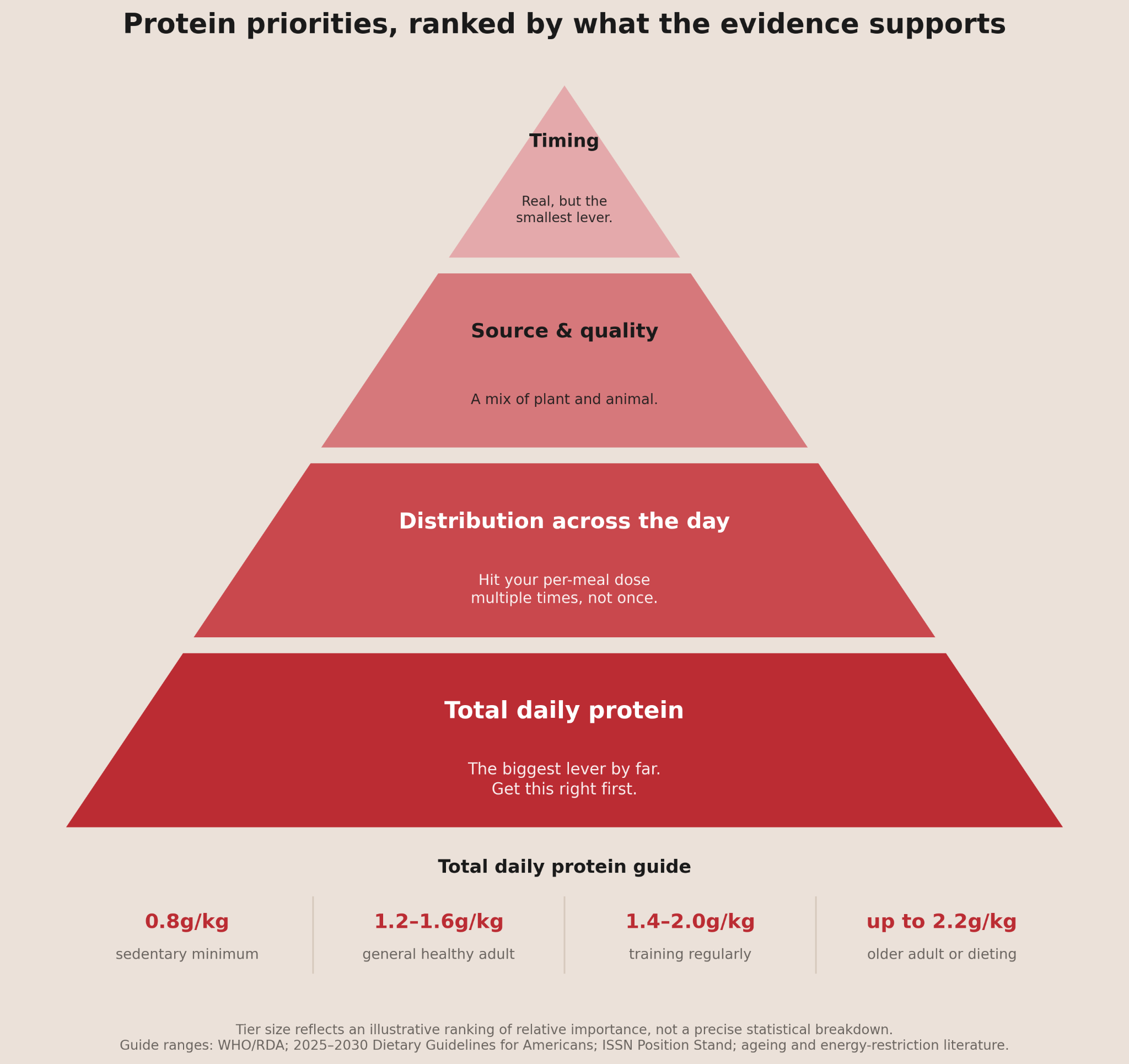
- Up to 2.2g/kg a day for older adults or anyone actively losing weight, since ageing and dieting both raise what's needed to hold onto muscle (we also get less efficient in using protein as we age)
Get this roughly right first, everything else, source, distribution, timing, is a smaller adjustment on top, matching the same order the priority pyramid ranks things in.
The muscle building part, and where the old advice went wrong
For years the advice was that muscle building maxes out at 20 to 30 grams in one sitting, and anything beyond that was wasted. This came from the leucine threshold idea, leucine being the amino acid that triggers muscle building, flipping on the machinery that builds new protein (Macnaughton et al., 2016, Physiological Reports).
The threshold isn't wrong, it does take a minimum amount of leucine to flip the switch. The ceiling was wrong. A 2023 Maastricht study tracked people for 12 hours after eating either 25 or 100 grams of protein post-training, using labelled amino acids to trace where it went. The 100 gram dose produced a bigger, substantially longer lasting response, still being processed past 12 hours, not burned off as extra fuel (Trommelen et al., 2023, Cell Reports Medicine, PMID 38118410). Meaning the bigger dose doesn't actually get wasted.
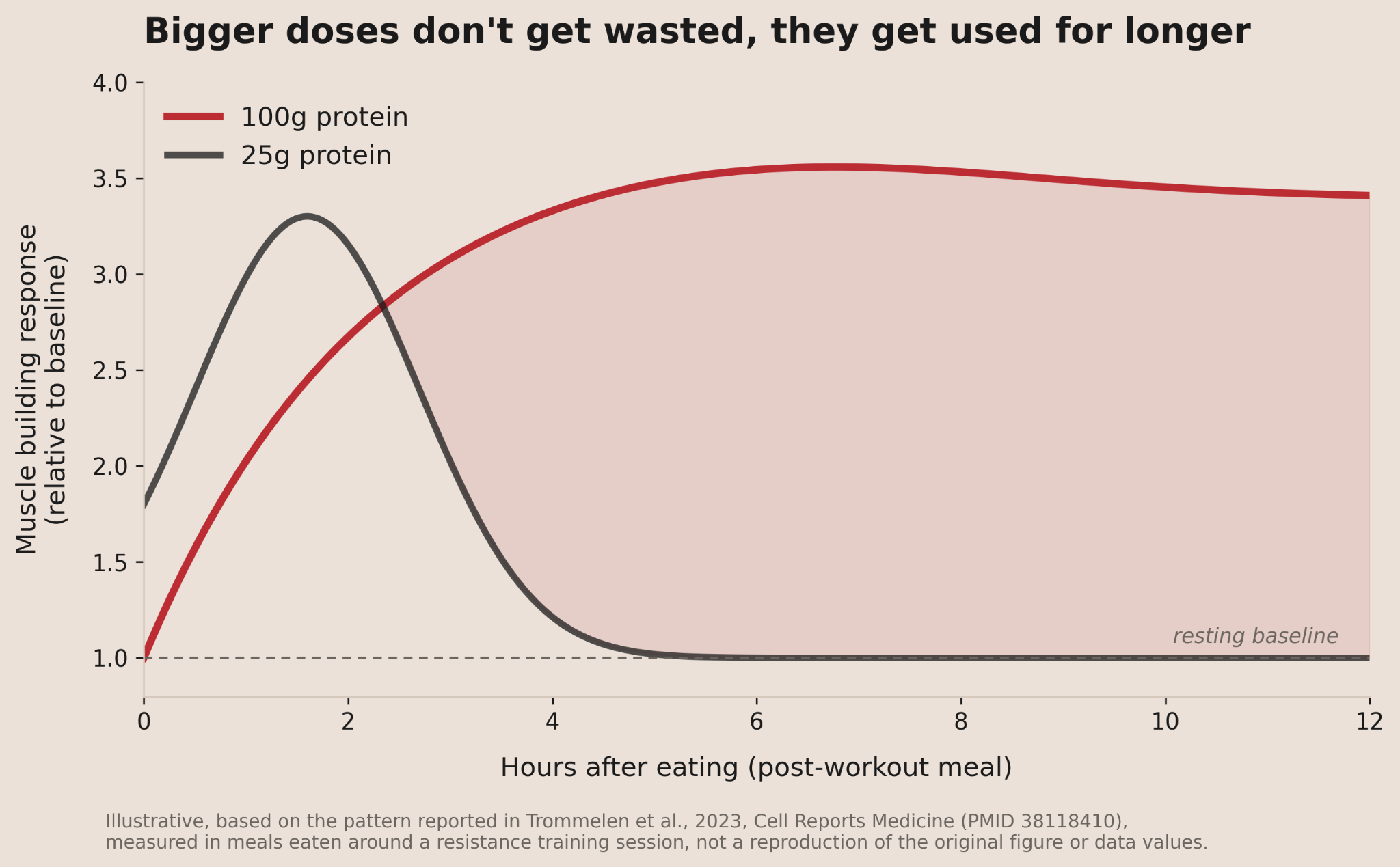
So "30 grams and the rest is pointless" doesn't hold up. What does hold up: spreading protein across multiple meals gives your body more chances to switch that process on, rather than eating almost none until one huge dinner.
A word on leucine specifically, it isn't really a separate lever, it's baked into total intake and distribution. Hit your daily total, spread it across meals, and you're almost automatically getting enough leucine each time, especially from animal sources. It's a genuine consideration in two cases only, mostly plant based eating, since plant proteins run a bit lower in leucine per gram, and older age, which needs more leucine per meal regardless of source. Outside those two, chasing leucine specifically adds little.
One caveat, most of this research, including the 100 gram finding, was measured in meals eaten around training. A separate study tested the same doses in rested and just-exercised muscle directly and found the per-meal threshold itself didn't change, only the size of the response, training amplifies rather than requiring a different dose (Witard et al., 2014, American Journal of Clinical Nutrition). So these numbers are a reasonable guide for any meal, though the biggest findings were specifically shown around training.
What a meal like that actually looks like
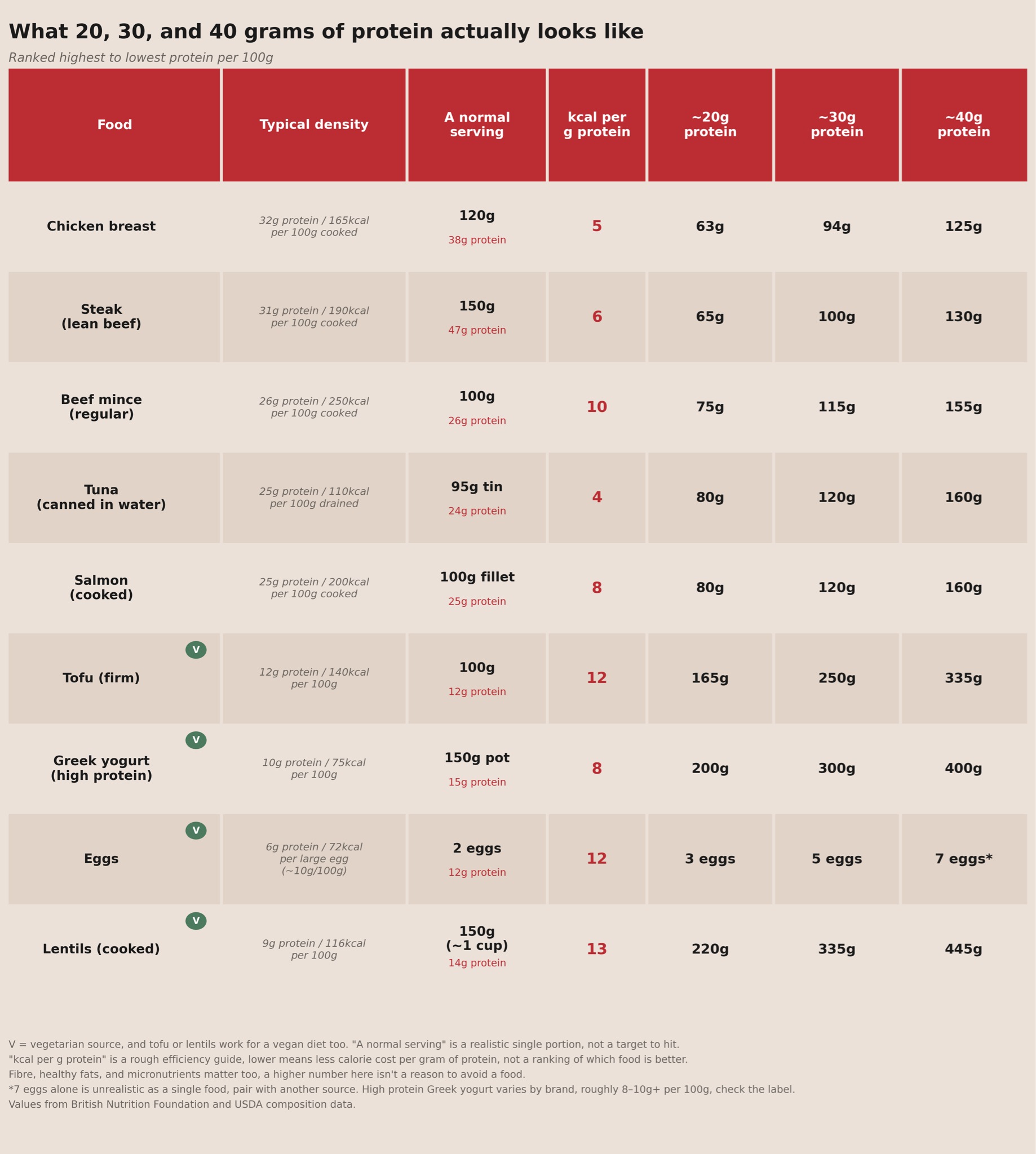
The food table sorts common sources, chicken, steak, fish, eggs, Greek yogurt, tofu, lentils, from highest to lowest protein per 100g, with a realistic serving size and calorie efficiency figure for each. Chicken breast and lean steak sit near the top and are almost identical on paper. A single normal serving of steak, chicken, or salmon often gets you most of the way to 40 grams alone, while a yoghurt pot, tofu portion, or lentil serving sits lower and works better paired with something else.
Source matters too
A 2025 Nature Communications study analysed food supply data across 101 countries from 1961 to 2018 and found an age split, more animal protein meant lower mortality in children under five, but among adults the pattern reversed, life expectancy was longer where more protein came from plants (Andrews et al., 2025, Nature Communications). The likely driver is what travels with plant protein, fibre and whole grains, both independently linked to lower all cause mortality, cardiovascular disease and cancer.
That holds at the individual level too. A meta-analysis of 32 cohort studies and more than 700,000 people found higher plant protein intake linked to modestly lower risk of dying overall and from cardiovascular disease, while total protein was linked to lower all cause mortality too, one of the largest, most rigorous evidence bases in this field (Naghshi et al., 2020, BMJ).
Sex and age considerations
A lot of protein content either ignores women or invents differences that aren't well supported.
In younger adults, the muscle building response to protein is remarkably similar between men and women. The gap in muscle mass comes down to testosterone's long term effect from puberty onward, not men getting more out of any given meal (Tipton, 2001; Craven et al., 2024, Nutrients). One study even found the opposite of the common assumption, women showed a slightly greater response to 25 grams of whey than men (Oikawa et al., 2019).
The menstrual cycle gets unearned attention too, current evidence doesn't support extra protein in the luteal phase, any minor increase in amino acid use is naturally offset by the appetite rise most women already feel. Same with the post-workout "anabolic window", it doesn't meaningfully differ by sex, a detailed review found the muscle building response to resistance exercise isn't meaningfully influenced by sex, and menstrual phase doesn't affect the training response, much of the sex research gap simply reflects that early studies didn't include women at all (Moore, 2019, Frontiers in Nutrition).
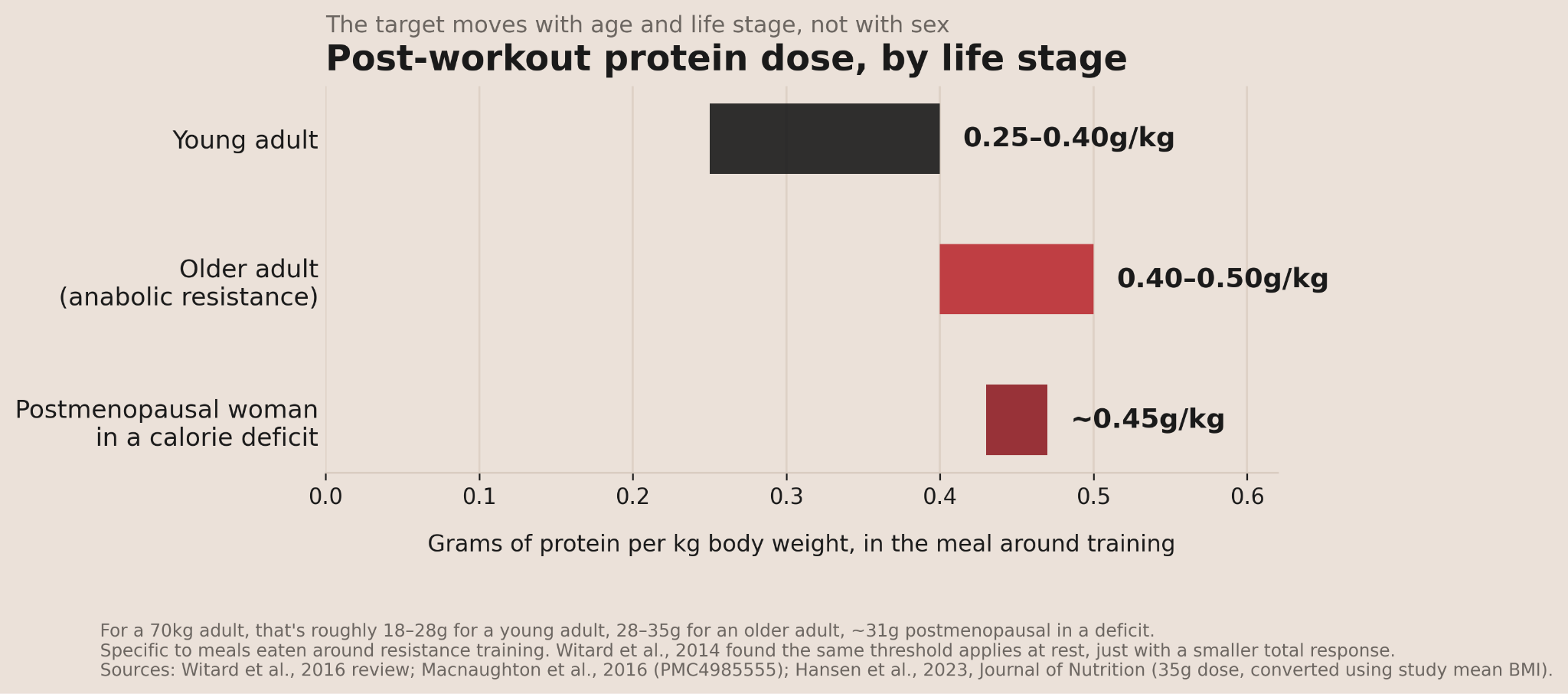
Menopause is the genuine exception. A well controlled trial found postmenopausal women in calorie restriction needed roughly 0.45g/kg per meal around training to maximally trigger muscle building, meaningfully more than the 0.25 to 0.40g/kg typical for younger adults, with no benefit above that (Hansen et al., 2023, Journal of Nutrition). The trial tested this as a flat 35 gram dose, so treat the conversion as approximate. For a 70kg postmenopausal woman losing weight, that's roughly 30 to 32 grams per meal around training, not the 20 often assumed.
Age is the bigger factor overall, for both sexes. Older adults develop anabolic resistance, the same dose produces a smaller response, so they generally need more protein per meal regardless of sex. The post-workout dose chart abovelays out these three life stage targets side by side.
Adolescent girls are worth naming too, flagged in current dietary guidelines as a group at real risk of under eating protein relative to need.
Two things this piece deliberately doesn't cover
Existing kidney disease changes protein recommendations, work with your doctor or a dietitian rather than a general guide like this one. And protein alone doesn't build muscle, it needs a training stimulus. If you're using a GLP-1 medication, hitting the higher end of the protein range and keeping some resistance training in matters more than usual, rapid weight loss without either tends to take muscle along with the fat.
Where that leaves us
Protein matters, genuinely, for muscle, recovery, hormone function and satiety. The research has moved past "30 grams and no more," but not toward "unlimited is optimal" either, the strongest evidence against very high intake is really about what those meals leave out, fibre and plant diversity, not protein being the villain. Work out where you sit on the ladder, most people land between 1.2 and 2.0g/kg a day, spread across meals, with a real share from legumes, wholegrains, nuts and seeds alongside meat, fish, eggs and dairy, not instead of them. Plenty of protein and plenty of fibre together is the actual pattern behind the world's longest lived populations.
In terms of what matters most regarding protein, refer to the protein priority pyramid above. Total protein intake first, regularity of intake, source, then timing.
Summary
- Protein is the raw material for muscle, skin, hormones and enzymes, genuinely central to recovery and satiety
- Total daily intake is the biggest lever, get your number on the ladder right first
- The old "20 to 30 grams and no more" rule is overturned, bigger doses just get used for longer, specific to meals around training
- No hard ceiling, but no prize for maximising grams either
- Source matters alongside amount, protein paired with fibre and plant diversity has the best long term evidence behind it
- One mechanistic study finding a blood cell signal after a protein shake is a small piece of a bigger picture, not a reason to fear a normal meal
- Sex differences are smaller than fitness culture assumes, the bigger factor is age. Menopause is the exception, closer to 0.45g/kg per meal, especially during weight loss
- This piece assumes healthy kidneys and isn't medical advice, and protein needs training to build muscle, both matter more if losing weight quickly or using a GLP-1
A few practical things to actually do
- Include a decent protein source at most meals rather than counting grams to the decimal
- Build plant proteins into your week regularly, alongside meat, fish, eggs and dairy, not instead of them - like Megan said, add variety
- Treat protein powders and bars as a backup, not the backbone, whole foods bring fibre and micronutrients isolates don't
- If you're older or newer to training, you may need slightly more protein per meal, normal, regardless of sex
- A tracking app is a useful short term education tool, not something to do forever
A word on how we talk about this
Nutrition content, protein especially, loves absolutes. Hit this number or you're wasting your training, never eat past this threshold or you're damaging your arteries, track everything or you don't know what you're doing. None of that reflects the actual evidence, which is ranges and individual variation, not fixed rules.
It's not neutral either. Rigid rules, moralising about "good" and "bad" foods, and anxiety about exact numbers are exactly the kind of thinking that can tip a normal interest in health into something more restrictive, for anyone, but particularly younger readers or anyone with a difficult relationship with food already. If this is landing as pressure rather than information, that's a sign to loosen the framework, not tighten it. A reasonably varied diet with a decent protein source and plenty of plants most days beats any number we could put in this newsletter.