
Peptides
Kia ora, happy weekend whanau!
This week, the first of two podcast episodes we recorded recently dropped. The first is me, Megan, talking about my body, food, and type 2 diabetes. Soon, Carl and I, on movement and how wonderful it is.
There’s a moment in the podcast where I get a bit emotional thinking about how far I have come in the journey with my body. How I have got to a place where I work to nourish it, to find movement that feels good and is fun. How I can be frustrated by its limitations and also thrilled by the things it can achieve.

(A quick note here that this week is going to get into some heavy body stuff. If you need to step away from it, please, do so. Keep yourself safe.)
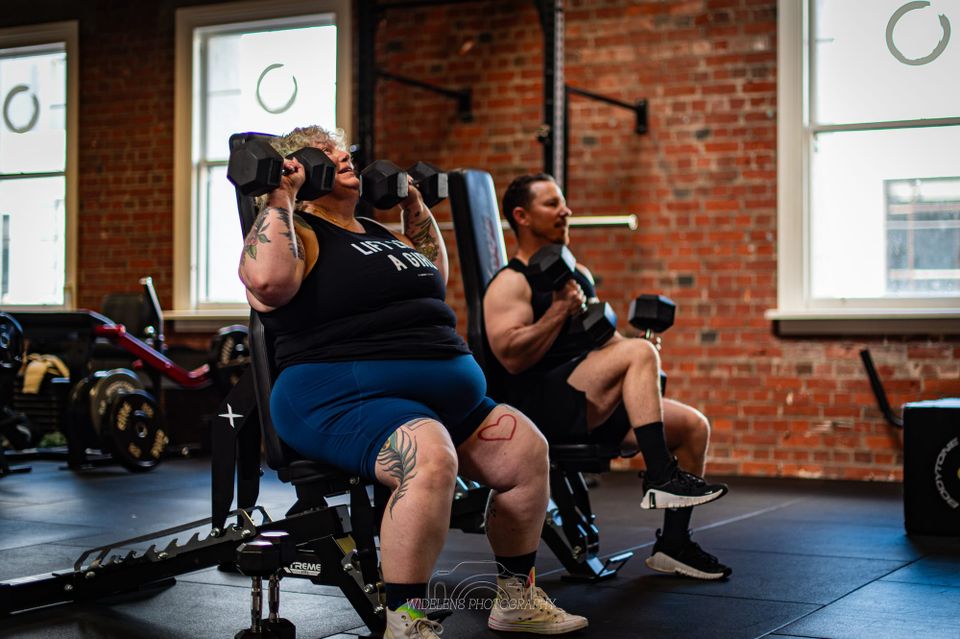
My own journey highlights why living in 2026 is so frustrating. We had a photoshoot this week with the brilliant Mel Parkin, who has been with us right from the beginning. When I was preparing for it, I deliberately chose outfits that wouldn’t be “flattering.” I am not interested in looking smaller for photos. Embrace the belly outline. I eschew skinnytok and all its works. It feels like a radical act to exist in an “imperfect” body in the Ozempic Age.

Over on Instagram, someone asked us to explain peptides. And I thought “what, like the stuff Hailey Bieber puts in her overpriced lip glosses?”
But then I realised I have been seeing that word everywhere. Every second ad in my tiktok feed is telling me about fibre, or peptides. The bits of fitness social I occasionally stray into are full of it. The Washington Post sends me terrifying emails with breathless stories of people taking probably-illegal-definitely-unstudied-likely-dangerous peptides.
So, short version. Peptide is an umbrella term for short amino-acid chain compounds, and includes both legit and gray-market medications that promote, among other things, weight loss and performance enhancement.
In New Zealand, Medsafe intercepted more than 370 parcels containing peptides and similar drugs last year, up from just 15 in 2022. More than 200 have already been seized in the first four months of this year. So, people are taking them.
I feel like it should go without saying that you probably shouldn’t take something that claims to be a medication if you don’t know where it was produced, and if it hasn’t been prescribed to you by a doctor. If it hasn’t been properly researched and documented and, at the very least, made in a sterile environment.
And just saying the drugs are “for research purposes” doesn’t get around that, as Medsafe had to warn in May. But you can also see why people are taking them.
I don’t want to get into the Ariana Grande discourse of it all, because it seems like there’s no good way to have this conversation. How we talk about bodies without singling out specific bodies is hard and complicated, and for a lot of people, dangerous. But this is where the skinny at all costs movement leads us.
One of my favourite people in the world loves Star Trek, so I have seen more of that universe than I would have sought out alone. And I remember one day, realising that there were no fat people. The show’s much vaunted diversity never included bigger bodies in its utopian vision. I remember thinking “Oh, this is how much they hate me.” And it’s hard not to feel like that again.
There’s an astonishing quote in that Washington Post piece from someone taking “reta” (one of the many peptides):
She liked how she looked. “Especially as a woman, so much of your value is tied to the way that you look,” she said. “And you’re treated radically different depending on how you look.”
What….if we just didn’t? What if we just refused to buy into the idea that how you look is your value? What if we just refused to participate?
IDK how that looks, but I will be over here, moving because it feels good, taking my prescribed medication, eating my fibre, and marvelling over how big my biceps got, even without performance enhancing chemicals.

Carl here…
Expanding on Megan's explanation, a peptide is just a short chain of amino acids linked together, like a few beads strung on a necklace. Once that chain gets long enough (usually more than about 50 amino acids), scientists start calling it a protein instead, so peptides and proteins are really the same basic building material, just different lengths.
Your body uses peptides constantly as messengers. Insulin, which controls blood sugar, is a peptide. So are many hormones and signalling molecules that tell cells what to do. This is also why peptides show up in fitness and longevity conversations. They are designed to copy or influence those natural signals.
Megan did a great job of putting it into context regarding aesthetics. On top of this, it has been used & promoted for injury and recovery. For example you may spend months nursing a niggle and someone at the gym mentions a peptide that fixed their shoulder in weeks. It sounds too good to pass up, and it is everywhere online right now. BPC 157, TB 500, Ipamorelin, marketed as a gentler alternative to steroids & something closer to what your body already makes. As a coach and educator in this industry, I see the appeal up close, and I also see how far ahead of the evidence the marketing has run.
Unfortunately, the science behind most popular peptides is thin, the people promoting them online often have a financial stake, and New Zealand's own regulator has issued a direct warning. Here is what the evidence actually shows.
The core claim is that peptides mimic the body's own signaling more closely than synthetic hormones, so they must be safer. However, it is almost entirely untested. A 2025 review of peptides in bodybuilding described the science as preliminary and fragmentary, with most enthusiasm coming from anecdote and marketing rather than actual controlled human trials.

Influencers be influencing, but what are they actually saying about peptides, and should we take note?
Stuff reported on former reality TV contestant Manaaki Hoepo promoting peptide use in a sponsored TikTok, describing peptides as helping him reach his goals faster, in a post sponsored by a company selling BPC 157 and unprescribed semaglutide together. Neither responded to questions about the arrangement. I cant believe I still get so angry about this but, seriously, where has our integrity gone?
The pattern is not unique to New Zealand. NPR found a fitness TikToker in the US crediting BPC 157 for healing an injury, with a discount code linked straight in his bio. A Canadian investigation found retailers marketing products as "research use only" while running video ads clearly aimed at everyday users, not researchers. In nearly every case, the influencer has a financial relationship with the seller, either undisclosed or unanswered when journalists asked directly.
The lack of integrity continues and it looks like they piggyback off other medications!
Legitimate, Medsafe approved GLP-1 medicines like semaglutide often sit right next to unapproved peptides on the same storefronts, sometimes the same vendor, as in the Hoepo example above. That proximity does real work. If one product on the site is genuine medicine, the rest of the catalogue feels safer by association. It is not.
Many peptide vendors also run on a recurring vial or subscription model, with influencer income tied to discount codes, a structure carrying the same incentives as a soft multi level marketing scheme. A discount code in someone's bio is not a neutral review, it is an attempt to grab your money. .
I think what worries me most other than what Megan spoke about above regarding the constant magnification of body pursuit, is where this may lead for many. Peptides and anabolic steroids are increasingly studied together under one umbrella, performance and image enhancing drugs, not because they work the same way in the body but because they travel through the same culture and often the same online circles. A systematic review synthesising three decades of research on steroid users, studies published between 1985 and 2014, found that most users had already used other substances before their first cycle. Once use begins, it tends to travel with other substances rather than staying isolated, a pattern researchers call polypharmacy, simply meaning several unregulated substances used together or in succession rather than one at a time. One study found people using supplements were thirty times more likely to also be using hormones concurrently.
None of this proves a strict pharmacological gateway, where one substance chemically primes you for the next. What it does show is normalisation. Once someone crosses the threshold of self injecting an unapproved compound sourced online, the practical and psychological barrier to trying the next one drops. The broader PIEDs landscape shows peptides and steroids sitting inside the same culture and often the same online circles, which makes moving from one to the other an easier step than it would otherwise be.
A big concern, is that no one really knows how to use it, as there isn't enough regulation of the product or research surrounding dosage, timing and population.
What about NZ regulation?
Medsafe issued a consumer advisory this year warning specifically about unapproved peptide products, naming BPC 157, CJC 1295, GHRP 6, Ipamorelin, Melanotan II, retatrutide, Semax, and TB 500. The advisory states these have not been assessed for quality, safety, or efficacy and may cause infection or life threatening reactions.
The US picture is similarly unsettled. The FDA restricted BPC 157, TB 500, and others from compounding in 2023 over safety concerns. In April 2026 several were removed from that restricted category, but not promoted to an approved one, leaving them in a genuine grey zone. A February 2026 announcement of a broader rollback came before any formal rule change, with the FDA's advisory committee only formally reviewing the substances in July 2026. The compounds have not become any more evidence backed. What has changed is administrative classification, driven as much by political announcement as by new clinical data.
What is the take home?
Peptides are not risky because they are peptides. Unregulated, self sourced injectables of any kind sit inside a documented pattern of escalation and combined substance use, and peptides are simply the newest entry point into that pattern. The "safer and more natural" framing is exactly the belief the research says predicts, rather than prevents, use. Before trying one, the more useful question is not "is this peptide safe" but "why am I considering it in the first place?”