Lifting with Type 2

Happy Saturday, friends!
One of the questions I (Megan) get asked relatively often is "how does lifting help with your type 2 diabetes?"
It's one of those questions that has multiple answers. There's the factual answer: having more muscle, and using it, allows my body to better process both glucose and insulin, and that makes my blood sugar management much easier than it otherwise would be.
I like this metaphor:
Think of your muscles as a car park for sugar.
After a meal, glucose floods into your bloodstream like cars pouring into town after an All Blacks game. If they can't find anywhere to park, they circle the streets, generally behave badly, and cause congestion. That's high blood sugar. Your muscles are the biggest car park in the body; they're where most of the glucose ends up being stored (as glycogen).
More muscle means a bigger car park. More spaces are available, so traffic clears faster after every meal, and the whole system is less likely to gridlock.
Lifting empties the car park and opens extra gates. When you train, your muscles burn through their stored glucose, which frees up spaces. The work itself also opens gates that don't need a parking attendant (insulin) to let cars in. Muscle contraction pulls glucose transporters to the cell surface on its own, so sugar gets in even when insulin isn't working well. That effect lingers for hours after a session, and regular training keeps the attendants more responsive over time (better insulin sensitivity).
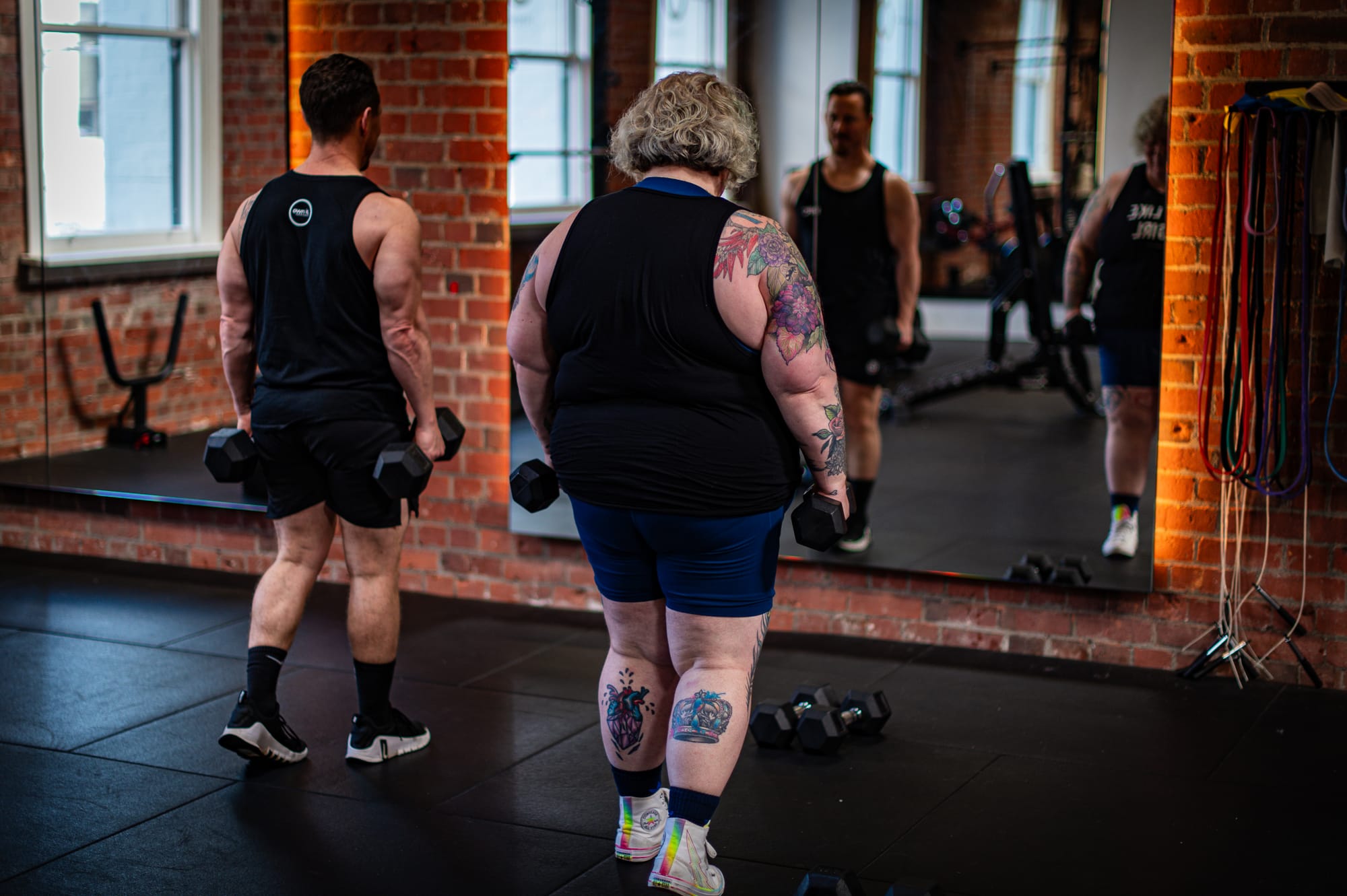
So, that's one answer. The other answer is that lifting helps everything in my life, and my blood sugar is just a part of it. When I move my body, I am less stressed. When I am less stressed, I am less likely to hose a family bag of potato chips while watching reruns of The Good Place.
The diet that lifting has prompted, focused on protein and "slow-acting carbs", has been beneficial, but so have the community of people and the friendships I have made through lifting. All these things are good.
Mostly, lifting gave me a relationship with my body where caring for it, and so managing my blood sugars, was something I wanted to do, rather than a chore I kept fucking up. It taught me to listen to my body, to connect with it, and that I should fuel it for what I want to do, not just eat what's right in front of me.
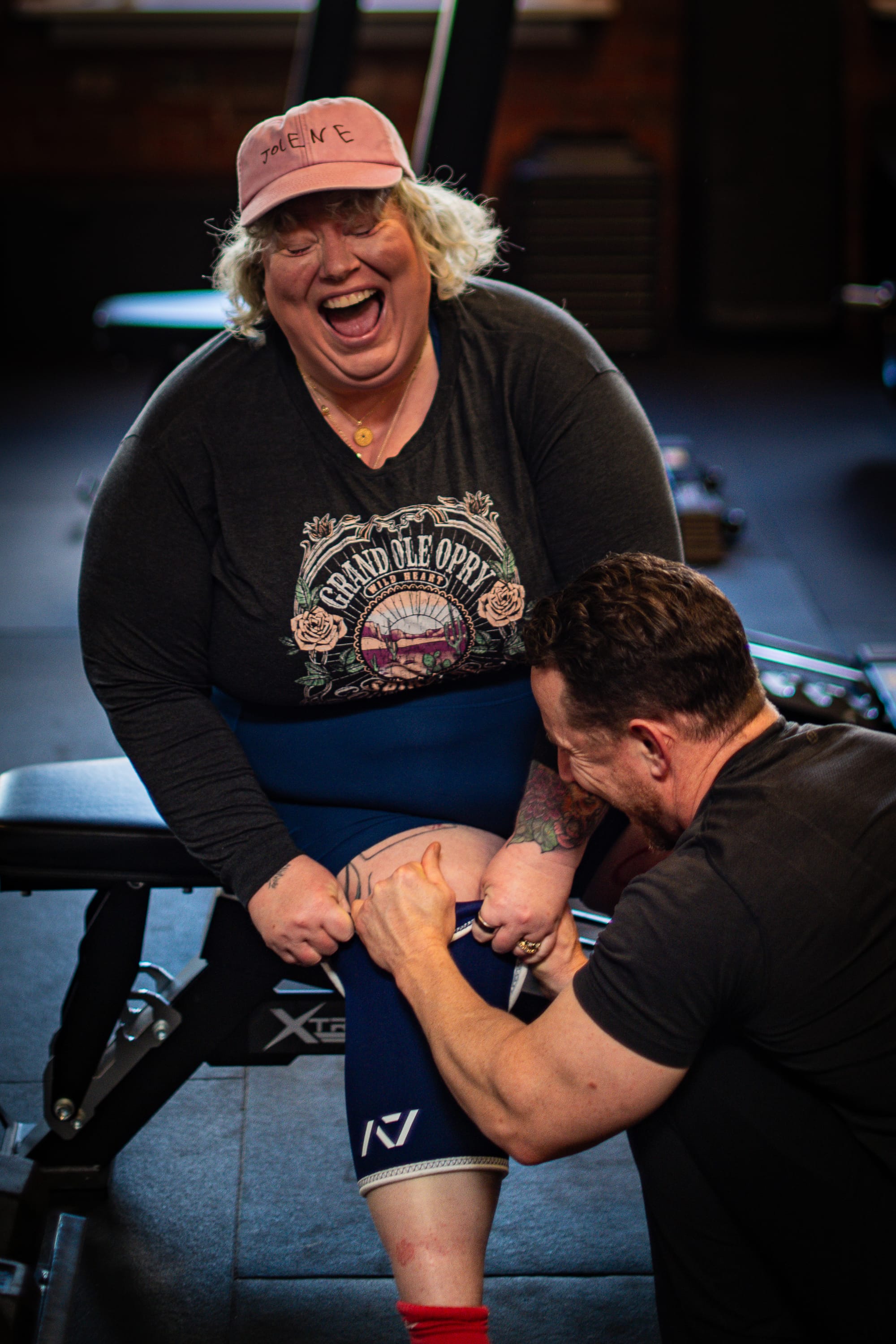
Carl and I were guests on the Sweet As diabetes podcast this week. It's a great conversation, and not just because we now have on record that Carl is jealous of my calves. I hope you'll listen, because I think there's a lot in there for people without diabetes, too. We talk about the importance of movement and of fun, and how exercise doesn't have to be this big scary thing involving lots of machines and heavy weights. It could just be five sit-to-stands and five calf raises a couple of times a day. (If you're on medication that can cause hypos, have a chat to your GP or diabetes nurse about how to adjust around exercise.)
In the podcast, I call exercise my superpower for managing my diabetes.
But it's also not. I barely think about my diabetes these days, except at my regular blood tests, and those numbers have been in a healthy range for a long time now. Lifting isn't a tool I use to manage my sugars. It's just who I am.
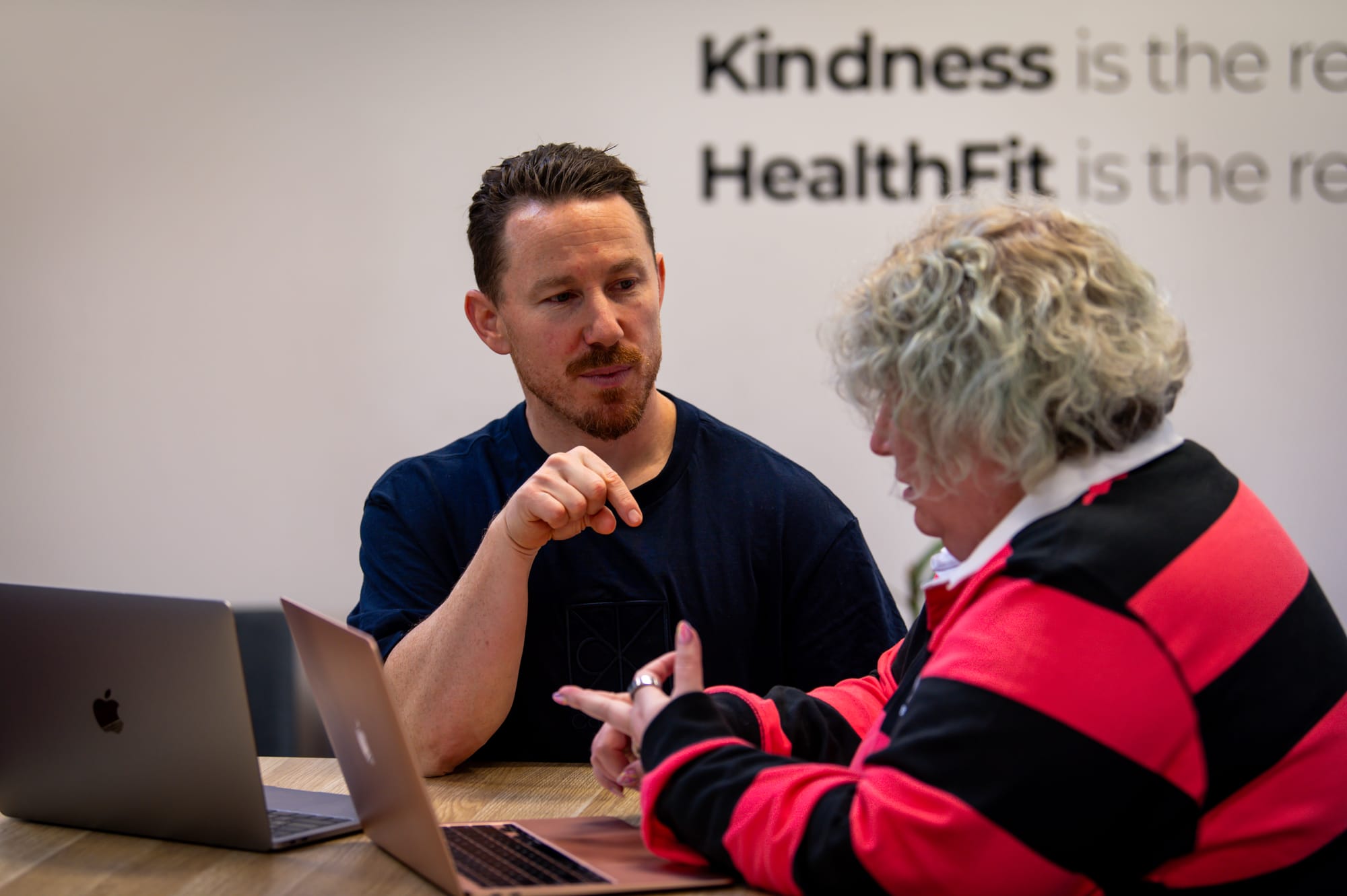
Carl here, or as I refer to myself in the podcast 'the facilitator of play and curiositity through movement'…
I've trained a lot of people with diabetes over the years. The technical lessons were valuable, but the psychological ones mattered too. Preparing for the Sweet As podcast sharpened both, and further again when listening to Megan and the fantastic hosts speak on it too. It also reminded me that the foundations of exercise, and of how we engage with it, aren't just specific to diabetes. They apply to every one of us.
Here are a few things that have stuck with me:
Megan's car park is the best metaphor I've heard for this, so I'm going to lift the bonnet on it. (Pun intended.)
Muscle is the body's biggest sugar sink
When researchers measure where glucose goes after insulin is released, skeletal muscle takes the lion's share. In the classic clamp studies from the early 1980s, the researchers estimated that muscle accounts for about 85 percent of the glucose cleared under insulin stimulation (DeFronzo et al., 1981). The liver and fat tissue matter, but muscle is the main destination.
So the amount of muscle you carry matters. In a large US population dataset of more than 13,000 adults, people with more muscle had lower insulin resistance and were less likely to have prediabetes (Srikanthan and Karlamangla, 2011). The honest caveat: that study shows an association, not cause and effect. But it points somewhere useful. Blood sugar isn't only about what you eat. It's also about how much room you have to put it. Muscle is that room, and you can build it at any age, at any size, starting from wherever you are today.
The front door and the back door
This is particulrly usefdul to understand as Type 2 diabetics. Normally, glucose gets into muscle through the front door. Insulin arrives, knocks, and signals a transporter called GLUT4 to move to the surface of the muscle cell and let glucose in. In type 2 diabetes, that knock gets fainter. The cell stops answering reliably, that's insulin resistance.
Here's what fascinated me while preparing for the podcast. Muscle has a back door. When a muscle contracts, it triggers its own internal signals (energy sensors and calcium release inside the cell) that move GLUT4 to the surface without needing insulin (Richter and Hargreaves, 2013). Crucially, a small study found this contraction pathway works just as well in people with type 2 diabetes as in people without it, even though their insulin pathway was struggling (Kennedy et al., 1999).
That's what Megan means by gates that don't need a parking attendant. Every time you work a muscle, you open the back door. And the effect doesn't slam shut when you finish. Insulin sensitivity stays elevated for hours afterwards.
Why lifting, specifically?
Any movement opens the back door. Lifting does that and builds a bigger car park over time. A meta analysis of 47 trials found structured exercise meaningfully lowers HbA1c (the three month blood sugar average) in type 2 diabetes, with bigger drops when people trained more than 150 minutes a week (Umpierre et al., 2011). And in a randomised trial of 262 people, combining resistance and aerobic training beat either one alone (Church et al., 2010).
Muscles don't have eyes
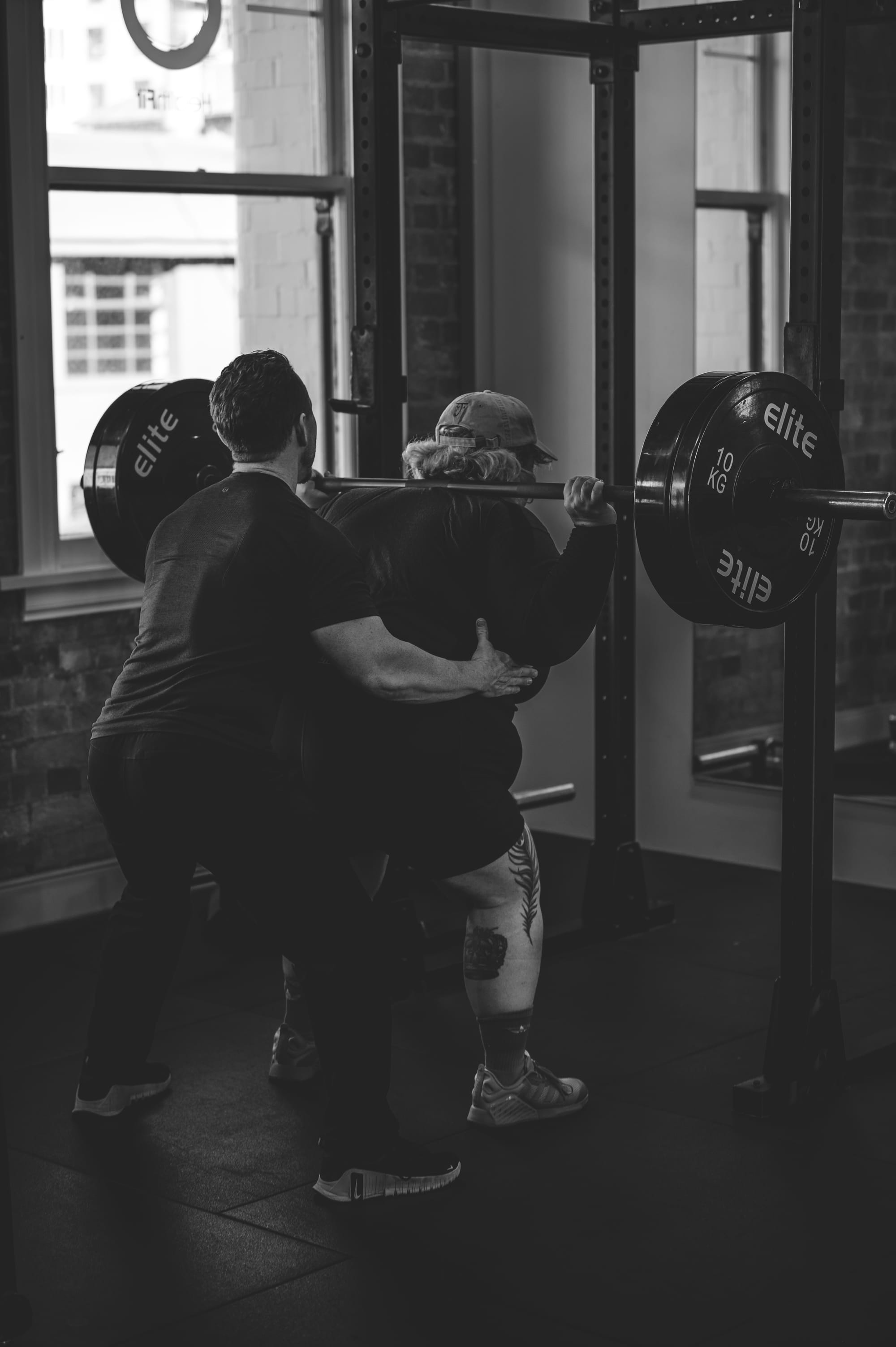
This is something I said on the podcast, and I'll stand by it. Your muscles can't see what they're lifting. A barbell, a bag of potting mix, a grandkid, your own body getting up off the couch. All your muscle knows is tension and effort.
The research backs this up. A meta analysis comparing light and heavy loads found similar muscle growth across the spectrum, as long as sets were taken close to fatigue (Schoenfeld et al., 2017). Heavy loads were better for building maximal strength, and the studies were in people without medical conditions, so it's not the whole story. But the principle holds. You don't need a gym membership or a rack of chrome to build your car park. You need effort, and some way of making things a bit harder over time.
Find your play
The other thing I kept coming back to on the podcast: the best exercise is the one you'll actually do. And the one you'll actually do is usually the one you enjoy.
That's not just a nice idea. A systematic review of 24 studies found that how good people felt during moderate exercise predicted how active they were later on (Rhodes and Kates, 2015). Feeling good in the moment is a stronger driver than we give it credit for.
So if lifting lights you up, like it does for Megan, brilliant. If it's dancing, touch rugby, swimming, climbing, gardening, or chasing your kids around the park, that counts too. Find the thing that feels like play, and adherence largely takes care of itself.
It's not just about exercise
Here's a point I really wanted to land on the podcast. Exercise is the hour you set aside. But there are another fifteen or so waking hours in your day, and what you do with them matters too.
Researchers call it NEAT: non exercise activity thermogenesis. In plain terms, it's all the movement of everyday life. Walking to the shops. taking the stairs, hanging out the washing, pacing on phone calls & getting up from your desk.
In one Australian study, people who broke up their sitting time more often had better blood sugar two hours after a glucose drink, regardless of how much formal exercise they did (Healy et al., 2008). That was an observational study, so it can't prove cause, but experimental work points the same way. In one trial, adults with type 2 diabetes who interrupted sitting with three minutes of simple exercises (half squats, calf raises, knee raises) every 30 minutes had noticeably lower blood sugar after meals than when they sat uninterrupted (Dempsey et al., 2016). The American Diabetes Association now recommends breaking up sitting every 30 minutes for exactly this reason (Colberg et al., 2016).
So Megan's five sit to stands and five calf raises aren't a watered down version of exercise. They're the real thing, in a dose people can actually do. Every one of them opens the back door.
What I learned about the barriers
This is the part that stayed with me from the podcast experience and one I feel commited to changing moving forward.
An international consensus statement found that, on average, four in five adults with diabetes experience stigma, and one in five experience outright discrimination (Speight et al., 2024). The main drivers are blame, the idea that diabetes is a burden, and fear or disgust. For type 2 especially, there's a loud cultural story that you brought this on yourself.
Now imagine walking into a gym carrying that. The mirrors, the machines, the sense that everyone else belongs there. Add fear of a hypo mid session, and a lifetime of exercise being prescribed as punishment for your body. Of course people stay away. That isn't a motivation problem, it's a sociatal problem, and it's ours to fix.
How we start to fix it
This is where the psychology comes in. Again... Self Determination Theory tells us people keep doing things when three needs are met: autonomy (I chose this), competence (I can do this), and relatedness (I belong here). A systematic review of 66 studies found that motivation coming from within, including simple enjoyment, predicts ongoing exercise far better than motivation driven by guilt or pressure (Teixeira et al., 2012).
Read Megan's piece again with that lens. "Something I wanted to do, rather than a chore." That's autonomy. The friendships and the community. That's relatedness. And the confidence to listen to her body and fuel it for what she wants to do. That's competence.
Then there's the last line: "It's just who I am." In psychology we'd call that the endpoint of the process, when a behaviour stops being a task you manage and becomes part of your identity, thats belonging.
So in practice, an inclusive approach looks like:
- Starting where the person is, not where a programme says they should be.
- Making the first dose small enough to succeed at, then building.
- Helping people find the movement that feels like fun (play).
- Valuing the everyday movement, not just the formal session.
- Asking about someone's own reasons for moving, rather than lecturing them with ours.
- Talking about what bodies can do, not what they should look like.
- Building spaces where people feel they belong from day one.
Megan calls lifting her superpower. From where I stand, it's bigger than that. It's the way she keeps challenging herself, and the way she uses her voice to bring diabetes out of the shadows and into the conversation. That does more to break down stigma than any study I could cite. But I am happy to be a part of the conversation, through a different lens.