
Sit on that and rotate
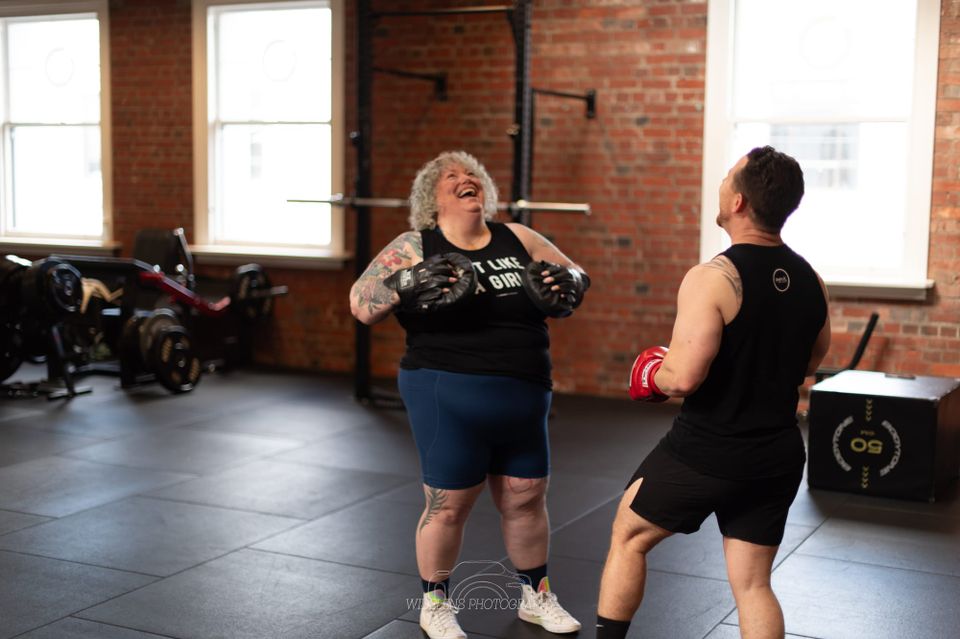
In the middle of boxing class this week, Carl sidled over to me and asked how my knee was coping with the one-two-one-slip-roll-three combination we were working on.
"The knee is fine," I said. "It's the elbow and the back and the neck that are the problem."
The elbow is a known issue - long story short, I did too much knitting with too few breaks and now I am paying for it. The neck righted itself in a few days, largely thanks to Carl digging his elbow into the painful bit.
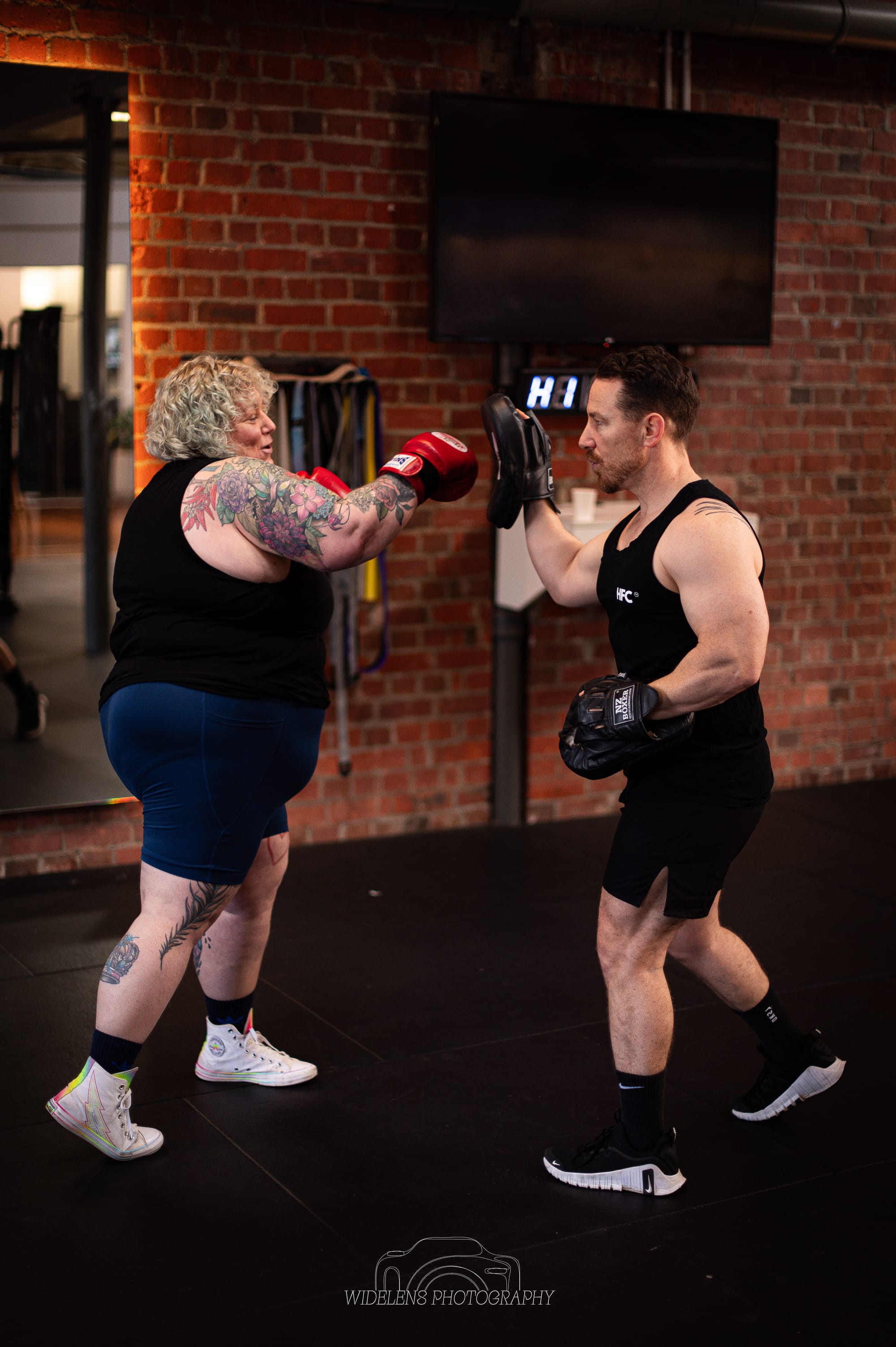
The back….ah, the back.
Look, I can deadlift 140kg. (In fairness, I haven't for a while, but I know I physically can.) So can someone explain to me why I hurt my back bending over to get clothes out of the washing machine?
On the plus side, I am pretty sure I can identify what muscle hurts. It feels like my latissimus dorsi - the lat. And I know this, because it's the one I can feel working when I do pulldowns. And thanks to a) being a nerd b) listening to Carl when he talks, I know that the reach and twist motion I was prolly doing to get my laundry would have involved the lats.
Another plus, my knee really is feeling pretty good. We're in the "end range" of rehab now, where there's a lot of things I can do, and a bunch of things that still hurt that I don't want to do and I know I have to - kneeling, balance, steep hills, long walks along the beach.
And I have a theory. A random instagram post, backed up by Carl, got me thinking. The human body has three "planes of motion," and for the past many months, I've really only been doing one of them.
I am going to let Carl explain the planes of motion properly, but basically, it's forward-back, side-to-side, and twisting and rotation.
My knee has been doing all three, as we've been working on getting it better at, for example, turning suddenly, changing direction mid-stride, even using resistance bands to pull my knee sideways. But that’s all been pretty targeted to one specific joint.
And the rest of my body? I've largely been doing things like deadlifts, squats, single leg RDLs, bench press and military press. Lots of push and pull and raise and hinge. Forward and backward motion, and not a lot of rotation and side to side movement.
As evidence to my theory, Carl has me hooked on a new drill. Enter the Blaze Pods - six pods at different heights on a corner wall. When they light up, you slap the pod, and then another one lights up. Good for reaction times, movement, and sneaky cardio. (Rude, as ever.)
I grew up playing basketball, where a fundamental position is the defensive stance: knees bent, body low, weight on the balls of the feet, arms spread wide, shuffling side to side to stay in front of your player. Standing in front of the pods, my brain knew the exact movement to make. But could I get my body to release its muscle memory? No, I could not. I turned my whole body to the side, rather than just moving laterally. I have become a forward backwards person, for shame.
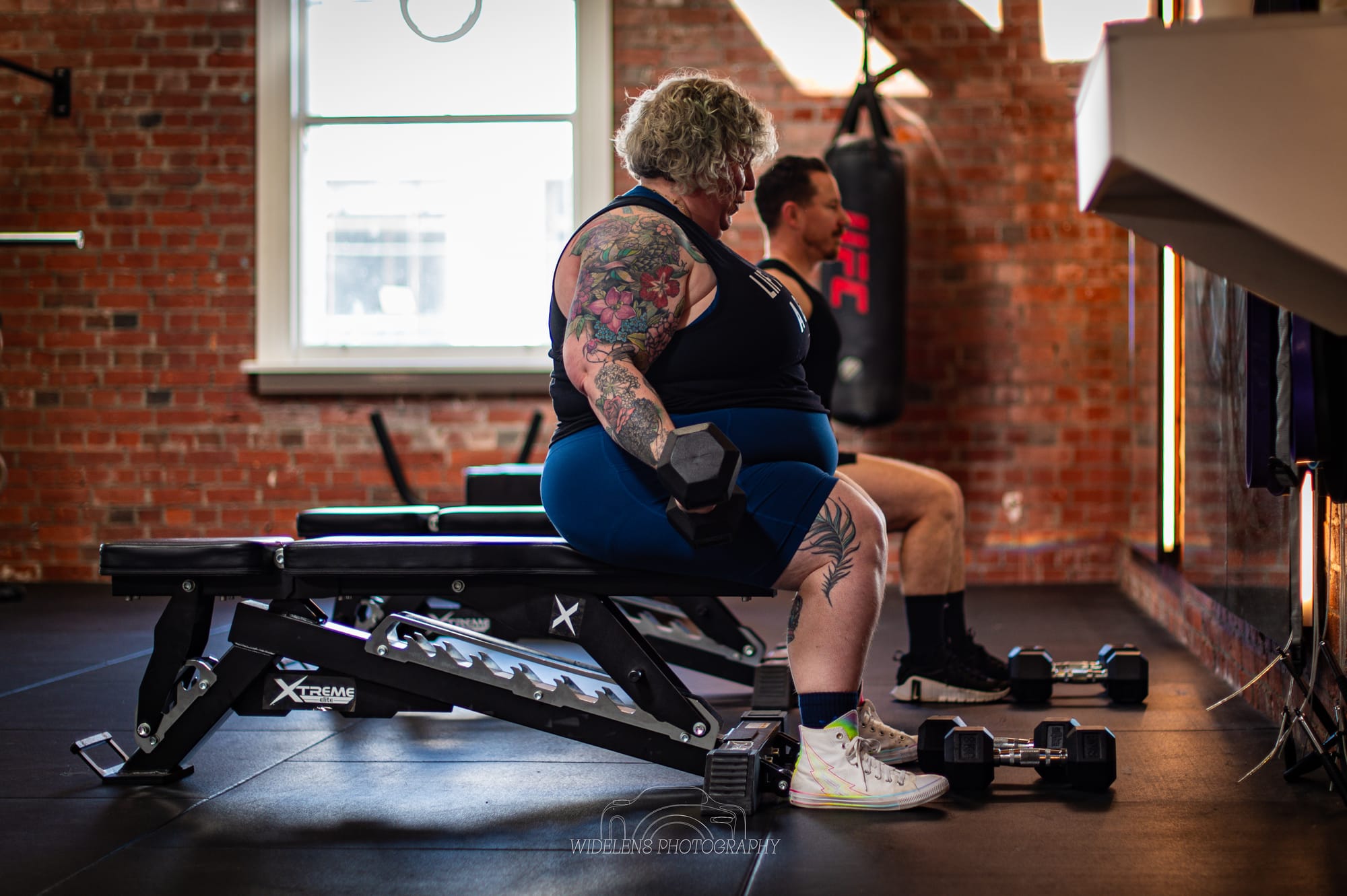
I spent a year prepping for a powerlifting competition, and then a few months becoming a superhero, and then six months recovering from a decently serious injury. I've been doing stuff. What I haven't been doing is thinking about functional strength as much as I maybe should have been.
But this is an easy fix. I can add sideways and rotational movements into my routine. I can get back to pilates - which works all those little muscles that my big lifts don't.
I have a new favourite tiktok exercise. One of the ones that seems dumb, but I try it, and then I am super into it. Basically, it's a palloff press, where you hold a resistance band (or a cable) out in front of you, and, in this instance, resist the band trying to pull you into rotation. But my fun new variation involves threading a 5kg plate onto the band, so as well as the force of the band, you have random bounces and shimmies of the plate moving. I think I actually felt my obliques for the first time ever.
I can do more of those kinds of exercises. And the joy is, not only will they be fun, but they will be making me stronger overall, and more capable and functional. Less likely to hurt myself on a random wednesday doing the laundry. And better at the big lifts when I want to be.
First though, I have a date with a wheat bag and some ibuprofen.
Carl here…
I love this, and it opens up some really good discussion points, some of which I purposefully built into the classes I designed at HealthFit. Every class includes most of the foundational movement patterns (nearly every complex movement can be broken down into these):
- Squat
- Lunge
- Hinge
- Push
- Pull
- Rotate
And all three planes of motion (explained shortly), for the reasons Megan touched on above.
Megan's washing machine incident is a better case study than she probably wants credit for. A person who can deadlift well over bodyweight, taken out by bending over a laundry basket, is not a contradiction. It is what happens when a body gets very good at one type of movement and rarely practises the other two.
The three planes
Every movement your body makes happens in one of three planes.
The sagittal plane is forward and backward movement. Squats, deadlifts, lunges straight ahead, biceps curls, walking in a straight line. This is where almost all traditional strength programming lives, and for good reason, since it is where we produce the most force and build the most raw strength.
The frontal plane is side to side movement, things like abduction and adduction. Lateral raises, side steps, cartwheels, the shuffle Megan describes trying to do in front of the Blaze Pods.
The transverse plane is rotation. Twisting to look behind you, a golf swing, throwing a ball, reaching across your body to grab something off a shelf.
Most gym programming, and most people's daily training habits, are heavily sagittal. Push, pull, hinge, squat. Nothing wrong with any of that on its own. But real life, and real sport, rarely stays in one plane. A basketball defensive stance is frontal plane. A rotated reach into a washing machine drum is transverse, with a bit of sagittal flexion layered on top. If that combination has never been trained, the body has no strategy for it, regardless of how much weight you can move in a straight line.
There is decent evidence behind this idea in a rehabilitation and injury prevention context. A systematic review of proprioceptive and neuromuscular training programmes, which by design work outside the sagittal plane, found meaningful reductions in lower limb injury risk, including a nearly halved risk of acute knee injuries, in athletes who did this kind of training compared with those who did not (Hübscher et al, 2010). The mechanism is not fully settled and most of the trial evidence comes from pivoting sports like handball and soccer rather than everyday movers, so I would not overstate it as a guarantee against a tweaked back from doing the washing. But the general principle, that training in more than one plane builds a body better prepared for the movements you cannot always predict, holds up.
The lunge, three ways
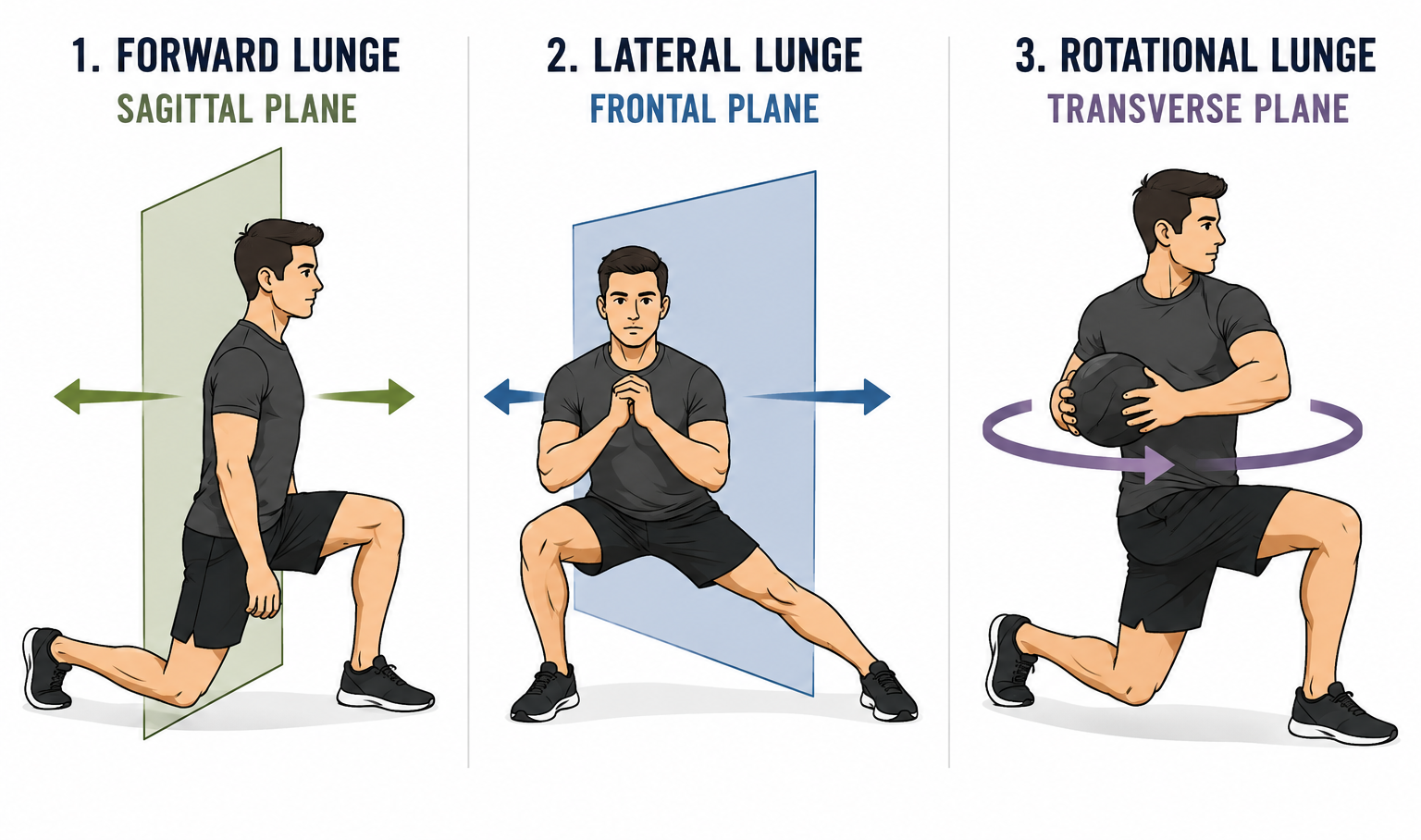
A lunge is a good example because it can sit in any of the three planes depending on how you do it.
A forward lunge is sagittal. Step straight ahead, drop the back knee, drive through the front leg. This is the version almost everyone defaults to, and it is a genuinely good exercise, but on its own it only teaches the hips and knees to control movement in one direction.
A lateral lunge is frontal. Step directly out to the side, sit back into the hip, keep the trailing leg straight. This asks the glute medius and adductors to control side to side load in a way the forward version never does, and it is closer to the demand of Megan's defensive shuffle or Alaia stepping sideways to field a ball.
A rotational or curtsy lunge is transverse, or a blend of transverse and frontal. Step one leg behind and across the other, or add a trunk rotation as you drop into the lunge. This is the version that most closely resembles reaching into a machine, twisting to grab a bag off the back seat, or changing direction mid stride.
None of these is more correct than the others. The point is variety. A programme that only ever includes the first version is training one third of the available movement vocabulary.
Stabilizers and mobilizers
This is a simple way to help understand the muscles and their functions. Though there is not a large body of literature behind this, it still may be useful to understand. Comerford and Mottram, who classified muscles by function rather than just by name (Comerford & Mottram, 2001). Broadly, some muscles are local stabilisers, small deep muscles that work continuously at low load to control individual joints and keep them stacked properly. Others are global stabilisers and global mobilisers, larger and more superficial muscles built to produce big ranges of motion and generate force, particularly in the sagittal plane.
The relevant part for Megan's back is this. When a stabiliser role is underused, either because a joint has been immobile through injury or because training has never asked much of it, the body tends to recruit a mobiliser muscle to do the stabilising job instead. It is not built for that role, so it fatigues, tightens, or simply cannot handle an unfamiliar load well. A lat is a classic global mobiliser. Excellent at pulling and extending the shoulder through a big range, not really designed to be the primary control point for a loaded reach and twist. Ask it to do that job under an unpredictable, unbraced load, and a niggle is a pretty unsurprising outcome.
This model is a clinical and biomechanical classification rather than something proven with large randomised trials, so it is worth treating it as a useful framework for thinking about training gaps rather than a hard law of the body. But it lines up well with what Megan is describing.
Fibre type
You get better at what you train. We have talked before in this newsletter about how muscle fibre type composition interacts with training load. The short version is that there is reasonably consistent evidence that heavier loads (broadly above 60 percent of one rep max) preferentially grow type two, fast twitch fibres, while lighter load, higher rep, higher fatigue training tends to grow type one, slow twitch fibres to a similar or sometimes greater degree (Grgic & Schoenfeld, 2018).
This matters for movement diversity too, not just for muscle size. Megan's weighted Pallof press variation, with a plate threaded onto the band, is a low-load, high-control, high-fatigue exercise, quite different in demand from a heavy sagittal deadlift. It is doing two things at once, asking an under-trained plane (transverse, resisting rotation) to do real work, and doing it in a way that likely biases a different fibre population than her big compound lifts. The same logic applies to pilates-style work and to the Blaze Pods drill. None of it replaces heavy lifting, and heavy lifting remains the best tool for building maximal strength, but it is filling in a gap that heavy sagittal lifting alone cannot.
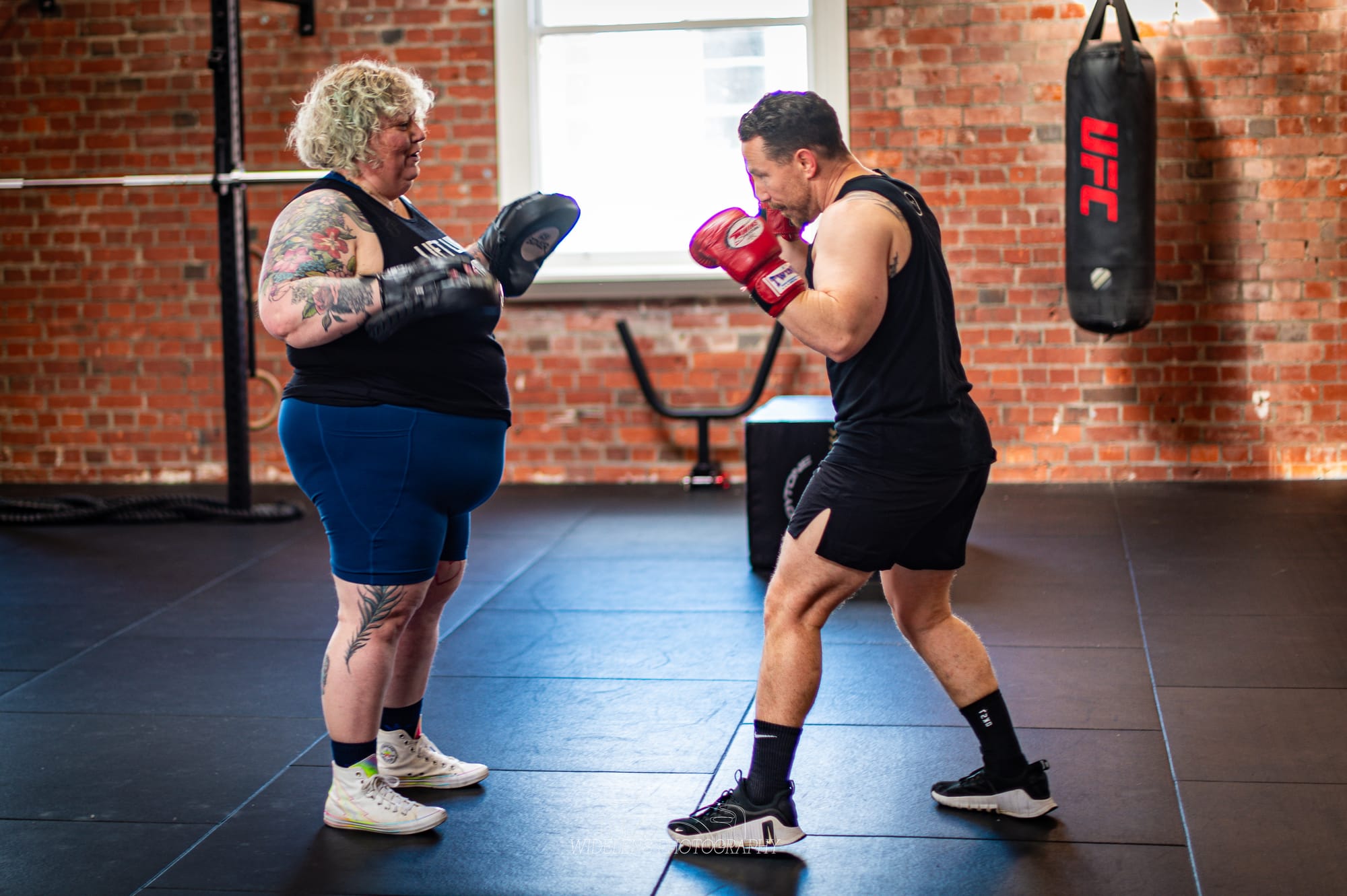
You do not need to overhaul a programme that includes deadlifts, squats and presses. They are foundational strength exercises that shouldn't be replaced and have so many great transferable benefits. Think more additive, build in regular exposure to frontal and transverse plane work, in both loaded and unloaded forms, so the stabilising system gets practice rather than being caught off guard by an ordinary Wednesday.
A rough template worth trying:
- Keep your primary heavy lifts as they are
- Add one lateral movement per week (lateral lunge, side step, lateral band walk)
- Add one rotational or anti-rotational movement per week (Pallof press, cable woodchop, medicine ball rotational throw)
- Layer in reactive, multidirectional drills where you can (agility ladder, reaction lights, even just games with lateral and rotational demand).
So, that feeling of a new muscle waking up usually means an undertrained plane just got a job to do, and if a muscle could send a message about it, an undertrained lat protesting on laundry day would be about as clear as irisin gets.