
In Confidence
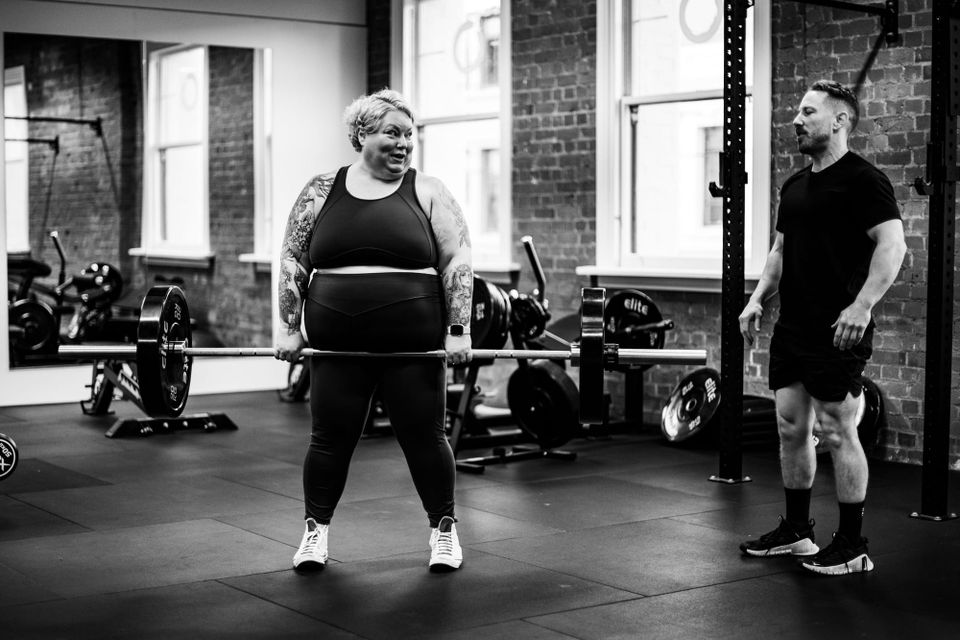
When I first walked into the gym six years ago, I was terrified.Terrified that I would hate it, terrified by the idea of changing my life, terrified that despite what I had said going into it, this process would be all about weight loss.And it didn't turn out that way. I have fundamentally changed my life, resisted the siren call of weight loss at any cost, and been pleasantly surprised by how much I love everything about strength training.So when I was chatting to someone this week, and they said "I am always just really intimidated in the weight room," I had to turn the empathy tap on, hard.
I get it, I really do. I am so lucky that at Healthfit there are a) very few gymbros and b) not that many people who wanted to use the squat rack. So I don't get particularly intimidated.
Near my parents' place down south, there is a great gym I visit three or four times a year. It feels to me like an old school lifting gym - kind of dusty and grimy, with every piece of equipment you can imagine, and not very many mirrors. (I think about their hip thrust machine quite often.)Last time I was there, I needed a specific piece of equipment, and while I was staring at it plaintively, the dude using it caught my eye and said "do you want to work in." It hadn't occurred to me to ask.
In my experience, most people in gyms want to do their thing, get in, and get out. They aren't looking at you. And most people, if you need it, are super helpful.(And if you're ever in the gym with me and you think I am staring at you, it's one of two things. I am either hardcore disassociating between sets, or I am wondering exactly how you are bending your leg like that.)
Occasionally, though, I have had to work out in the kind of gyms that the bros frequent. By the time I was regularly using commercial gyms, I had honed my lifting enough that the gymbros mostly just make me laugh. Cos unless you’re one of them - full of bad form and unearned confidence - you don’t get confident and then do it. You get confident by doing it.
I have a distinct memory of being in a gym in Auckland, and watching a dude in the mirror as he watched me. There was a sneer on his face, a very clear "you don't belong here" look.
And then, he had to watch me load 120kgs onto the bar and deadlift it for reps. Which wiped the sneer right off his face, and I got one of those reluctant nod/frowns of acknowledgement.
Because I am powered by spite, I like to rile them up if I can. I have been known, when I see that "what are you doing in this bit of the gym, you should be on the cardio machines" face, to sidle up next to the bro and copy what he's doing, but with a slightly heavier weight.
Look, this is not my best self, but I figure some people would benefit from being humbled occasionally. I am firmly of the opinion that the gym should be for everyone, and anyone who is making those spaces less inclusive can suck it. If I have to burn out my biceps doing curls I have no business doing to make a man think twice, then I will.
My friends, it is 2026, we are - to quote Irish comedian Kyla Cobbler - getting furious and jacked. We are "bitches who fight bears in the forest" We are taking our rightful place in whatever space we want to. The weight room is no different.
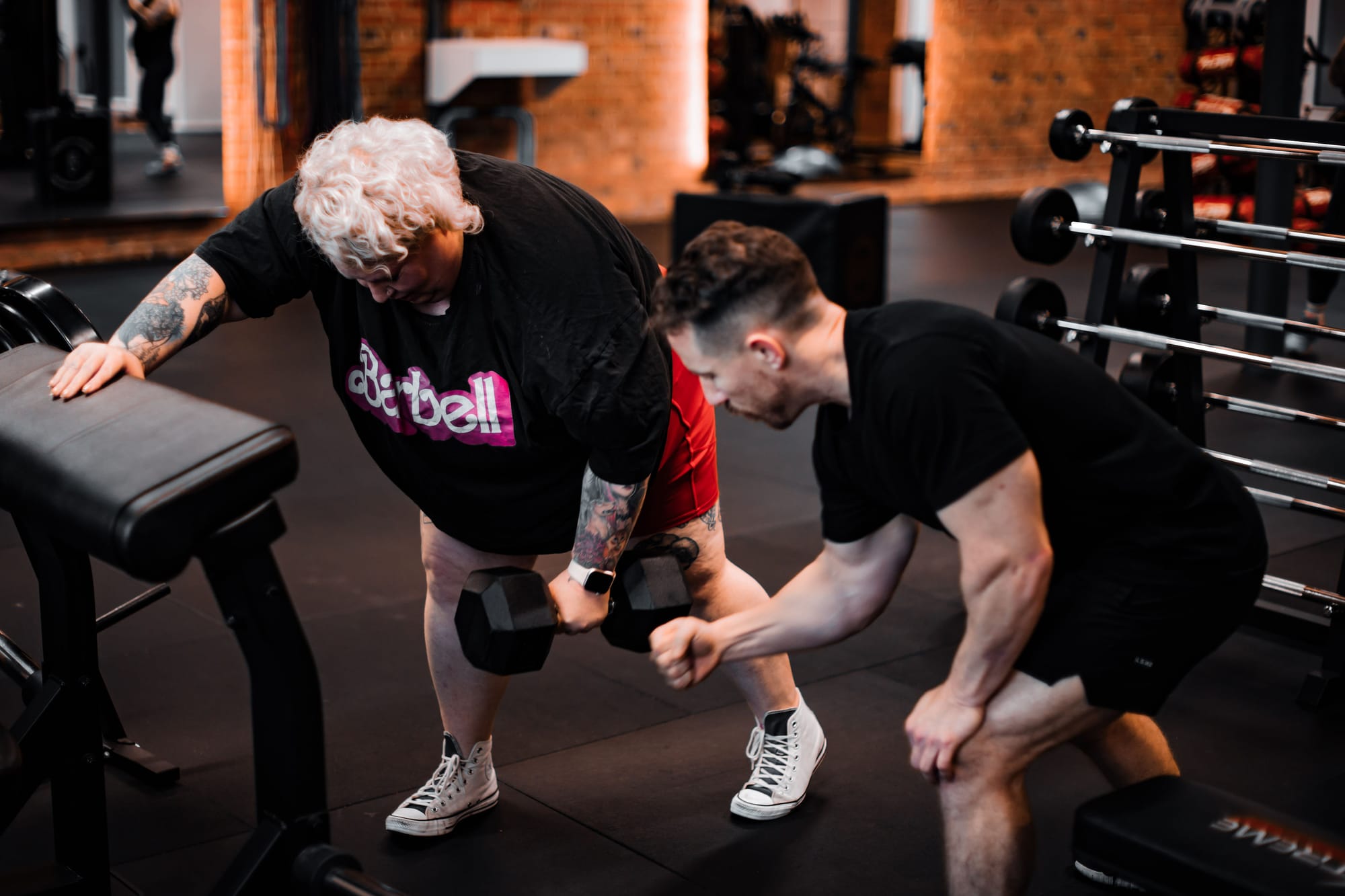
Carl here on familiarity, gender differences in the gym and the motivational power of spite.
What your friend said to you isn't really about the weight room. It's at least partly about familiarity, or the absence of it.
There's a well-replicated phenomenon in social psychology called the mere exposure effect where we tend to develop more positive feelings toward things simply by encountering them repeatedly. Originally identified by Robert Zajonc in 1968, the research demonstrated that repeated exposure to a stimulus increases the likelihood of someone developing positive feelings toward it. A large-scale meta-analysis by Montoya et al. showed the effect is real, robust, and follows an inverted-U shaped curve, meaning the early exposures are the most powerful. Those first few times in the gym, the ones that feel the worst, are doing the most work.
But familiarity alone doesn't explain why the weight room has historically felt like hostile territory for women. For that, we need to look at the research on the gym environment itself. A 2025 mixed-methods study by Cowley and Schneider, surveyed 279 women and found four dominant themes in their gym experiences: feeling "never enough" (judged for appearance and performance), "often too much" (self-critical, dealing with clothing anxiety), "always on display" (harassment, fighting for space), and "sometimes empowered." That last category is the one worth dwelling on, because women in that study reported that empowerment came specifically from skill acquisition, breaking gender norms, and exercising in supportive environments. You don't arrive empowered though, you get there by doing.
To build on that last study focused on women in the gym, A 2025 Frontiers in Psychology study found that gender stereotypes significantly negatively predict female exercise behaviour, with women who hold higher levels of sport-related gender stereotypes showing a measurable decline in their exercise participation. The discomfort isn't irrational overcaution. It is pattern recognition in response to a real environmental signal, and it has measurable downstream effects on participation.
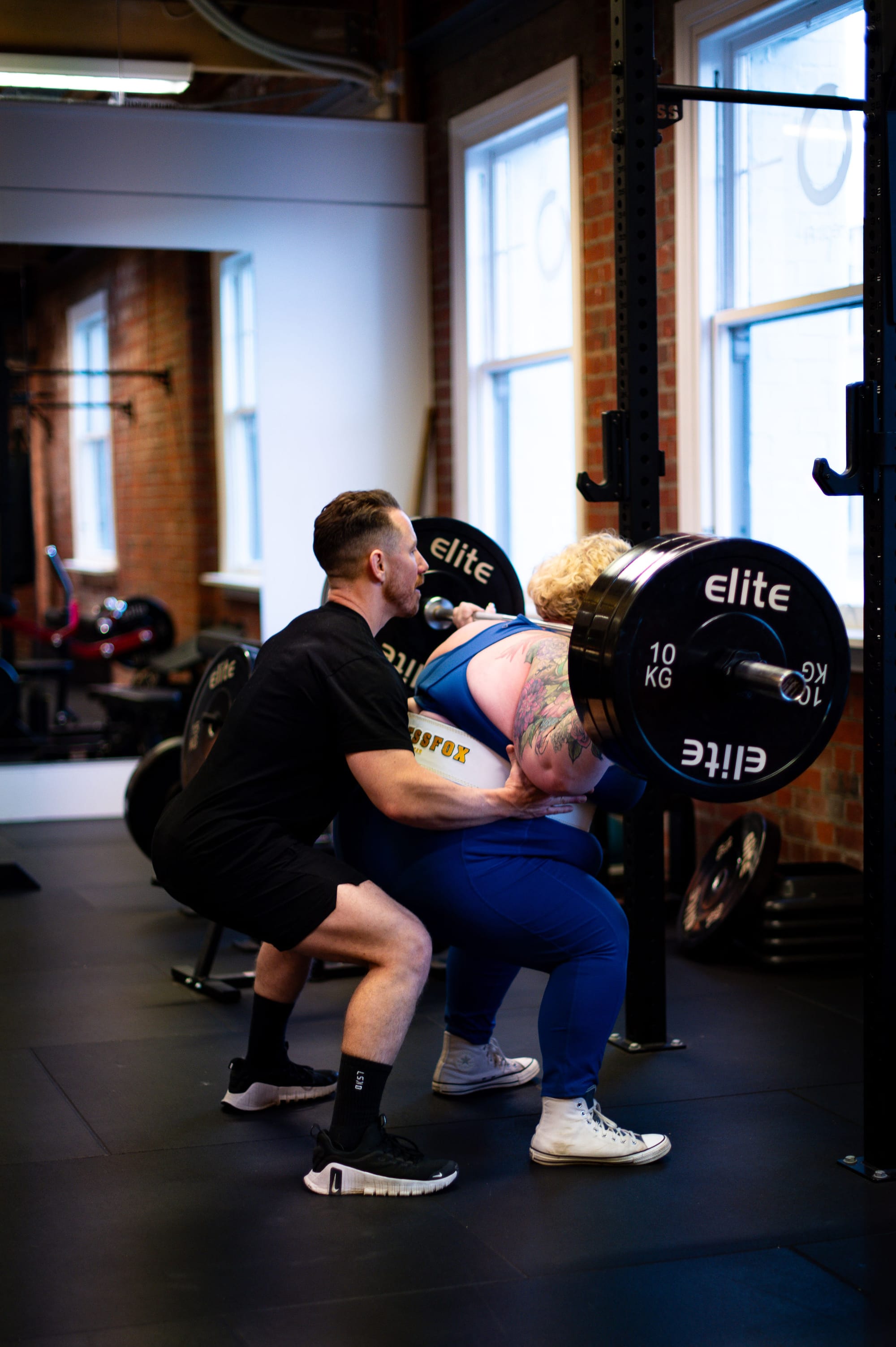
This is where self-efficacy theory becomes important to understand. Bandura (1997) identified four sources of confidence and ranked them by potency. The most influential is mastery experience, meaning direct experiences of success. Each time a person successfully completes a task or overcomes a challenge, their confidence grows, providing solid evidence of their own competence. This is exactly what "you get confident by doing it" describes. It's not a motivational poster, it's a robust psychological mechanism with decades of replication behind it. Crucially, it's an individual's own interpretation of their success experience that drives the effect upward. The cognitive appraisal of "I did that" is what builds the belief.
Again….Self-Determination Theory adds another layer. SDT proposes that sustainable motivation rests on three psychological needs: autonomy, competence, and relatedness. In the exercise context, a systematic review and meta-analysis found that enhancing women's perception of competence and relatedness significantly promotes sports participation, with relatedness being the strongest factor of the three. Being around people who treat the space as genuinely shared, who offer to work in rather than stare you down, isn't just nice. It is mechanistically important for whether women come back.
Which brings us back to the sneer, the 120kg deadlift, and the reluctant nod. In Bandura's framework, that moment is almost textbook. A mastery experience, witnessed by someone whose judgment activated a threat, resolved in the most unambiguous possible way. Self-efficacy upgraded and stereotype threat neutralised!
On the motivational power of spite, there's a school of thought in motivation research that distinguishes between approach motivation, moving toward something desirable, and avoidance motivation, moving away from something aversive. Most gym content leans hard on approach: get strong, feel good, live longer. And that works, for some people, some of the time.
But avoidance motivation has a bad reputation it doesn't entirely deserve. When the aversive thing you're moving away from is someone else's low opinion of you, something interesting happens. It stops being purely avoidance and starts functioning more like what psychologists call reactance, the motivational state that kicks in when we feel our freedom or autonomy is being threatened. Tell someone they can't do something, imply they don't belong somewhere, and a meaningful subset of people will dig in harder precisely because of that (we’ve all been there!).
The research on this is more robust than you might expect. Studies on oppositional motivation, particularly in performance contexts, show that perceived disrespect or exclusion can significantly boost effort and persistence, especially in people with a strong sense of their own competence. The mechanism isn't complicated, the threat activates identity protection. You're not just lifting anymore, you're proving something, and proof requires evidence.
The important caveat, and Megan kind of acknowledges this, is that external motivators like spite are a fantastic ignition source and a long-term fuel. The goal is to borrow the activation energy of reactance long enough that intrinsic motivation has time to take root. You lift out of spite until you lift because you love it! Many people have made exactly that journey.
So there are lots of powers at play that you can use to motivate you! As a woman in the gym, it is already challenging. Find your motivator (positive or negative), gain roots through competence and become ready to fight bears in the forest!