
Hype, Heart Rate and the Haka - Finding your Zone
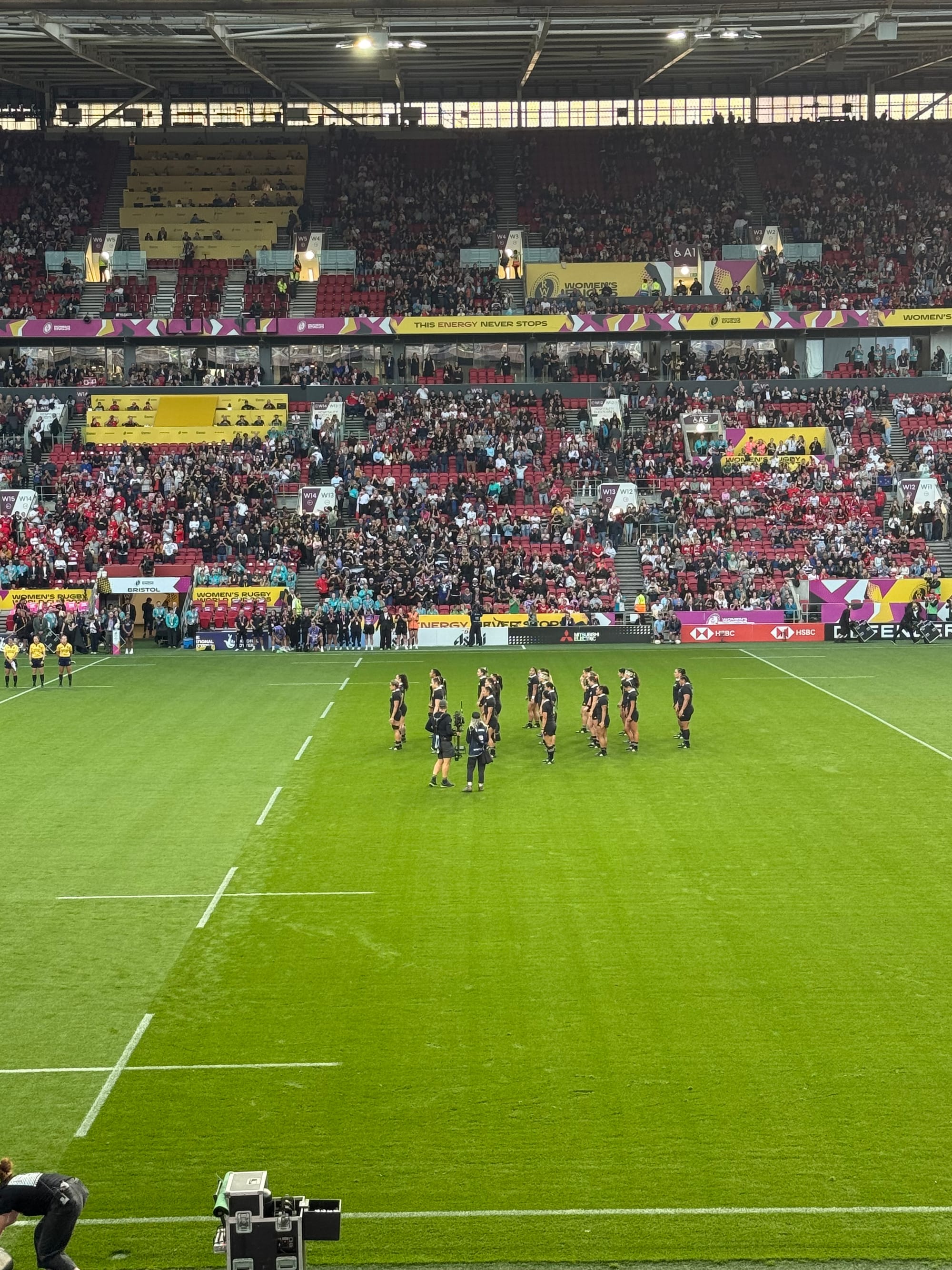
Last weekend, I watched the Black Ferns win a close-fought test against the French women’s rugby team, a game that was more rugged than anyone really anticipated.
At the beginning of the match, the Ferns performed their haka, Ko Uhia Mai, and at the end, my watching companion turned to me and said, “the French team should be allowed to respond now with a Monty Python-style ‘I fart in your general direction.’”
Funnily enough, France has already tried. In the 2011 men’s World Cup final, they advanced on the All Blacks’ haka in a V formation, crossed halfway, and were fined for their trouble.
But he’s kind of not wrong. Last year, I watched the Black Ferns at the Rugby World Cup silence crowds with the haka, including more than 80,000 people at Twickenham. Each time, I thought, “you know, this gives them something of an advantage.”
I love the haka. More often than not it makes me tear up – particularly when it’s women performing it. Seeing it performed on a stage like that moved me so much more than a national anthem ever has.
But it’s not just the hush of all those people. There’s a cultural, psychological and possibly a physical effect that doing something like the haka gives players, and the team as a whole. As someone who has become fascinated by what human bodies can do, I couldn’t help wondering how much of that is real.
Back when we were training to compete, when I was deadlifting, Carl would give me the cue to stomp or stamp my feet before lifting to fire up my nervous system. It never really worked for me. I mostly felt too self-conscious for it to do anything, and I always felt uncoordinated.
But watching the competitors this week at the NZPF powerlifting Nationals in Porirua (OMG, Evie Corrigan is incredible!!), there is clearly something to it.
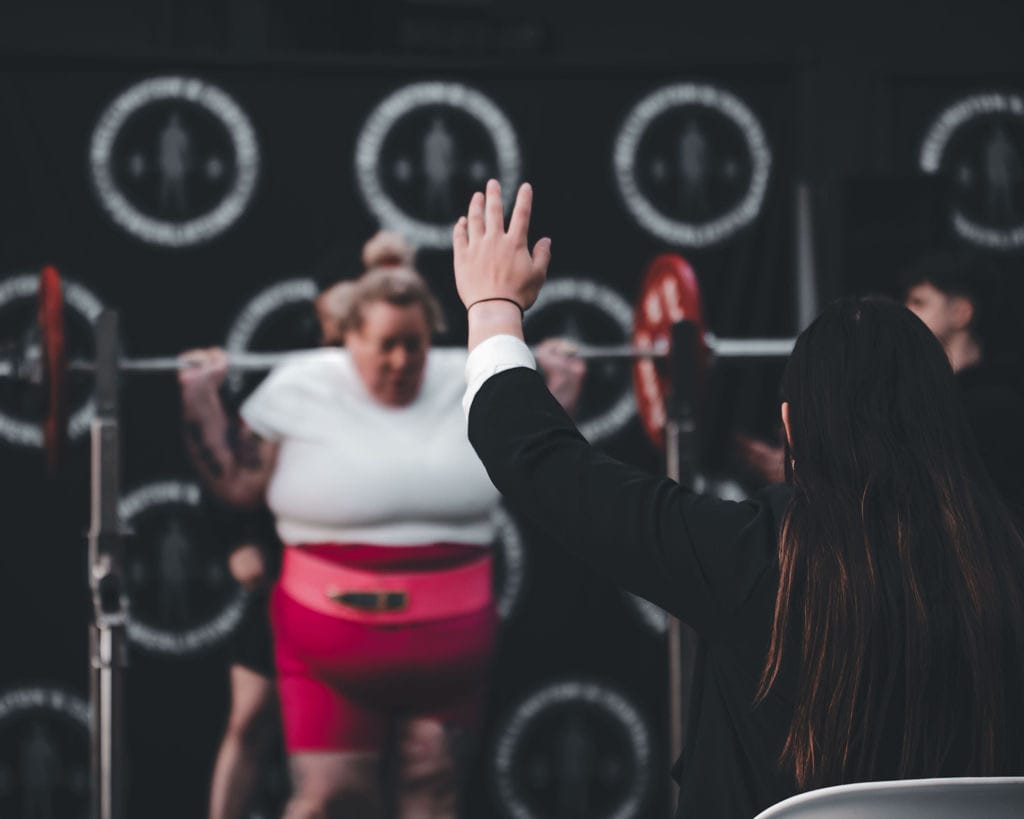
Each athlete had a different routine. Many had headphones on, nodding along to loud music until just before they hit the platform. There were lots of angry yells, stomping and chest beating. One competitor fist-bumped every spotter as he came out. When you remember you only have 60 seconds to start your lift, that’s an impressive dedication to firing yourself up.
Some came out and crossed themselves. Some grinned at whānau in the audience from the warm-up room entrance. There was a lot of adjusting of belts, dusting of chalk, and finding the perfect grip on the barbell. It’s not so much that everyone did the same thing, but that everyone did something.
For me, the thing that makes my deadlift feel strong is “pulling the slack out of the bar,” the tugs on the bar that make it tight against the plates before the big pull. I absolutely have a squat routine that involves a specific way of ducking my head under the bar and pulling my hands tight around it at the same moment.
And there’s almost always an angry woman singing loudly in my ears before (and during) my big lifts. I have a specific playlist called “PB or GTFO.”
You don’t have to be a high-performance athlete for this to matter. No matter what you’re doing, a way of psyching yourself into a big effort helps, whether that effort is a faster pace, a bigger lift or a wider stretch. Learning what that is, for nerds like Carl and me at least, is part of that whole “listen to your body” thing we bang on about round here. Learning, honing and perfecting that routine is the fun.
When I bounced into the gym this week, excited to actually pick up some weights after six weeks of phlegm (and, I’ll admit, freshly bitten by the competition bug again), I asked Carl about the haka, whether it’s an advantage, and how it applies to those of us who will never have to perform in front of a crowded stadium.
He’s got an answer, and it’s below. But I think what I was really asking was: everyone does something, so what’s mine going to be? And does it absolutely have to involve stomping?
Carl here…
You have to love the chats Megan and I have in our sessions. Like me, Megan is always curious about what's happening physiologically and psychologically in nearly all scenarios. So what happens in the bodies and heads of the poeple performing the haka, and does it have a real impact on the scoreboard?
The haka does real things to heart rate, arousal and group bonding. What it does to the opposition depends almost entirely on how each opponent reads it.
In August, a 44 year old Ma'a Nonu stood alone in Sharks colours in Durban and answered Ka Mate with Kapa o Pango. The All Blacks applauded, then won 54 to 0. Two years earlier, England prop Joe Marler posted that the haka "needs binning" and spent the week apologising. Every few seasons someone overseas argues it is an unfair advantage. So let's ask the Gains and Brains question: what actually happens, physiologically and psychologically, when 23 people shout, stamp, slap and chant in unison 90 seconds before kickoff?
A note before we start. Haka is taonga. Ka Mate is attributed to Te Rauparaha in the early 1800s and is performed at weddings, funerals and graduations, not just test matches. Nothing below reduces it to a performance hack. We are only asking what the science says about the moments before a game.
The debate so far
The "unfair advantage" argument has history and it involves two parts: opponents stand still and go cold, and the All Blacks get a lift. Both claims are testable, and only the first has had even informal measurement. Here is a summary of the history.
Two things stand out. First, the haka is a challenge that invites a reply. Steve Hansen called England's 2019 response brilliant, and World Rugby's rule only stops opponents crossing halfway. Second, the All Blacks have performed it before every loss too. As one Australian analyst put it, a weak All Blacks side loses with a haka like anyone else. Tonga, Samoa and Fiji perform their own challenges and rarely draw the same complaint.
What happens in the body of the performers
The haka is a 60 to 90 second bout of loud, rhythmic, whole body effort. That alone does four things worth caring about.
1. It is a second warm up. For a John Eales documentary, Dr Vince Kelly of the University of Queensland put heart rate monitors on players performing and watching a haka. Some performers passed 90% of their maximum heart rate, while watchers stayed far lower. Kelly's point was simple: teams usually cool a little between the warm up and kickoff, and the haka puts heat back in. Treat this carefully. It was a documentary measurement, not a peer reviewed trial, and it measured heart rate, not performance. The mechanism is sound though as muscle temperature drops quickly during passive standing, and warmer muscle contracts and conducts faster.
2. Shouting adds force. This one has real lab support. Welch and Tschampl (2012) found a martial arts kiap raised grip strength in novices and experts. Japanese work in Scientific Reports (2021) showed a shout raised maximal handgrip force, alongside larger pupils and reduced inhibition in the motor cortex. The likely route is a noradrenaline surge that lets the brain recruit more of the muscle it already has. The effect is not universal: one study found no benefit of grunting on maximal deadlifts. And the haka shout comes a minute or two before the first contact, not at the moment of effort, so treat any carryover as a priming effect rather than extra force at the breakdown.
3. Hormones, possibly. Kelly speculated testosterone might rise, but nobody has measured it during a haka. What we do know: Crewther and colleagues (2014) found professional rugby players had higher pregame salivary testosterone before wins than losses. A systematic review (Strahorn et al., 2017) found psychosocial interventions like motivational video and coach feedback can shift testosterone in rugby players. So a stirring ritual raising testosterone is plausible. It is not shown, and the 2014 data are correlations from 22 players across six games.
4. Synchrony releases endorphins and bonds the group. Rowers training in time with each other showed bigger rises in pain threshold, a proxy for endorphin release, than when training alone (Cohen et al., 2010). Tarr and colleagues (2015) found that synchrony and exertion each independently raised pain threshold and feelings of closeness in group dance. Stamping, slapping and chanting together is about as synchronous as human movement gets. A higher pain threshold before 80 minutes of collisions, and a stronger sense of "us", are both useful.
What happens in the heads of the performers
The psychological case is stronger than the physiological one, and it runs through salience.
Salience of identity. In the minute before kickoff, the haka makes one identity loud and clear: who we are, where we come from, who wore this jersey before us. Social identity research suggests that when a group identity is made salient, people work harder for the group and coordinate better. Wiltermuth and Heath (2009) found that acting in synchrony increased cooperation in later group tasks. A ritual that every player has performed many times also works like a team version of a preperformance routine: familiar, controllable and identical whatever the score, venue or crowd.
Salience of attention. Loud, rhythmic, coordinated movement captures attention, for the performers and everyone watching. For the team performing, that narrows focus onto the task and the opponent in front of them. Whether narrowed focus helps depends on the role, which we come back to in the bell curve section.
Challenge, not threat. The most useful lens here is the biopsychosocial model of challenge and threat. Before a big event, athletes weigh the demands against their resources. When resources feel sufficient, they enter a challenge state: the heart pumps more blood with wider vessels, and attention and decision making hold up. When demands feel bigger, a threat state follows: vessels constrict, cortisol rises, and performance tends to suffer. A systematic review of 38 studies (Hase et al., 2019) and an updated 2025 meta analysis both found challenge states generally beat threat states for performance. A haka is close to an engineered challenge appraisal: high arousal, high control, felt support from teammates, and a clear focus on what we will do.
What it does to the opposition
The haka can raise or sap an opponent, and which one depends on the person, not the haka.
Physically, the only plausible cost is cooling. Standing still for 90 seconds after a warm up lets core and muscle temperature drift down. Kelly's own fix was to keep tracksuits on and stay warm rather than disrespect the challenge, which he warned would only fire the All Blacks up further. Passive heat maintenance between warm up and kickoff is already standard practice in elite rugby.
Psychologically, the same stimulus produces opposite responses. Former England hooker Richard Cockerill, who went nose to nose with Norm Hewitt in 1997, has said facing the haka motivated him rather than scared him. England's players in 2019 said their V was designed so they would not just stand there and absorb it, and they knew it would rile the All Blacks. Ireland's figure of eight turned the moment into their own ritual of grief and identity. In all three cases the opposition converted a potential threat into a challenge by doing something with it.
The research backs that individual reading. In a study of athletes rating stressors, the interaction between the athlete and the specific stressor explained about 52% of the variance in whether it felt like a challenge or a threat (Moore et al., 2019). Put simply: the same haka will feel like a threat to one opponent and fuel to the player beside him.
Attention is the other channel. A haka demands to be watched, and eye contact is part of the challenge. For an opponent who is already anxious, that is a minute of attention spent on the other team rather than their own first job. There is related evidence from tennis that loud grunting can impair an opponent's judgement of the ball (Sinnett and Kingstone, 2010). But that is during play, and no one has tested whether a prematch ritual has a lasting attentional effect once the whistle blows.
The arousal bell curve, and why it is personal
The haka turns arousal up for everyone on the team, but the best level of arousal is different for every player.
The classic curve. The Yerkes Dodson law (1908) describes an inverted U: performance rises with arousal up to a point, then falls. Too flat and you are slow to the first ruck. Too high and your hands, decisions and kicking go. The curve also shifts with the task. Gross, powerful skills tolerate high arousal, while fine, decision heavy skills peak lower.
The individual version. Yuri Hanin's Individual Zones of Optimal Functioning (IZOF) model argues there is no single "right" level. Each athlete has their own zone, which might sit low, moderate or high. Hanin's early work with elite rowers found some performed best at anxiety levels traditionally considered too high. A meta analysis by Jokela and Hanin (1999) found athletes performing inside their individual zone did better than those outside it. The model has fair critics (Gould and Tuffey, 1996), mainly about how zones are measured, usually by athletes recalling past feelings. But the core idea has held up: emotional intensity helps or hurts depending on the person.
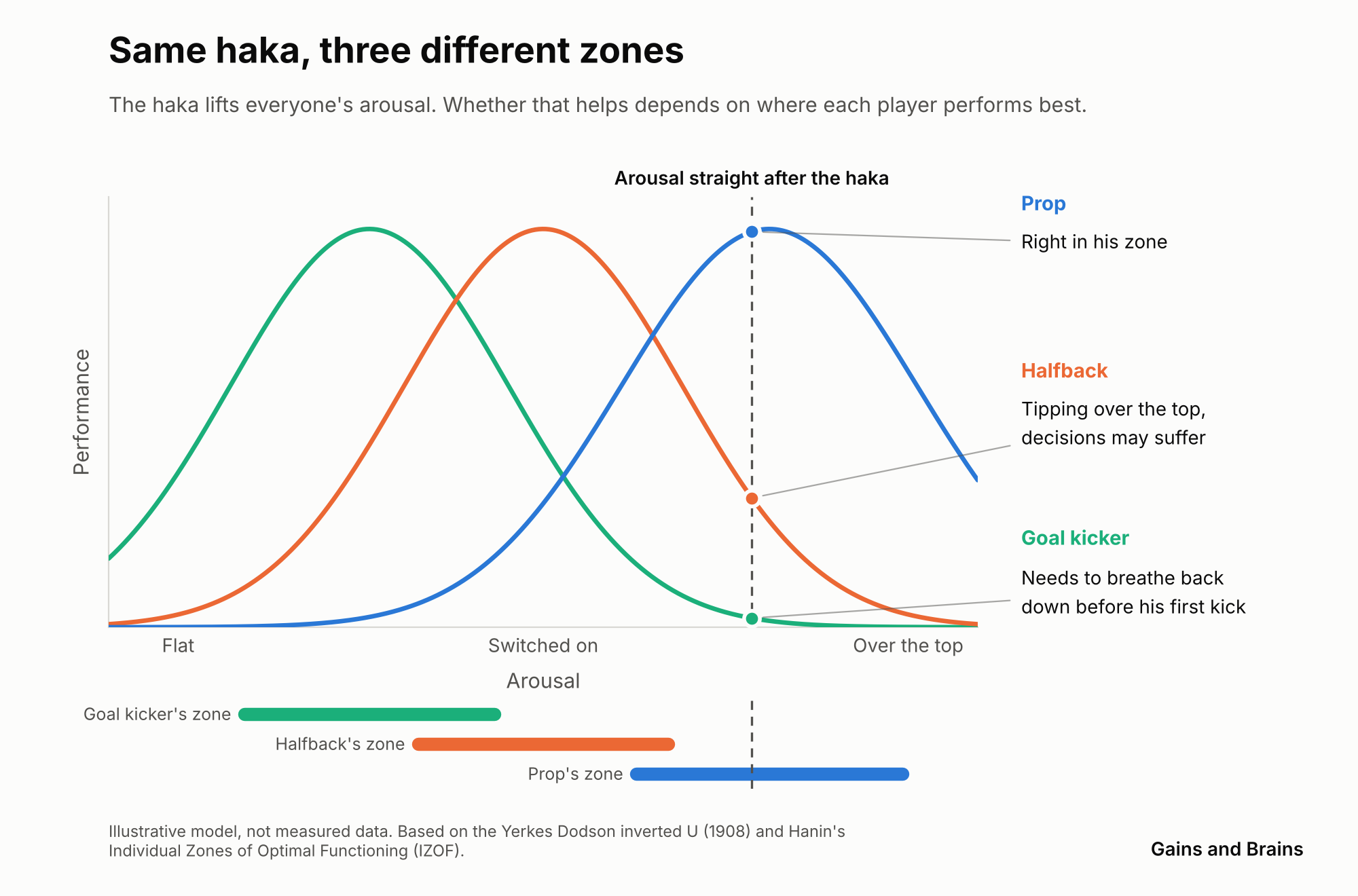
This image highlights how too much or too little arousal can impact on performance, this position example is not necessarily representative of the position, but more to highlight how different it may look for individuals.
Apply that to a haka. Picture three players hearing the same chant (refer to the above image):
- A loosehead prop whose job is to win the first scrum and hit rucks. His zone is high, and the haka likely lands him right in it, increasing his needed physical aggressiveness.
- A halfback who has to read the defence and pass under pressure. His zone sits in the middle, so the haka could tip him over the top and he may not think clearly and make good decisions.
- A goal kicker whose first job might be a 40 metre penalty in the third minute. His zone is lower, and he may need to bring himself down after the haka, so he can focus on kicking goals with focus.
This is why some players are seen breathing slowly or walking away for a moment after the haka. The same goes for opponents: a fired up, high zone forward may be better off for watching it, while a nervous young first five may be pushed out of his zone.
The bottom line: the haka is a blunt, team wide arousal dial. Teams that win use it as a starting point, then let each player adjust to his own zone and I’m guessing they have strategies for this?
So, is it an advantage?
A small one, plausibly, and not an unfair one.
The honest caveat is that this can never be cleanly tested. There is no control group of All Blacks tests without a haka, and the All Blacks' record owes far more to talent, depth and coaching than to 90 seconds before kickoff. Opponents also get to respond, and some of the most famous upsets (Chicago 2016, Yokohama 2019) followed a strong reply. If there is an edge, it is available to anyone who prepares for the moment as deliberately as the All Blacks do.
What you can use on the gym floor
Find your own zone. Before your next few heavy sessions, rate how amped you feel from 1 to 10, then rate the session afterwards. After a month, look for the number your best sessions cluster around. That is your zone, not your training partner's.
Use noise on the right lifts. A sharp exhale or shout on a maximal grip, carry or pull may help you recruit more. Save it for true top end efforts, and skip it on technical lifts where it pulls you out of position.
Do not go cold. If you rest more than about 10 minutes between your warm up and a big attempt, or before a race start, keep layers on and do a few short ramp up sets or strides to bring the heat back.
Move together. Group warm ups done in time, like the start of our classes, are not just admin. Synchronous movement raises pain tolerance and connection, which may help explain why group sessions feel easier.
Reframe nerves as a challenge. Racing heart before a PB attempt or competition? Tell yourself "my body is getting ready" and focus on what you control. Treating arousal as fuel is linked to a challenge response rather than a threat response and this mindset seems to actually make a difference!
Know when to turn it down. For skill heavy work like an Olympic lift or a tricky gymnastics movement, three slow breaths with a longer exhale can bring you back into your zone after a hype up.
So, does the haka win games? Not on its own. Talent, fitness and good coaching do that. What the haka does well is warm the body, bring the team together and switch players on, all at the moment it matters most. The real lesson is for the rest of us: there’s no single “right” level of fired up. Some of us perform best buzzing, others calm and steady. Pay attention to how you feel before your best sessions, find your own zone, and build a simple routine that gets you there. That’s your haka.