
For the Over 65's!
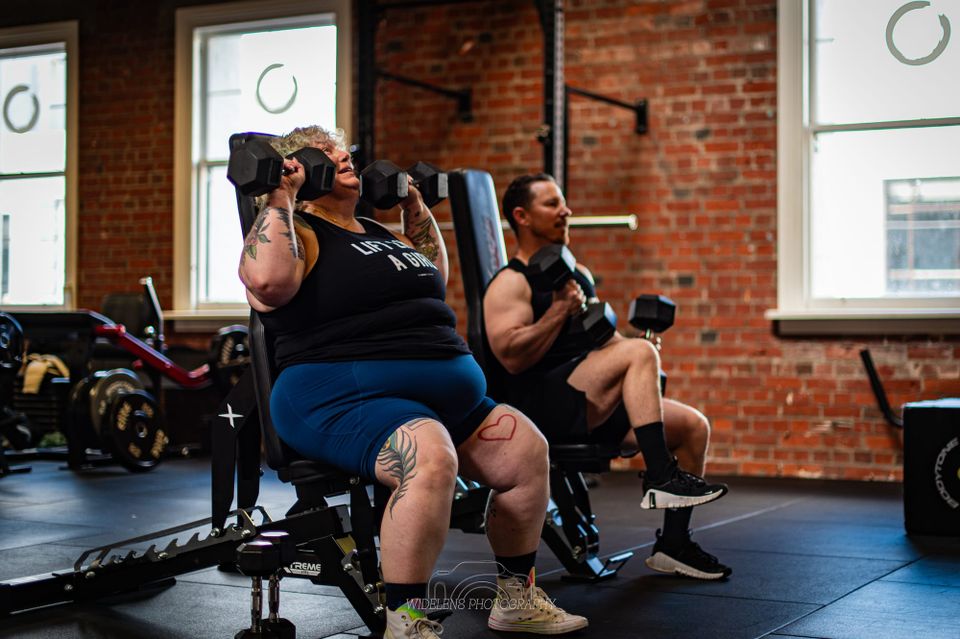
A couple of weeks ago, we asked y’all some questions. If you didn’t do it then, please feel free to fill out the form here.
There were some great answers, and a number of great topics for us to cover. I (Megan) am indebted to the person who asked “Do you ever get sick of each other?” cos I am going to be using that against Carl forever.
(We don’t, or rather, I don’t. Carl may be very bored of my whining about the various sore bits of my body.)
Someone also asked for some help with “training for over 65’s?”
I am not over 65, though I am staring down the barrel of 50, and feeling it. Part of the reason I joined a gym in the first place was that I had started to make noises when I stood up from the couch. I now only make those noises after leg day, but I definitely feel my age when I get out of bed in the morning.
But I have been thinking about aging a fair bit recently.
As my knee heals, I have been able to do more and more. But there was a time there where every bit of activity cost me something - pain, energy, or emotional bandwidth.
There was one day when I was still on crutches when I needed to go to the post office. I had been at the gym for a physio appointment, and I decided I would walk up to the post office. Maps tells me it was 750 metres.
When I got there, it was closed. Which meant I had to walk to the other post office, another 350 metres away. I genuinely had to sto p and think if I had enough energy to make it that far, and then to get home.
Every time I did something, I had to calculate whether I would have enough left in the tank to get me through the rest of the day. I am aware there are people, living with chronic conditions, for whom this is entirely normal, but it was relatively new for me. The calculations I am more used to involve whether another 10 minutes of doomscrolling will make me grumpy tomorrow, or if one more glass of rosé will make my morning especially hard.
Living like that made my world so much smaller, and so much less interesting. I felt so much less independent, and I wondered if this is what life might be like in 30 years.
And I could see how easily it could spiral, with an injury taking away confidence, leading to stopping movement. And then that lack of movement leading to less confidence and the cycle continuing. And I know that spiral because that’s how I started my forties.
But it is certainly not how I am ending my forties. I am going to end them (not for a while yet, thank you very much) stronger, fitter and healthier than I have ever been.
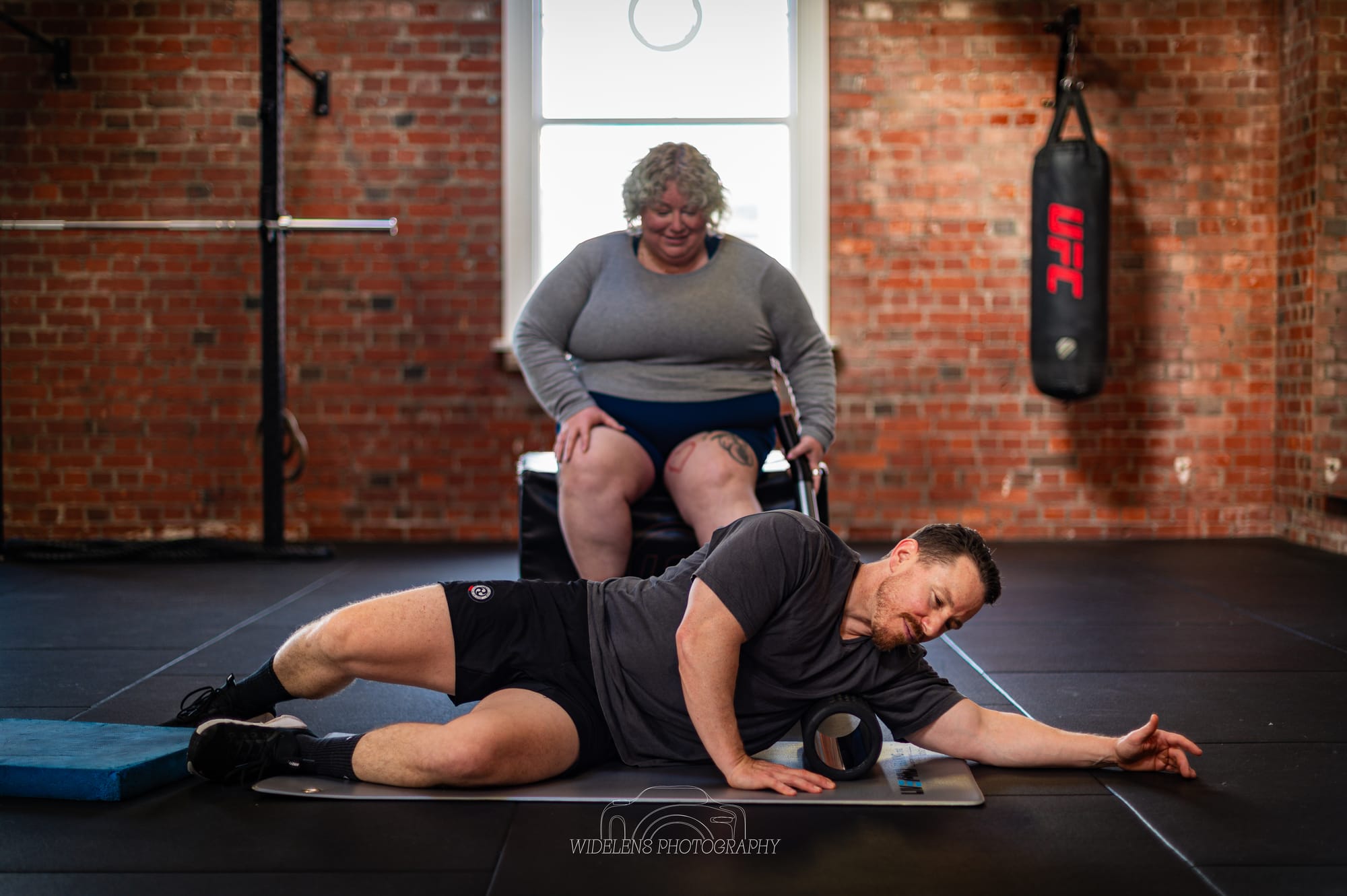
Thinking about my eighties is a huge reason why I keep going back to the weights, why I keep lifting, and why, even though I hate it, I have added things like jumping and medicine balls to my workouts. Because Carl likes to send me studies about how much power matters as we age, even more than strength.
And then there’s all the people I know in their 70s and 80s who swim, travel, drive, run, lift and generally disprove what I imagined as I whined my way through the beginning of an Actual Proper Injury.
I see Carl in the gym with his clients, older than me, who are fit and strong and mobile in ways I would like to be now, let alone in 10 years. I see a Kiwi woman breaking world powerlifting records at 62, squatting what I would squat on my best day.
I don’t know if I will be breaking records, though I would love to try. But I would like it if when the post office is closed, walking to the next one isn’t a huge deal.
So, Carl, how are we training for that? And do you reckon you will be sick of me by then?
Carl here…
First things first, no, I don’t get sick of you Megan. To prove it, I’m making dessert right now to bring round to yours, outside of the gym and outside of this newsletter (let the record show).
Your post office story is also one of the best descriptions I’ve heard of what we’re actually training for. It isn’t a weight on a bar. It’s being able to say “ah well, I’ll just walk to the other one” without doing the maths first.
This may sound complex, but it really isn't. Here I’m mostly talking physical, but in reality, there are big psychological and social components to achieving a good long life. I was actually talking to a professor from AUT recently and she said one of the best things we can do daily to help stay well and live long is to go for a walk with a friend.
What predicts a long, good life
When researchers look at who stays well the longest (I call it wellspan, because lifespan only counts the years), the same few things keep coming up. Some are physical and a surprising number aren’t!
Fitness and strength:
Among more than 122,000 patients referred for a treadmill test, the least fit had roughly five times the risk of dying during the study compared with the fittest. That’s a bigger gap than smoking showed in the same data. Separately, pooled data from 16 cohort studies linked muscle strengthening to about a 15 percent lower risk of dying from any cause. The sweet spot was around 30 to 60 minutes a week, and the risk was about 40 percent lower when people also did aerobic exercise.
Moving through your day:
I have talked on NEAT movement and having an active life. For adults over 60, the benefit of daily steps levelled off at around 6,000 to 8,000. For under 60s it was around 8,000 to 10,000. And Megan, your couch noises are data. In about 2,000 clinic patients aged 51 to 80, the ability to get down to the floor and back up with as little support as possible predicted survival. So walk, be active and practice getting up and down off the ground! Even if it takes you forever! Our local neuro exercise specialist Ruby Talley from Plexity, sums this up very well in this article.

People, purpose and perspective:
A review of 148 studies found that people with stronger social relationships had 50 percent better odds of survival, an effect on par with smoking. Among nearly 7,000 Americans over 50, those with the lowest sense of purpose were more than twice as likely to die during follow up as those with the highest. And people over 50 with more positive views of their own ageing lived about 7.5 years longer over 23 years.
Honesty hat on, these are observational studies, and most rely on people reporting their own habits. They show strong links, not proof of cause, and people who are already unwell tend to move less and see friends less. But the pattern is consistent, and the trials point the same way. So as that professor said to me, go for a walk with your friend! Or find a cool community within a gym or another hobby.
Does training actually change the outcome?
Yes! The LIFE trial took 1,635 sedentary adults aged 70 to 89 who already had some physical limitations. Over about 2.6 years, those given structured walking, strength, balance and flexibility work were less likely to lose the ability to walk 400 metres than those given health education (30.1 percent versus 35.5 percent). Megan, your post office trip was 1,100 metres.
On falls, a Cochrane review found that exercise cuts the rate of falls in older people living in the community by about 23 percent. Balance and functional exercise did the most reliable work, and programmes that combined it with resistance training probably cut falls by about a third. Here’s the part lifters need to hear: resistance training on its own had uncertain effects on falls. You need both.
For the brain, the FINGER trial gave at risk adults aged 60 to 77 two years of exercise, nutrition guidance, cognitive training and heart health monitoring. They scored modestly better on thinking tests than people given general health advice.
Power leaves first
Megan’s right that I send her power studies (guilty). Muscle power, which is how quickly you produce force, declines earlier and faster than strength as we age. In mobility-limited older adults, leg power explained more of the variation in stair climbing, chair standing and walking speed than strength did. A review of 20 trials found that lifting with the intent to move fast gave a modest extra improvement in physical function in adults over 60, though the certainty was low. In my experience, power is a big part of what lets you react when you clip the kerb. So the medicine balls and jumps stay. Sorry not sorry.
The ex-athlete trap
You know this person. You might be this person. They played rugby or netball, or ran half marathons, twenty years ago. Then a birthday or a mate’s challenge sparks a surge of motivation, and they train like the 25-year-old still living in their head. A few sprints later, the hamstring goes. Their conclusion: “My old body just isn’t up to it anymore.” So they stop.
That conclusion is wrong, and it’s expensive.
What I see on the gym floor is that the drive and the movement memory come back instantly, but tissue capacity doesn’t. Muscles and tendons adapt to what you’ve done lately, not to what you did in 2004.
So this isn't due to age at all, it's due to being deconditioned. Yes, you probably recover more slowly, and your peak may not have the potential it did in your 20s. The only answer to this is…progressive overload!
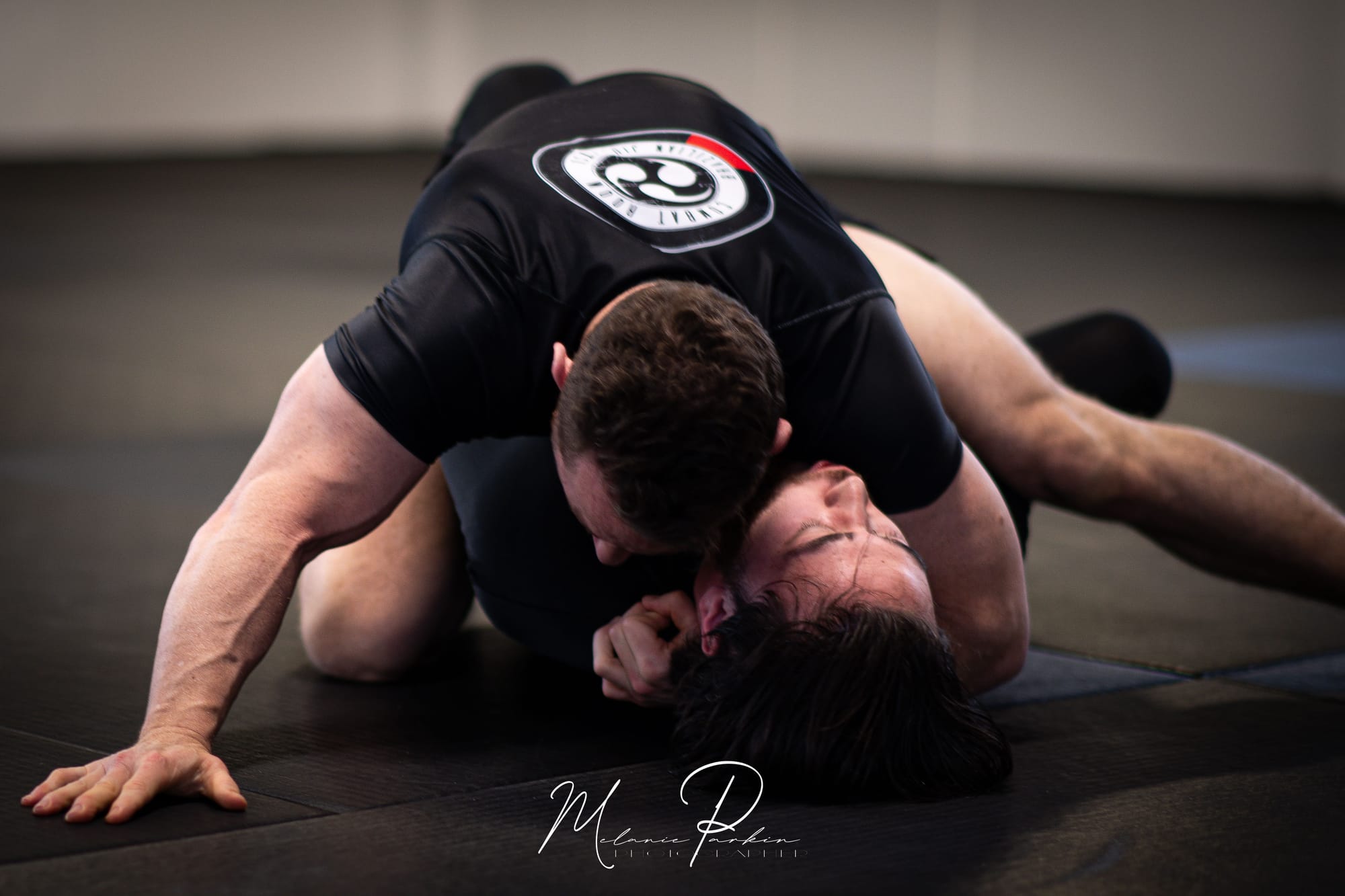
Get yourself a plan, then follow it (dont push beyond it!), and slowly increase the intensity, whether thats load, speed, complexity or overall volume.
The bigger risk is the story “my body can’t do this anymore”. As we covered in our piece on the fear avoidance model, one setback can easily become avoidance, and Levy’s work suggests our beliefs about ageing matter for how we age. The NSCA position statement on training older adults sets out explicitly to reduce the fears and barriers that keep people from lifting.
Dave
I want to tell you about Dave. He was one of my legacy clients. He’s no longer with us, but he taught me more about ageing well than any textbook. Dave started training regularly in his 60s. At 91 he lived independently, travelled often, and was always teaching a course or taking one. That included IT courses, which takes more courage than any deadlift in my opinion!
We trained three days a week on a split that covered every layer of what I call the movement pyramid:
- Stability, the foundation that makes everything else safe
- Mobility, so his joints had the range his life asked for
- Linear strength, the big patterns, loaded progressively
- Cardio systems, targeted at specific energy systems rather than just “doing cardio”
- Progressive movement, with many patterns and directions, plus dual tasking (moving while thinking)*
*That last layer has growing support: a 2025 review found that dual task exercise improved balance and mobility and reduced falls in older adults, though the evidence quality was mixed. Its also been shown to prevent cognitive decline.
Hold Dave’s life up against those predictors: fitness, strength, people, purpose, curiosity, and an attitude that his age wasn’t a stop sign. Not everyone gets dealt the same hand. But Dave showed me how much of the hand you can still play.
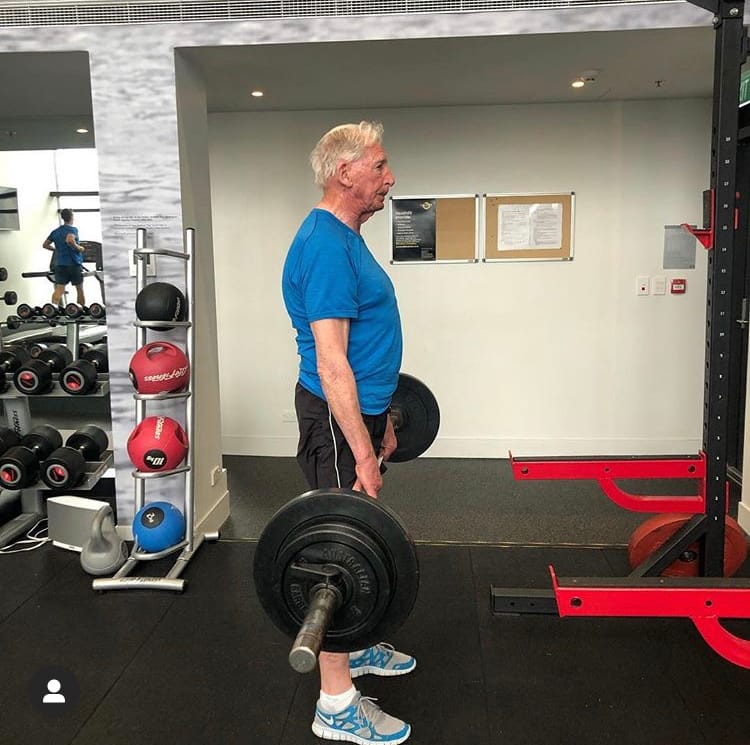
So how do we train for the next post office?
- Lift two or three times a week. Train the whole body and build load gradually, with around 30 to 60 minutes of strength work across the week.
- Add a little speed. One or two power moves per session, like med ball throws, fast step ups, or small jumps if your joints are happy. Fast on the way up, controlled on the way down.
- Train your engine. Mostly comfortable cardio, with some genuinely harder efforts mixed in.
- Be active in life and walk. Aim for 6,000 to 8,000 steps a day if you’re over 60, or 8,000 to 10,000 if you’re under.
- Do balance and functional work most sessions. Get down to the floor and back up, step in different directions, and add a thinking task while you move.
- Protect your people and your purpose. Move with friends, join a class, and learn something difficult.
- Test yourself. Try the sit and rise test every few months.
- Start where you are. If you’re new to exercise or managing a health condition, check in with your GP and start with supervised sessions. If you’re 65 or over (55 or over for Māori and Pacific peoples), ACC’s Live Stronger for Longer lists approved strength and balance classes around the country.
So Megan, that’s how we train for it. Will I be sick of you by then? Ask me again when we’re 80 and racing each other to the second post office. I’ll bring dessert.