Face Pulls & Feel Good
“How great are facepulls?” I yelled at Carl across the gym.
He looked back at me confused, and nodded the nod of “uh huh Megan, what are you on about now?”
Let me explain. I’d had my session with Carl, and we’d done bench. Heavy, heavy bench, wherein I set a new PB - 65kg. Was it pretty? No. Did the weight go up? Hell yeah it did.
I decided a PB was enough for the day and went to get a coffee to fill in time before physio. And then, I got bored and decided more upper body would be a better way to fill in time.
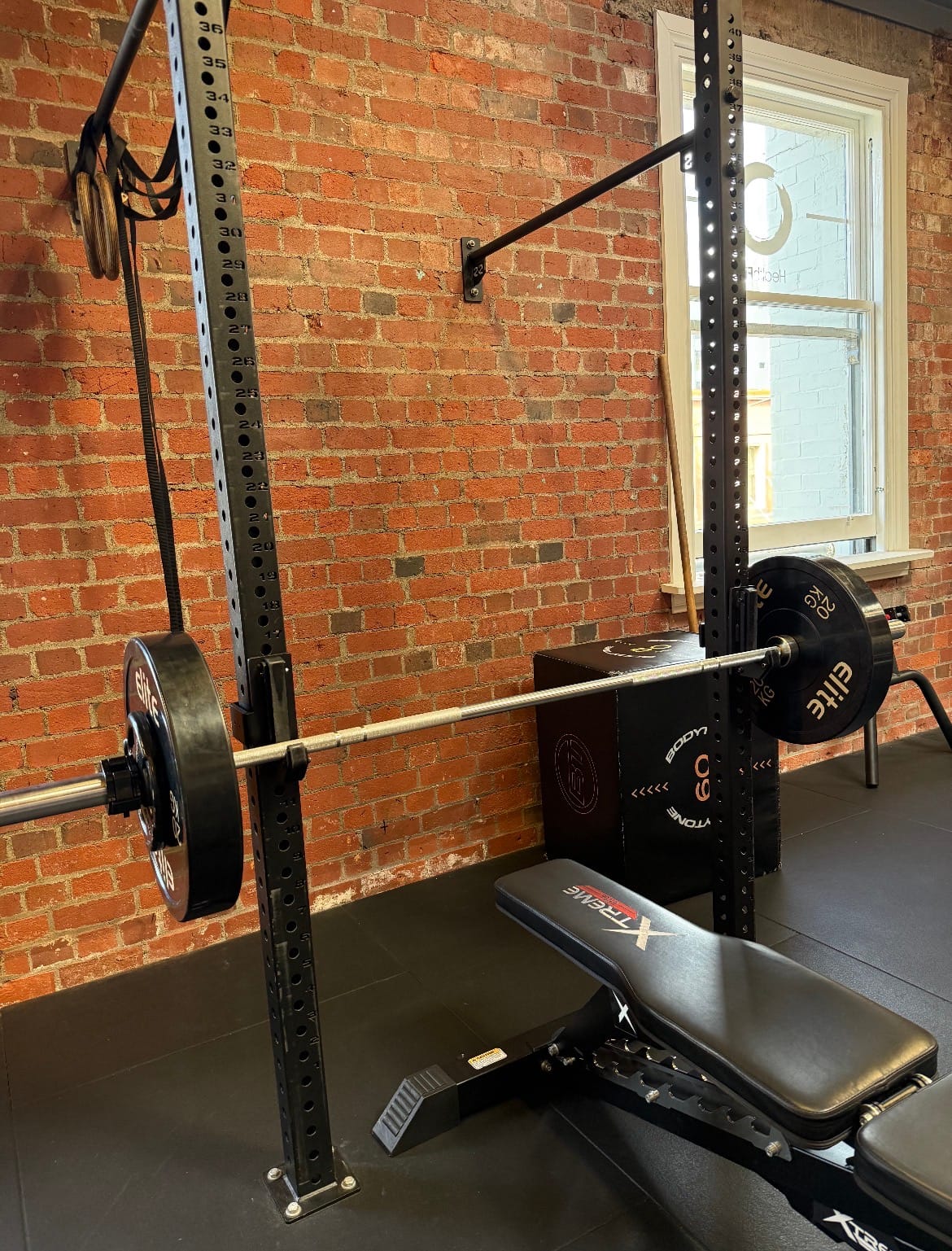
So, a cable row, pulldowns, shoulder and lateral raises were all on the menu. And then I remembered I had seen a tiktok about facepulls and I wasn’t sure I had ever done one. And if I had, it had been a good long while.
I threw a lightish weight on a cable, set it at the right height and pulled the rope to my face. Oh, would you look at that? Look how my shoulders can move. Look how my traps and delts engage. On the second set I took the weight up a little, but kept it light. I did 14 reps of those things.
We spend a lot of time hunched over in the twenty-first century. Over our phones and laptops. I have a massage gun that has a pre-programmed setting for “tech neck” as though massage will fix the damage technology is doing to our bodies. Honestly, I love a massage, but it won’t fix my terrible posture while doomscrolling for hours.
Bench, with all that work on the pecs, can also make you want to fold inward. Normally I would warm up for it using a stretchy band to open my chest up, pulling my shoulders back and down. And I did, today. But I was unprepared for how great pulling a lightish weight to my face would feel after all that work.
The internet tells me that facepulls are great for my shoulder health and I believe it. But mostly, I was delighted to discover a new way to move my body that feels good.
I spent most of my life thinking exercise was a punishment for my body not fitting arbitrary beauty ideals. I’d flog it with excessive cardio, which would last for a few weeks before I hated it, injured myself or ran out of time, and quit. Eventually I just stopped thinking moving was for me.
Lifting weights has changed every little bit of my health, and I am tremendously grateful for that. But becoming a person who will wander back into the gym for 30 minutes more ‘punishment’ because it will feel good is still - after 6 years - deeply surprising to me.
We get asked a lot how to stay consistent in the gym - how to build a routine, to show up for yourself. And there are a lot of neuroscience answers to that question. But the answer that I think has worked for me is both more simple and vastly more complicated.
Find a way that moving consistently feels better than not moving. Let your body do the work of motivating you. Today that was a lightish weight on a cable that made my shoulders feel like they could actually move. Next time I'll probably do them again.
As I type this, the DOMS is kicking in and I have slight regret in picking up a heavier than necessary dumbbell for shoulder presses. But I feel strong and powerful and connected to my body.
So, Carl. How great are face pulls?
Carl here. I have to say, I do love a face pull, and for good reason. But before we get into that, let's take a moment to acknowledge that bench! When you're dealing with an injury or a niggle, it's so easy to pour all your gym energy into managing the problem rather than chasing a performance outcome. Proving to yourself that you're still capable? That's exactly what Megan did and it matters more than people realise.
Megan's account is sapiential, my job is to explore the experience through science. So let's do that!
The Science of "That Felt Good":
Megan's face pull moment is a perfect case study in what the research actually says about long-term exercise adherence, and spoiler… it has very little to do with discipline.
Affective Response Predicts Future Behaviour
The feeling Megan describes, that shoulder-opening, "oh wow my body can do this" moment actually has a name in the literature! It's called affective response to exercise, and it turns out to be one of the strongest predictors of whether someone comes back, how cool?!
A landmark study by Ekkekakis et al. (2011) found that how exercise ‘feels’ during and immediately after a session is a far stronger predictor of future participation than intentions, goals, or knowledge about health benefits. Not how hard you worked, not how many calories you burned but how it felt!
This has been replicated consistently. Williams et al. (2012) demonstrated that positive affective responses during moderate-intensity exercise predicted physical activity behaviour up to 6 and 12 months later even after controlling for past behaviour and self-efficacy. Your body is literally logging the experience and voting on whether to return!
The Problem With "No Pain, No Gain" - I personally hate this saying!
This is why the traditional punishing approach to exercise Megan describes, excessive cardio as body punishment, is not just psychologically damaging, it's physiologically self-defeating! When exercise consistently produces negative affect (think discomfort, dread, shame), the brain encodes it as a threat rather than a reward.
Ekkekakis, Hall & Petruzzello (2008) showed that exercise performed above the ventilatory threshold (that gasping, flogging intensity) reliably produces negative affect in the majority of people, particularly those newer to exercise. The implication is not great. Programmes designed around intensity for beginners are likely to produce dropouts, not fitness.
Dopamine, novelty, and the Face Pull Effect.
There's also something specific happening in Megan's 'I've never done this before' moment worth unpacking. Novelty, it turns out, is a potent dopaminergic stimulus. Bunzeck & Düzel (2006) demonstrated that novel stimuli activate the substantia nigra/ventral tegmental area, the dopaminergic midbrain involved in both reward and novelty processing, more strongly than familiar ones. The brain is, quite literally, wired to find new things rewarding.
In practical terms, trying a new movement isn't just fun, it's neurologically rewarding in a way that your 47th session on the same treadmill programme simply isn't. The brain is wired to find exploration intrinsically motivating. This is part of why Megan wandered back into the gym and found something new, and why that something new felt disproportionately good.
Consistency Is an Outcome, Not a Strategy
Here's the reframe the research supports: consistency isn't just something you impose on yourself through willpower and scheduling, it's something that emerges when the activity is rewarding enough to repeat.
Teixeira et al. (2012) conducted a systematic review finding that autonomous motivation (doing something because it feels good, aligns with your identity, or is genuinely enjoyable) predicted long-term exercise adherence far better than controlled motivation (guilt, obligation, external pressure). The person flogging themselves to the gym out of shame tends to quit. The person who goes because their shoulders feel amazing tends not to.
This maps directly onto the previously mentioned Self-Determination Theory (Deci & Ryan), one of the most robustly supported frameworks in behavioural psychology, which identifies autonomy, competence, and relatedness as the core drivers of sustained motivation. Megan's face pull hits all three: she chose it herself (autonomy), she felt her body do something new well (competence), and she hollered about it across the gym to Carl (relatedness).
The Application - what to actually do!
If you're trying to build consistency, the research suggests asking a different question. Not "how do I make myself go to the gym?" but "what kind of movement feels good enough that I'd go back?"
That might be face pulls. It might be a barbell. It might be dancing badly in your living room. The modality matters far less than the affective experience. Find the thing that makes your body feel capable, strong, and alive, and your nervous system will do the rest of the motivational work for you.
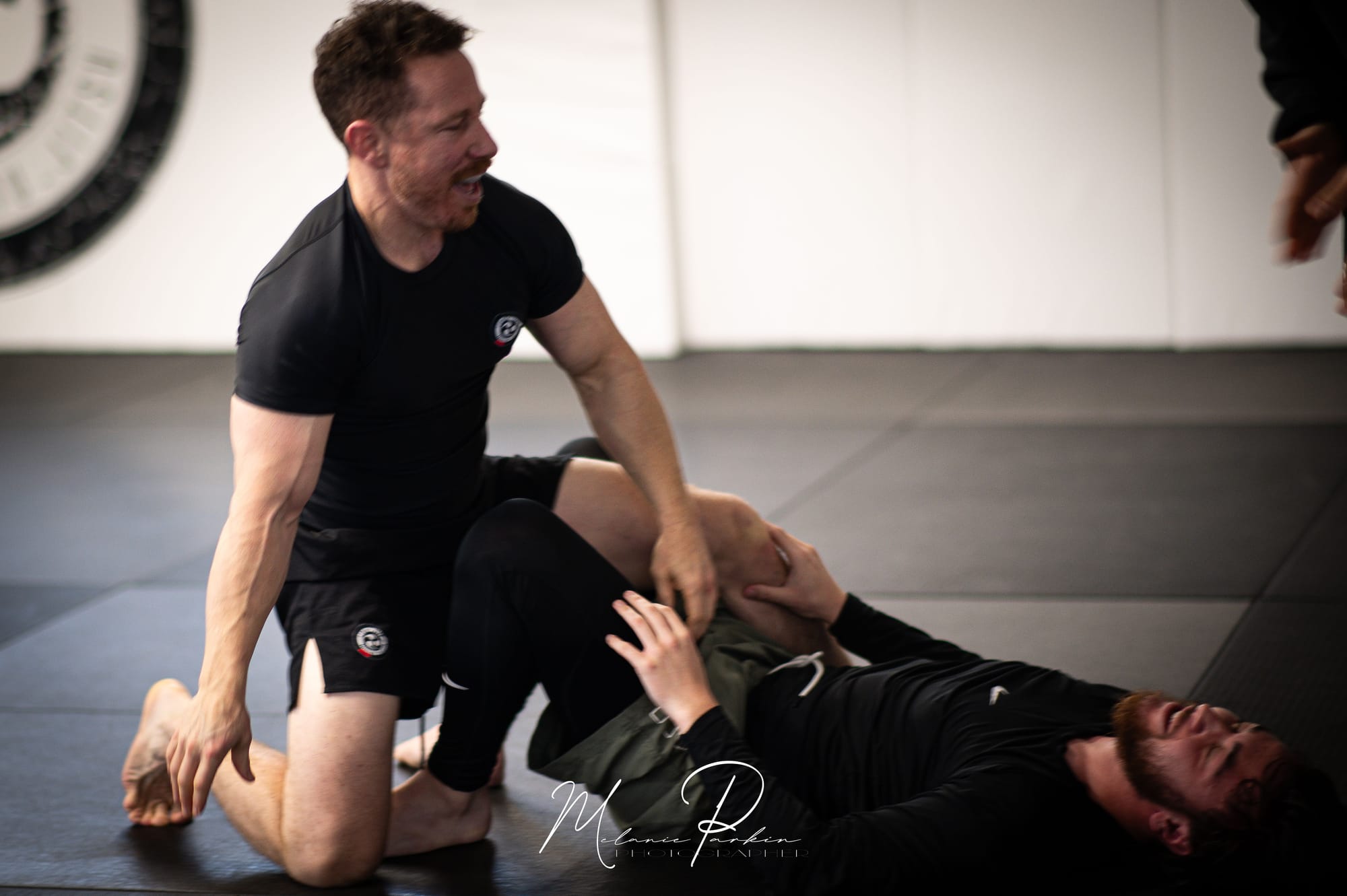
Megan didn't just decide to be consistent. She also found something that felt good. Six years later, she's still smashing it, and with some pretty forgivable barriers too!
My take-home is to find the fun. Play, experiment, try the face pull you saw on TikTok. But do it within a strong, consistent programme that's anchored to your goals. Structure gives the play somewhere to land.
Did you find our word of the week? If so, please feel free to comment on our post. On that note, we are coming up to one year soon! What shall we do to celebrate?!
Also, we do this for the love and to create positive change, so if you feel like this newsletter is useful, please share it with your friends :)