But why?
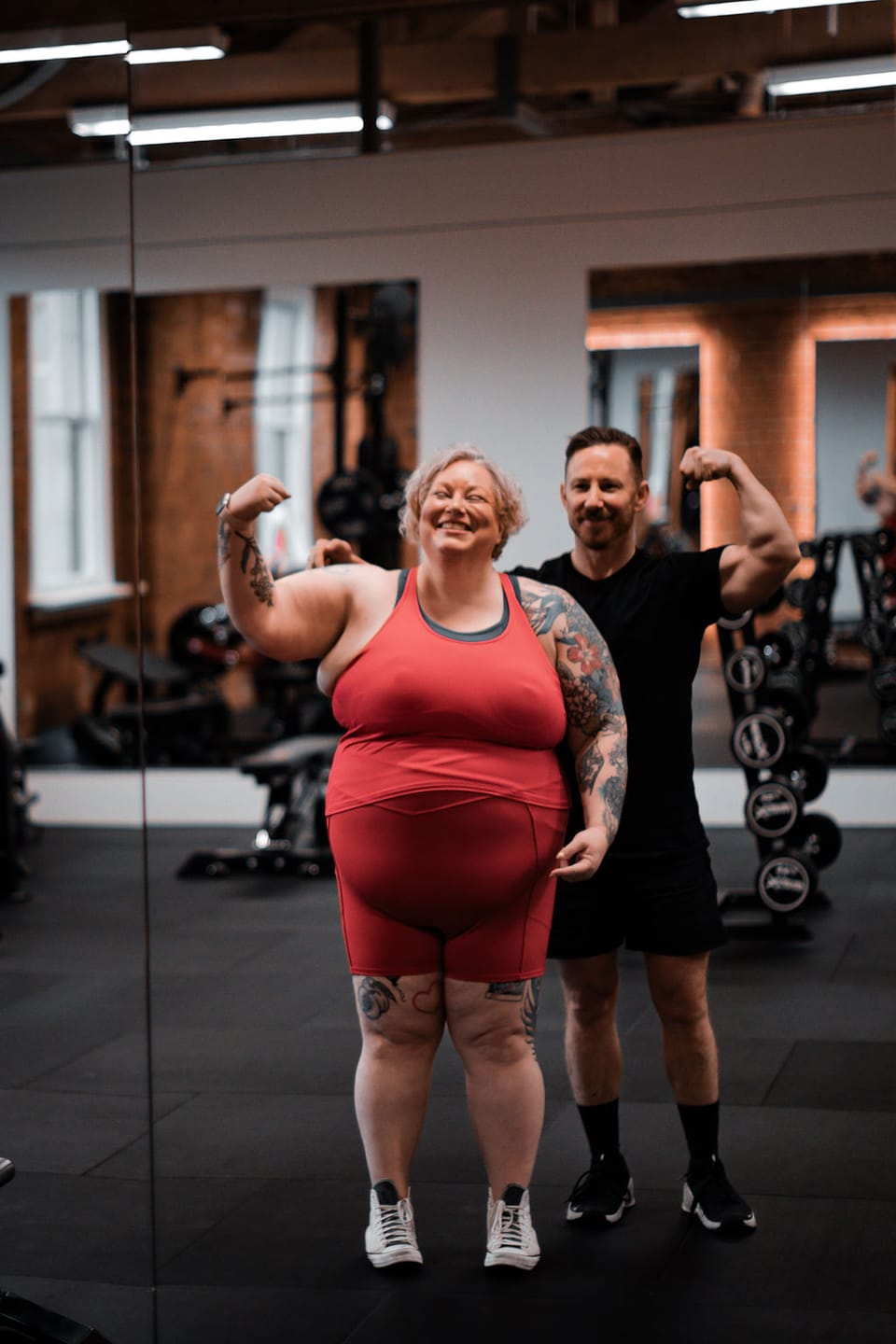
Hi G&B fam. Happy Saturday! Megan here. A bit of admin to kick things off this week.
Did you know you can email us? Please do - we'd love to hear your feedback, questions, and above all, the amazing things you're getting up to in the gym. Hit us up with your PRs.
Also, because Carl and I are such generous, wonderful people, we've added a couple of things to the website. We've collated the injury series, and put together a list of our favourite fitness social media accounts - already filtered for "pro-science and anti-fat-shaming." You're welcome. We will add more as we go.
In return, if you have a spare 5 minutes this Easter, can we ask a favour? To make sure this newsletter is actually useful for you, it would mean a lot if you could fill out this quick survey.
|
OK, on with this week's topic! One of the questions I get asked, usually after I've bored someone about strength training for too long, is: "But why?"
"Why do you like this thing that is objectively hard and sometimes painful?"
Well, to paraphrase Doechii, I like gettin' muscles, I like sweating, I like to lift. (I also like day drinking and day parties and Hollywood.)
The "why" is kind of hard to answer, beyond "this scratches an itch I didn't know I had, it shuts my brain up, and it makes my body move easier and feel better. Oh, and have you seen my biceps?"
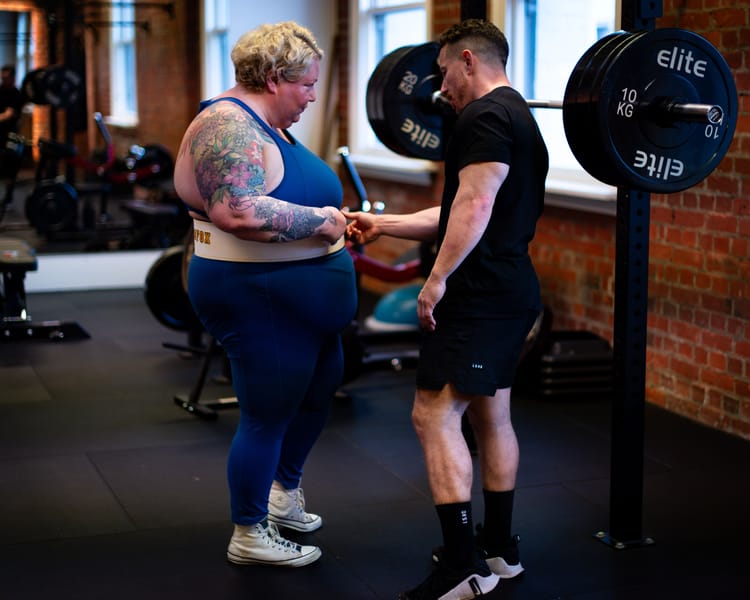
But here's a concrete example. On the weekend, I lifted properly heavy for the first time in ages. I did 3 sets of bench at close to my max, and followed it up with lateral raises and Arnold press, and a heavy bicep/hammer curl combo I had seen on Instagram.
By the end of the workout, I was properly wiped out - my muscles were shaky and spent. But I felt great, like I could lift a car over my head.
And when I stood up to leave, for the first time in months, I wasn't limping. I was walking with a normal gait.
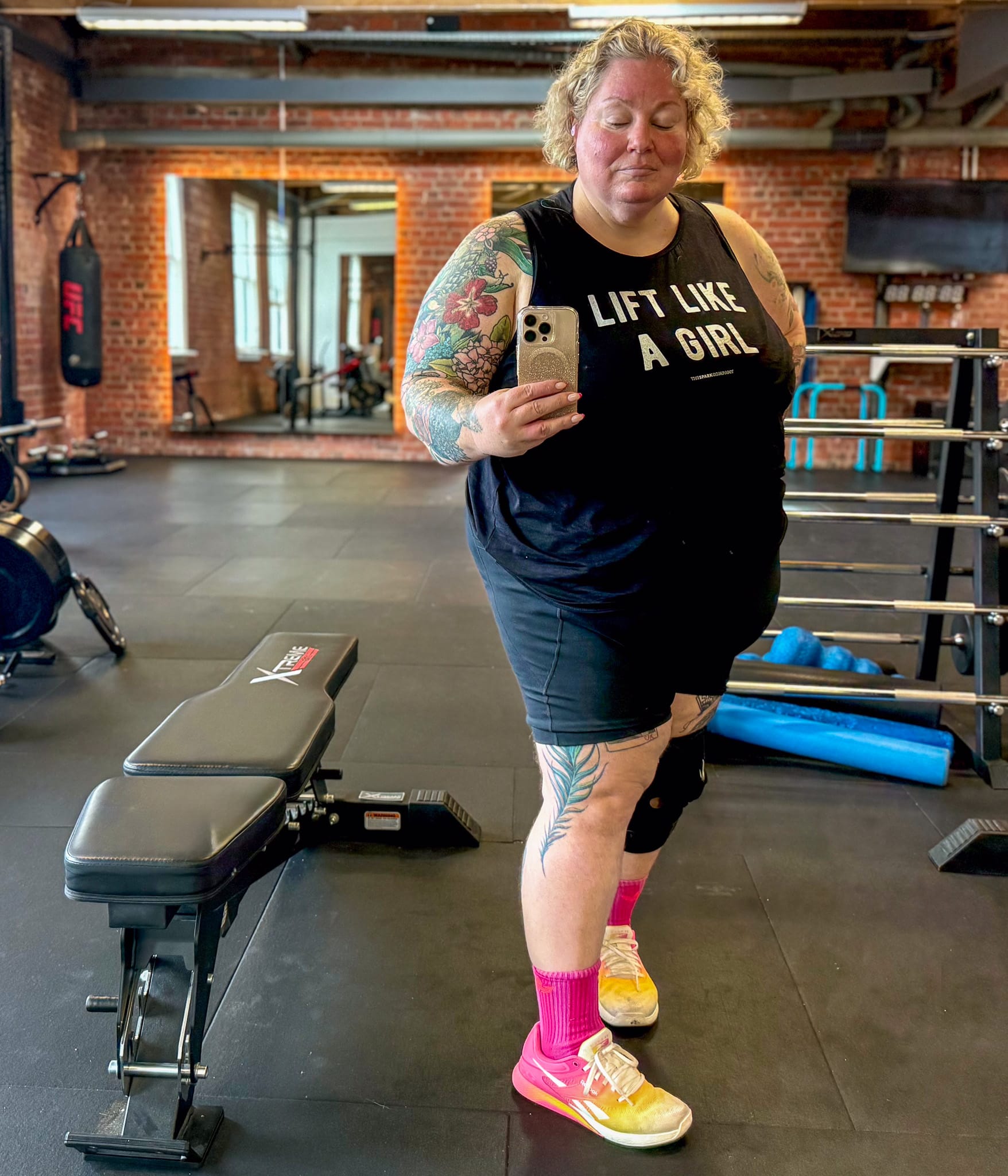
Carl is probably going to talk about neural adaptation, and the nervous system, and guarding, and a bunch of very impressive terms.
But I like the bit where, for a moment there, I didn't feel broken.
Whatever they look like, bodies not being broken matters deeply to me. We're living in a bizarre time for body positivity. Celebrities and influencers and co-workers are slimming down aggressively, and it is hard not to feel like we have to do the same.
It's possible - necessary, I think - to be body positive and still not always feel great about your body. Especially when you're being bombarded with the kind of culture we're living in, not to mention ads for "peptides" on the internet.
Despite what the internet would have you believe, two things can be true at once. It's really hard to look after something you have been taught to hate, but you can care for your body and be frustrated about it at the same time.
Lifting weights - especially heavy ones - helps me land more on the "taking care of my body" side of the equation than the "being frustrated my hips aren't very mobile" side.
And it also gives me the tools to help with some of those frustrations. Not just the hip mobility, but also the not feeling great about my body.
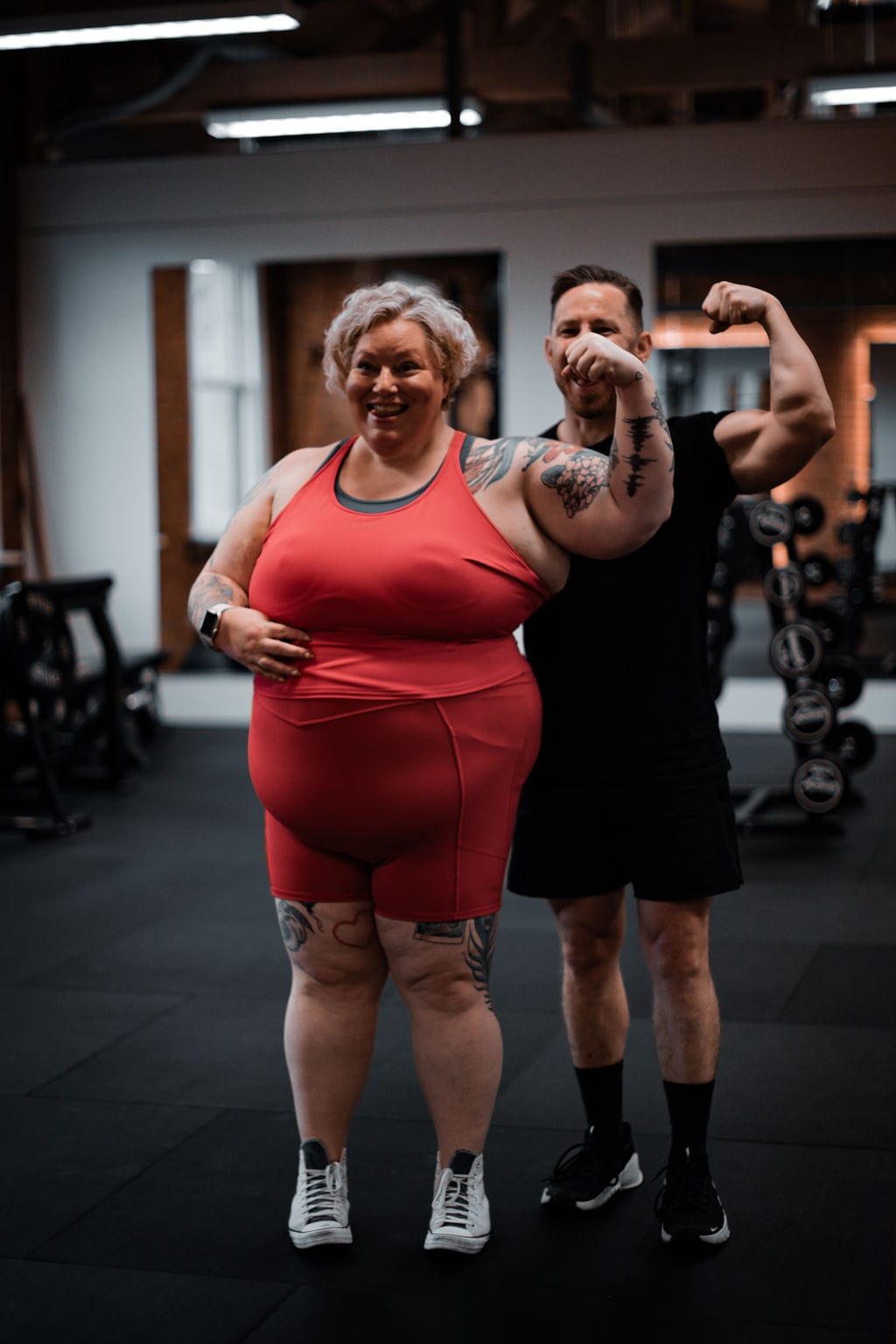
Again, have you seen my biceps? They're epic, and they can lift a serious number of drinks at the day parties. My body is powerful and badass, even if it's a little below capacity at the moment.
Bench press magically took away my limp for half an hour. Not because it was fixed, but because the weights reminded my body how not-broken it is. That's why I like it.
Carl here - What you felt there is something I see often. Your body didn’t suddenly “fix” itself mid-session. But it did change how it was organising itself. Less guarding, more muscular recruitment, better coordination, more confidence to move. And for a short window, things just worked.
Now, putting the nerd hat back on.
There is a well-established model in pain science called gate control theory (Melzack and Wall, 1965). The simple version is that pain isn’t just a signal coming from the body, it is something the nervous system actively turns up or down.
A useful way to think about it is like a megaphone. When the system detects threat, uncertainty, or vulnerability, it turns the megaphone on. The pain signal gets amplified, louder, harder to ignore. But when the system feels safer, more in control, or more capable, it starts to turn that megaphone down. The signal doesn’t necessarily disappear, but it becomes quieter, more like a background whisper than something shouting over everything else.
Movement, pressure, and muscle contraction, especially in something like heavy lifting, can help shift the system in that direction. They provide strong, clear input that says “this is okay, we can handle this,” and the nervous system responds by lowering the volume.
Also, heavy lifting has another positive effect. You’ve got high levels of muscle activation, a lot of sensory input, and a brain that is very focused on not dropping a bar on your face. All of that competes with, and can dampen, pain signals. Systematic reviews on exercise-induced hypoalgesia* show that resistance training can reliably reduce pain sensitivity in the short term (Naugle et al., 2012).
There’s also myokines - tiny chemical messengers your muscles release when you contract. They travel through your body and have all sorts of beneficial effects: reducing inflammation, supporting tissue repair, even helping with pain regulation.
There’s also a growing body of evidence showing that strength training changes how the brain perceives the body. Early strength gains are largely neural, your brain gets better at recruiting muscle and coordinating movement (Folland and Williams, 2007). But alongside that, you get increases in things like self-efficacy, body trust, and perceived capability.
Meta-analyses have shown resistance training improves both mental wellbeing and body image (Gordon et al., 2018). And this is the bit I think really matters in your story, because, for a moment, your body didn’t feel like a problem to solve. It felt like something that could do things. That “I could lift a car” feeling is your brain updating its model of what you are capable of. And when that shifts, even briefly, pain, movement, and confidence tend to shift with it.
So when you say the weights reminded your body how not-broken it is, that’s pretty close to the science. Not because anything was magically fixed, but because the system got better input and made a different decision.
You don’t have to feel amazing about your body to take care of it, you just need moments that shift you slightly toward capability.
That half hour where you walked normally matters, because those moments stack. They build your body’s evidence. And over time, the story shifts from “something is wrong with me” to “this still works… and maybe I can trust it a bit more.”
Also, for the record, I have seen the biceps. Still very compelling evidence.
* To get super nerdy, which we like here at G&B: exercise-induced hypoalgesia refers to the temporary reduction in pain sensitivity following physical activity. It occurs when exercise activates the central nervous system’s descending inhibitory pathways and stimulates the release of endogenous opioids and other neurotransmitters, which act to dampen pain signals (Koltyn, 2002; Naugle et al., 2012). EIH can affect both local regions involved in exercise and remote areas of the body, and is typically observed after moderate to vigorous aerobic or resistance exercise. While the hypoalgesic response is robust in healthy individuals, research indicates it may be diminished in people with chronic pain conditions, such as fibromyalgia or osteoarthritis (Vaegter et al., 2016). Clinically, EIH underpins the use of exercise as a non-pharmacological pain management strategy, supporting gradual engagement in activity despite pain, and is increasingly applied in rehabilitation programs.