Actually Fun!
Happy Saturday, whanau!
A short one from me (Megan) this week, for two reasons: this topic is very much Carl’s domain, and I am travelling again. Managing my knee injury, cobblestones, jet lag, and the sheer volume of walking tourism requires is basically a full-time job.
A great job. But still.
Last week, we talked about reasons to exercise, beyond weight loss. The single biggest predictor of whether you will be able to keep up an exercise routine is not aesthetics, nor is it the number in the scale or how your resting heart rate is changing.
A big question we seem to forget to ask is “is this fun?”
For most of my life, exercise was a punishment. It was the price I was meant to pay for being fat.
But it wasn’t always that way. As a kid, I loved basketball and netball. I was pretty decent at shotput and hurling that stone across the sports field felt pretty great.
But as I got older, my options seemed to shrink. I wasn’t “fit enough” for basketball anymore, and - tragically - there is no thriving adult social league for throwing rocks.
(I have checked.)
I tried Roller derby, briefly, but other than excellence at thinking up punny names, i was much more suited to being a sideline official.
“Walk,” people would tell me, as though walking doesn’t feel like a tedious trudge through the same suburbs i have been visiting for 15 years. Walking is my least favourite form of exercise, and I am baffled by people who enjoy it.
So, I will always be grateful to Nellie, my first trainer, who somehow figured out that strength training was the key to unlocking something for me.
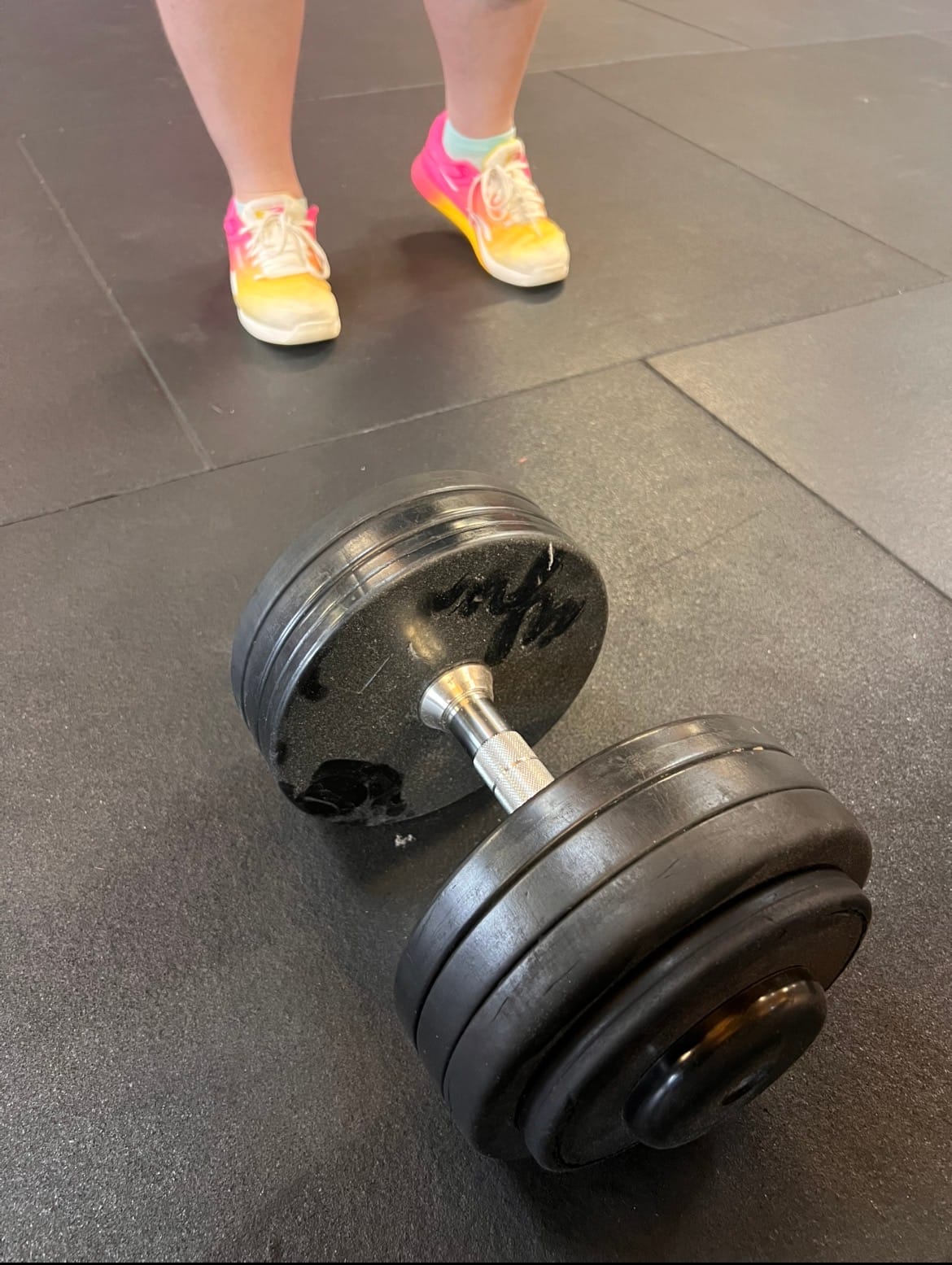
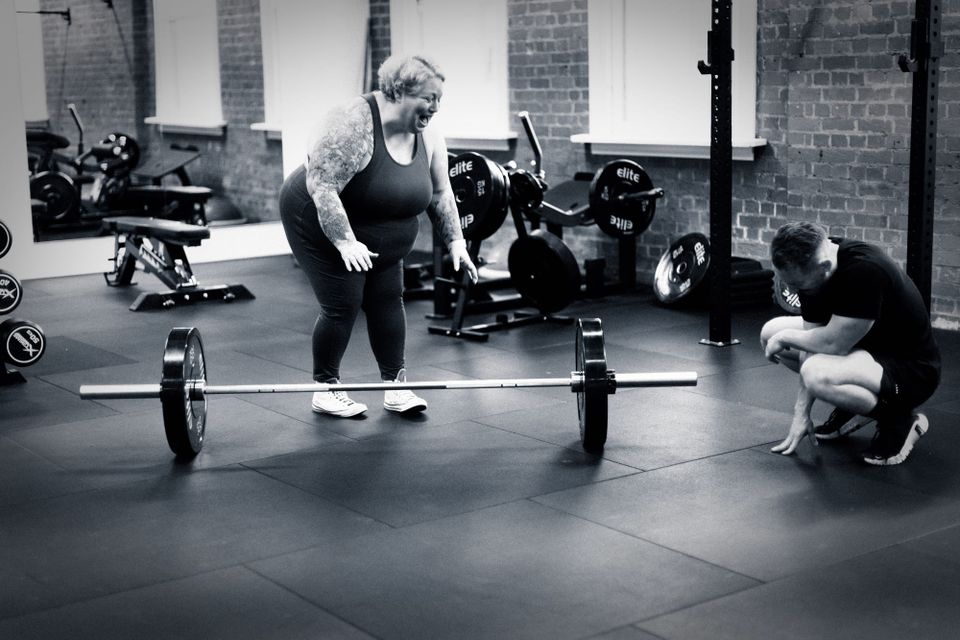
I can’t really explain why I love it - there’s probably a reason in every single newsletter we’ve published so far. I can tell you that the sound of two plates smacking together on the end of a barbell is like music to me.
There is just something inherently fun to me about picking things up and putting them down again. And learning that has opened the door to so many more activities that it turns out, are also fun.
I say that Nellie “somehow” figured that out, but I am pretty sure there was method to her madness. So, that’s your cue, Carl. How do you figure that out with a client? And if someone doesn’t have access to a resource like you, what might they do?
Carl here...
This is actually something I’m really passionate about!
First up, fun isn’t fluffy and easy, it can be super challenging and very personal! If something feels good in some way, you’re far more likely to keep doing it, and consistency beats the “perfect programme” every single time.
There’s actually some solid research behind this. In Self-Determination Theory (Deci & Ryan), long-term motivation is driven by three things:
- Autonomy (you chose it).
- Competence (you feel like you’re getting better)
- Relatedness (you feel connected to people, environment, or even yourself).
When your training ticks those boxes, it tends to feel good to do, not just good after.
The problem with asking “is this fun?” is that it’s a deceptively simple question. Fun isn’t just one thing, it’s a mix of challenge, novelty, progress, mastery, social connection, sensory satisfaction, and even a bit of suffering. That “that was grim… but also kind of great” feeling absolutely counts. There’s also the idea of Flow State (Csikszentmihalyi), where enjoyment comes from being just challenged enough, not bored and not overwhelmed. That sweet spot is often where people accidentally become consistent.
So Megan loving strength training isn’t random. It likely gives clear feedback, tangible progress, a bit of edge, and yes, even the sound and feel of lifting play into it. On the flip side, if you’re waiting for exercise to feel like Netflix and snacks, we might be waiting a while. Fun and challenge tend to coexist, sometimes the enjoyment shows up during, sometimes after, and sometimes later when you look back and feel glad you did it. All three count.
When I’m working with someone, it’s less about having the perfect programme and more about structured curiosity. I’m paying attention to what they naturally lean towards, what they complain about, when they lose track of time, and what they talk about afterwards. From there, we run small experiments. Not “here’s your forever plan,” but “let’s try this for a couple of weeks and see what sticks.”
And that enjoyment piece isn’t just a nice bonus, it actually matters. Research in exercise psychology consistently shows that how you feel about an impending session, during and after a session, influences whether you come back. Positive experiences don’t just make a session better in the moment, they shape your intention to train again and help build longer-term habits. It’s not as simple as “fun equals adherence,” but enjoyment is a key part of the chain that keeps people showing up.
A great example of this is my sessions with Al. He’s got a background in ball sports, along with a history of both medical and mechanical barriers, so we’ve had to be a bit creative over the years.
For nearly 20 years now, we’ve started sessions with a hand tennis game and a “kick the ball in the box” game. Both are fully standardised, with rules and scoring systems, and yes, there’s a weekly updated tally that neither of us takes lightly. In between those games, we slot in the more structured lifting and conditioning work.
Out of curiosity, one day, we actually measured the sessions and compared them to a more traditional workout. Surprisingly, we burned about 30% more energy during the games-based session. What we didn’t measure, though, was everything else that comes with it, the complexity of movement, the cognitive demand, reaction time, mobility, stability, and probably most importantly, the enjoyment.
And to zoom out for a second, he’s been doing this consistently for over 20 years, which kind of tells you everything you need to know.
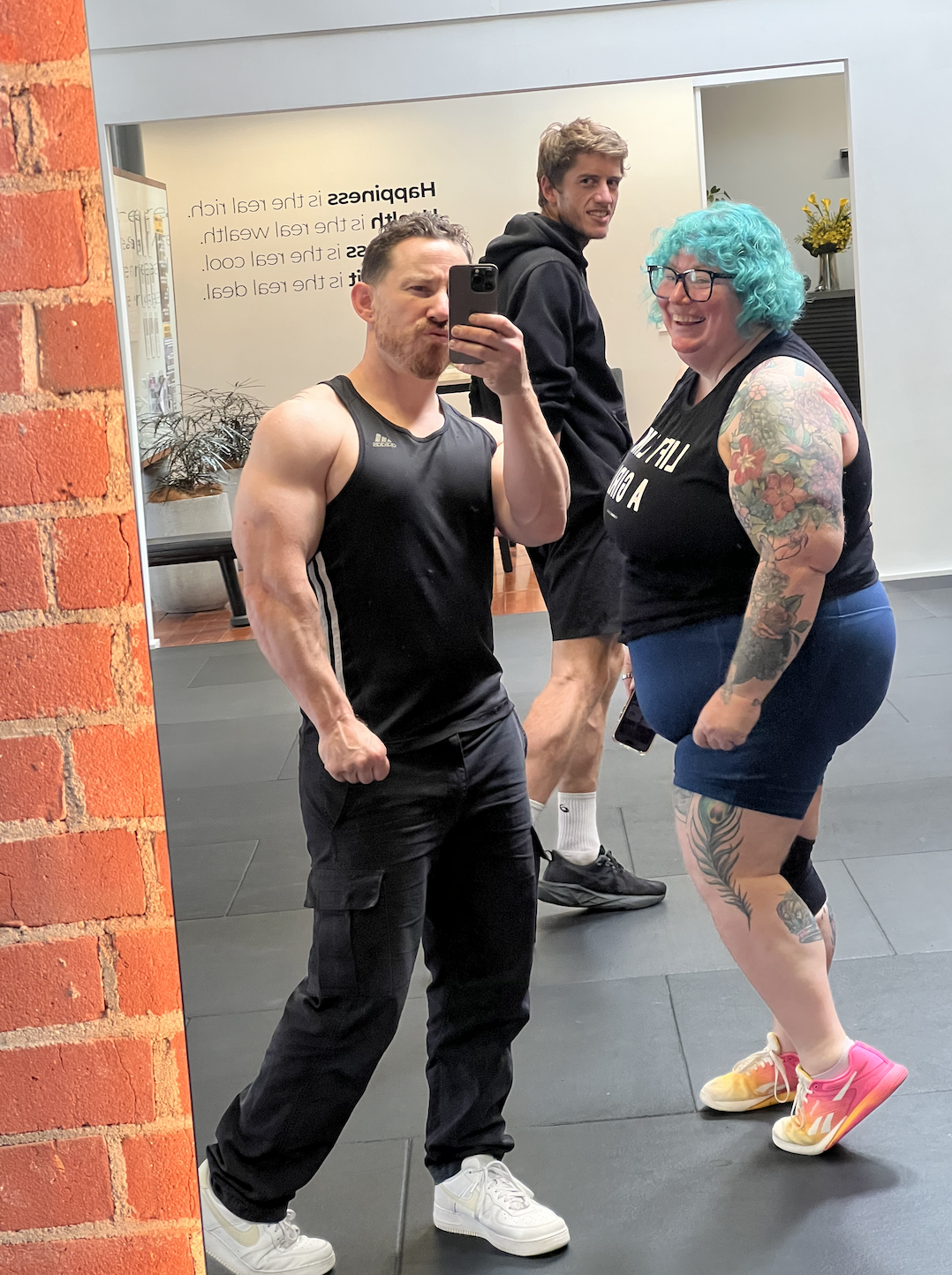
If you don’t have a coach, you can still approach this in a simple, practical way. After each session, do a quick “fun audit” and rate enjoyment, challenge, and how you felt afterwards out of 10. Then ask yourself if you’d do it again next week. If it’s consistently low across the board, it’s probably not worth forcing. Just as importantly, ask “what part of that did I enjoy?” rather than just whether you enjoyed it. That gives you direction. You might realise you enjoy learning skills, or zoning out and sweating, or being around people, or having a competitive edge. Each of those points you toward different types of training.
It’s also worth checking the level of friction. There’s a difference between dreading something and just feeling a bit neutral or lazy before starting. Dread usually means it’s the wrong fit, whereas neutral is just being human. From there, you can build what I’d call a “fun stack” by combining different elements. Maybe you have something you enjoy during, something you enjoy after, and something you enjoy because of the people involved. That combination is often far more sustainable than trying to find one perfect thing. This is what I do with Al, we actually laugh about this.
Final thought. You’re not trying to find the best exercise, you’re trying to find the thing, or things, you’ll actually keep showing up for. Megan found it in lifting, others find it in walking, sport, hiking, dancing, or yes, even running, which I still don’t fully understand but respect. The goal isn’t to force yourself into someone else’s version of fun, it’s to get curious enough to find your own!
Enjoy your weekend!