
Gains and Brains: New year, very much the same us
Happy new year, friends! I (Megan) remain of the opinion that phrase is acceptable - though probably best accompanied by a sarcastically raised eyebrow - well into January.
We have a treat this week! A little less of my blathering, and definitely none of that New Year New You bollocks that abounds around now. We asked lifter, journalist and all round good egg Amberleigh Jack to grace us with some words. And boy did she. And she’s set us up nicely for a lil series on injury and recovery.
(Got a question you’d like answered, or a topic you’d like ruminated on? You can email us.) Here’s Amberleigh:
A little over a month ago I PRd three of my lifts, scrubbed my floor mats, oiled my barbell and locked up my gym before heading in for a fairly major, planned surgery.
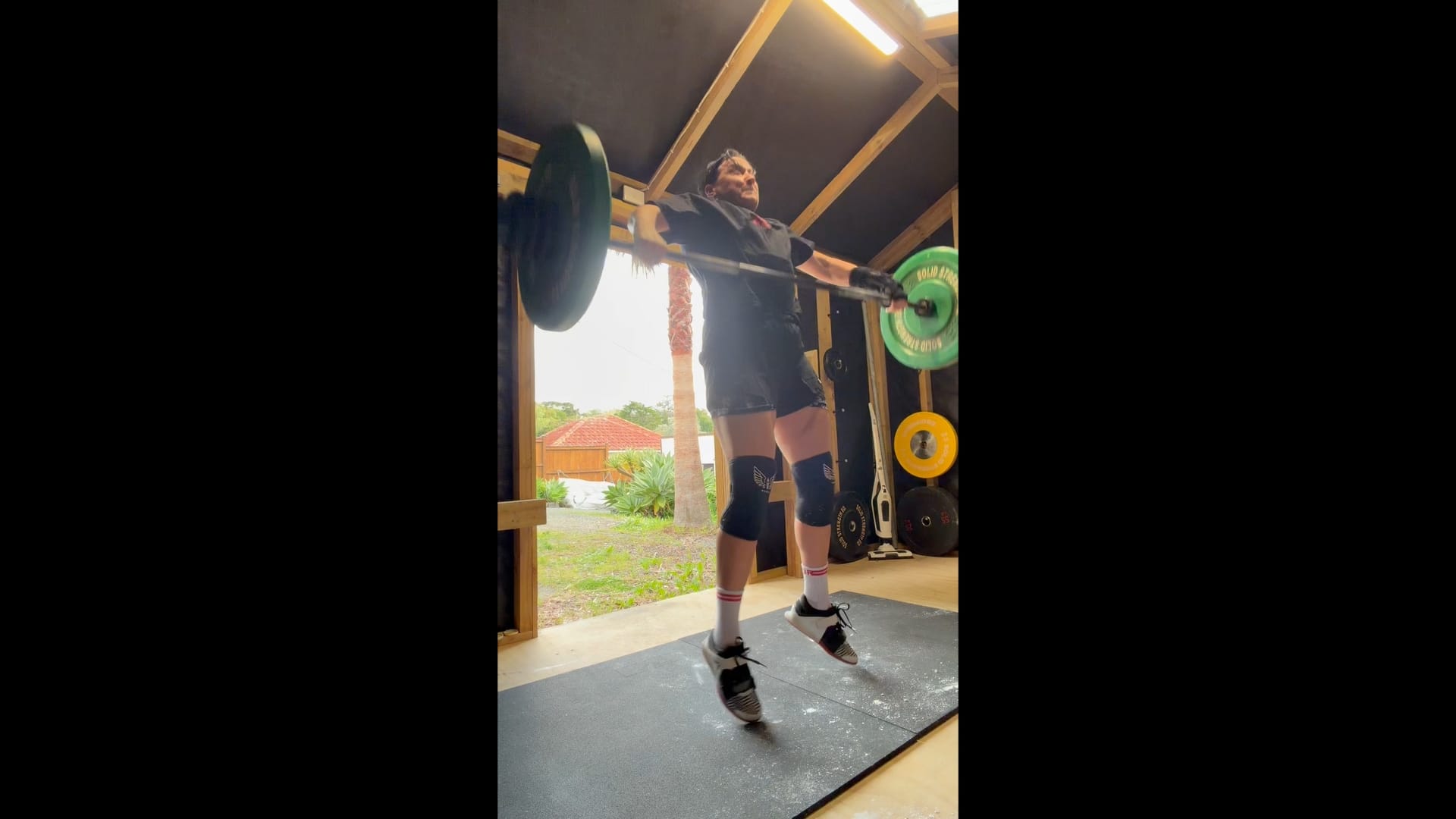
As I’m writing, I’m five weeks post-op with a handful of incision scars on my stomach. I’m healed enough for frustration to be setting in, but not enough to feel like I’ll ever be able to brace my core or stretch into a cobra pose again.
During one of my many disheartening and dark recovery days, Megan offered me an out from the monotony. Which is why I’m here, penning a guest column about lifting at a time when picking up anything much heavier than my cat feels like an unattainable goal.
In a few weeks, though, I’m hoping to be cleared to begin what will be the toughest part of recovery: The slow, frustrating slog of easing my way back to full strength and capacity.
I’ve had enough fractures, torn ligaments and “traumatic fingertips amputations” (in case you’re ever tempted, I don’t recommend sticking your hand in a lawnmower) to know rehab patience is definitely not a strength of mine. I only recently returned to consistent training last year after the discouragement and anxiety of starting again post-injury saw me leaving the gym one day and just never really returning.
So this time I’m reminding myself that one reason we love this crazy world of strength training is because it’s hard. That no lifting journey is linear. That the failures, frustration and tears while learning to move our body in complex ways make us realise we’re capable of doing something truly badass. That the feeling of standing up a lift and realising that this time it felt natural only comes after a lot of time spent feeling like you’ll never “get it”.
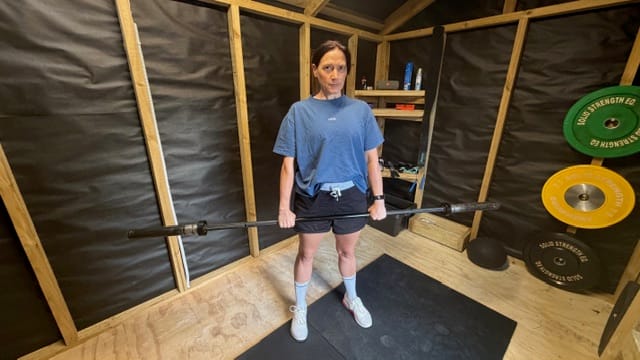
This next phase for me? That’s just a different “hard”. One that requires plenty of patience and willingness to go slow. My current deadlift isn’t the one I was so proud of grinding up in November. It’s the half load of washing I finally felt comfortable picking up this week.
In the hope of motivating myself, I’ve set some hefty goals this year. I’m keen to enter my first powerlifting competition (inspired largely by the recent badassery of Megan and Carl) and I’ll actually go for that novice weightlifting meet I’ve been telling myself I’ll do every year. Finally, in the hopes that this surgery will finally rid me of chronic pain for years, I’m keen to put these mid-40s joints to the test and relearn childhood flips enough to sign up for a masters gymnastics competition in a year.
But first, I’ve got to survive that brutal starting over phase. My plans look great on paper. I’ll have the perfect opportunity to dial in mobility and technique without the distraction of moving heavy weight at the same time. I’ll listen to my body, take it slow and not be hard on myself. I’ll do all the things that sound perfectly achievable until I’m actually in the moment and realising, once again, that being patient and giving myself grace is not my forté.
But again, that’s why we put ourselves through the highs and lows of picking up heavy things, right? Because it’s hard.
And when your comfort zone has become moving a barbell with the music up loud, embracing the “easy, light and slow” part of the journey can be the ultimate test of stepping outside of it, right?
Every sojourn to a great lift began with an empty bar, after all.
I am dreading it, though.
So, Carl, what’s the key to surviving the frustrating slog of returning to the gym after an extended break? And how do we do it without breaking our body or mind?
Carl here
Before getting into the psychological tools, it helps to anchor yourself in some 'gainz' science. If you've been there before, you have a speedy return advantage!
Research shows that people who have trained before regain strength faster than beginners because:
- Muscles retain changes at the protein level that make rebuilding easier
- The nervous system remembers movement patterns
- Muscle structure supports faster regrowth when training resumes
This means the work you are doing now is not wasted or symbolic. It is waking something back up and you will be back sooner than it took you to get to your peak!
Before we get to the mind, and keeping the above science in mind. Progressive overload is the most important thing to consider when returning. Meaning, slow and steady increases in total volume (meaning sets, reps, load, frequency and intensity). Let your coach guide this please! You will really want to push to get back quickly, but in reality, it will probably lead to breaking yourself instead, which will not help your body or mind!
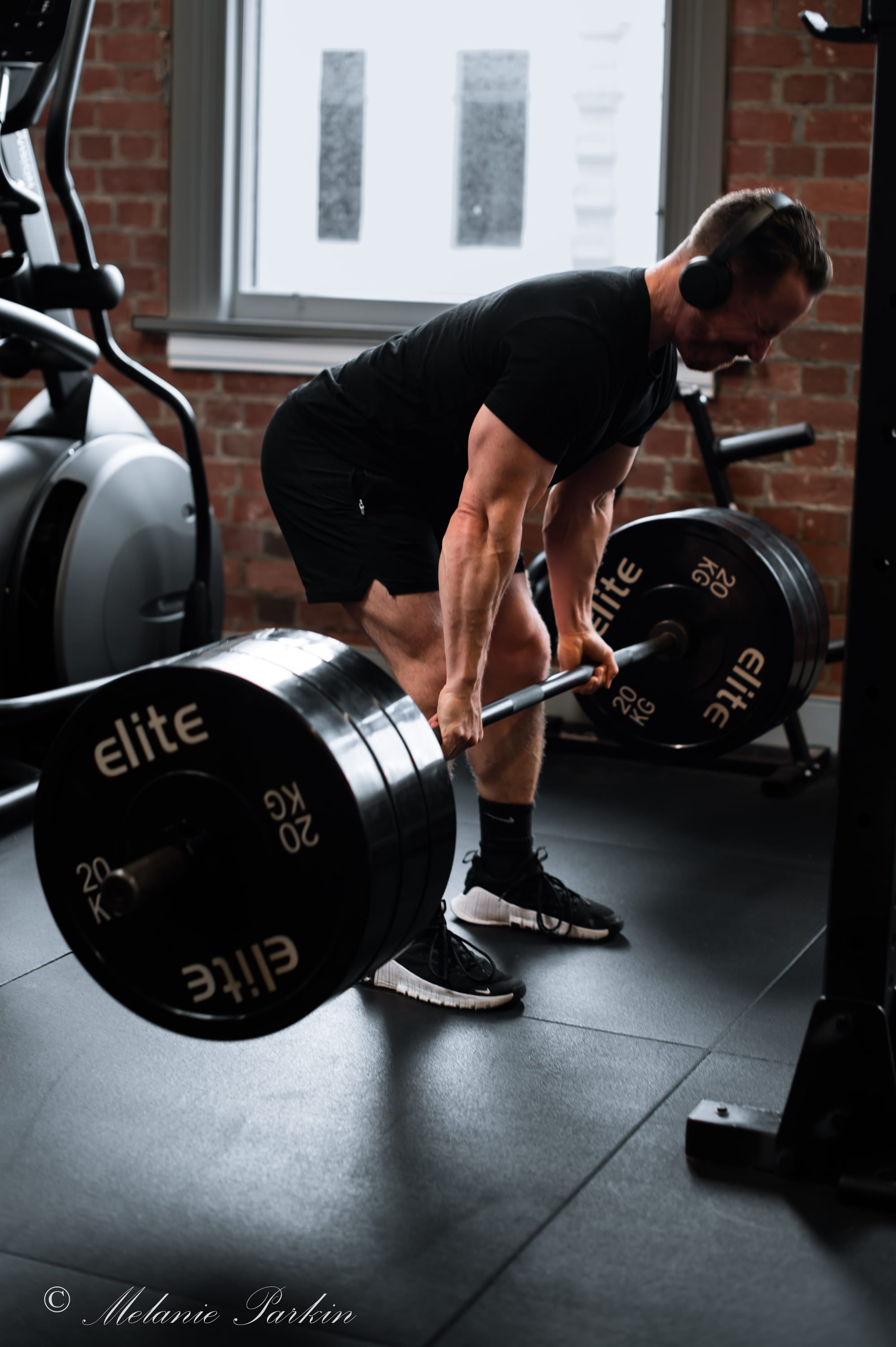
In terms of supporting your mental fortitude, I come back to the same tool I've mentioned before. Reframing.
Reframing takes practice, but the more you practice, the more your brain rewires itself to become helpful! You become more positive and resilient and you actually get more out of life. It can help you manage knee-jerk responses and be measured and consistent.
Before you consider this however, it all starts with awareness. Practice catching these unhelpful thoughts and note them. Write them if you find it useful (I do).
Here are some real-world narratives that are common, with a reframe and practical tools. Hopefully, at least one resonates.
1. “This feels pointless because it’s so light”
When you are used to lifting heavy, light work can feel embarrassing, boring, or meaningless.
Reframe it like this:
Light training often feels like going through the motions.” It's practice for your best performance". Despite being ‘light’ compared to what you are used to, it is still relatively heavy for your neuromuscular system. meaning, it's light compared to what you used to lift, but it's still heavy for your system and will still facilitate progress.
Right now, your job is :
- Restore confidence
- Rebuild trust in your body
- Accumulate successful sessions - consistency trumps intensity (that's inconsistent)
Science supports that skill, coordination, and confidence return faster when fatigue and threat are low.
Practical tool:
Before each session, define one goal that has less to do with weight:
- “Move smoothly”
- “Leave feeling better than I arrived”
- “Practice perfecting the movement”
- "Get that mind to muscle connection"
If you meet that goal, celebrate that!
2. Comparing yourself to your past self
This is one of the biggest mental traps and one I hear a lot, in injured and non-injured clients.
You remember smashing out a personal record. Now you are struggling with movements that used to be warm-ups. That contrast can feel crushing. Literally my experience in my big deadlift return last year!
Reframe it like this:
Your past self is not your competition and that person did not disappear. They are the reason your body is primed to rebuild faster now.
Practical tool:
Create two timelines in your head:
- Now: recovery and rebuilding (building a rock-solid foundation)
- Soon: performance and intensity
They are different phases with different goals. Mixing them leads to frustration.
3. Fear of reinjury or “breaking something”
After surgery or injury, it is common to feel nervous about pushing at all. This can show up as hesitation, stiffness, or avoiding movements you know you will eventually need. Please get professional guidance (a physio, trainer or specialist), this will help decrease anxiety around movement.
Reframe it like this:
Confidence returns through successful and graded exposure, not reassurance.
Your body learns safety by doing movements that feel manageable and end well.
Practical tool:
Use a 'confidence ladder':
- Start with movements you are 100% sure you can complete
- Increase complexity before intensity
- Let confidence lag slightly behind capability
If something feels scary, make it smaller, slower, or lighter.
4. All-or-nothing thinking
This often sounds like:
- “If I can’t train properly, why bother?”
- “I’ll wait until I feel strong again to be consistent”
Unfortunately, waiting to feel ready usually means waiting forever.
Reframe it like this:
Again, consistency beats intensity every time during a comeback.
The science on retraining shows that small, repeated doses of training are enough to trigger progress in previously trained people.
Practical tool:
Redefine success:
- Shorter sessions
- Fewer exercises
- More frequent 'easy wins'
A 30-minute session is not a failure, it's enough to stimulate adaptation and it keeps you coming back.
Ps. This is usually the length of my training sessions!
5. Emotional swings and bad days
Recovery is not linear. Some days you will feel hopeful. Other days you will feel angry, flat, or discouraged for no clear reason.
That does not mean you are doing something wrong.
Reframe it like this:
Mood often lags behind physical recovery.
Your body may be improving even when your confidence and motivation have not caught up yet.
Practical tool:
Plan for bad days in advance:
- Decide what a “minimum session” looks like
- Give yourself permission to adjust without quitting
- Remind yourself that frustration is part of the process, not a signal to stop
Simple Mental Rules That Help People Stick With It
These principles may seem boring, but can also be extremely effective.
- Measure progress by showing up, not by load - literally record your consistency, this trumps the perfect training session done sporadically.
- Assume progress is happening quietly before it shows up loudly
- Build momentum through consistency, not hero sessions
One Final Reframe That Helps Many People
Right now, this phase feels like a step backwards.
But from a long-term perspective, it is an investment phase:
- You are rebuilding tolerance
- You are restoring confidence
- You are setting up for big gains later
Every strong lift you are proud of in the future will trace back to this period. For me, I have had a full knee reconstruction at 20 and this led me to really understand the knee joint, biomechanics and rehabilitation in general a lot more. Now it's my 'best' knee!
These setbacks may not seem like an opportunity now, but they really are, but ONLY if you put in the work, with a plan, consistency and support (another post om this one soon!)
Cool Shit We Saw This Week.
- I (Megan) was interested this week that the NYT released a "healthy eating guide" that included macros but not calories. It was one of those possibly naive moments, but I did think to myself "oh hey, that feels like progress." It turns out it's change, but probably not progress. (NYT gift links)
- In this weight-loss drug addled world (honestly, WTF Serena?), Ilona Maher remains a ^&%$ing GOAT. (Insta)
- Jean is a badass. "By 83, she could deadlift 70kg. 'I couldn’t believe it,' she says. 'I thought it was light.'"
- I (Megan) did bicep curls to failure this week - and it was real nice to actually work like that. Turns out, I am doing the right thing. (WaPo) (My caveat: I see so many women picking up weights, and I want to say: baby girl, you can lift so much more than that.)
- Via our friend Stu - maybe a hanky at the ready for this, but some pretty delightful habits herein. (Insta)
- I feel lie there's more work to do here on the kind of lifestyle that means people can do multiple kinds of activity, but: Consistently engaging in a variety of types of exercises—from walking to weightlifting to gardening—was associated with a lower risk of premature mortality, even when total physical activity level was held constant