Rants and Reflections
Buckle in kids. Megan’s going on a rant.
We are living in bizarre times. As the world order crumbles, climate change disasters happen every second week, and the cost of living increases exponentially, we’re also watching celebrities waste away before us.
These (mostly) women appear on red carpets looking gaunt, emaciated and frail. Whither, I ask, the women with muscles and thighs, who look like they could be warriors? Where did strong go?
The speed with which pharmaceutical thinness has become culturally aspirational feels uncomfortably familiar to anyone who survived the heroin chic era. The “nothing tastes as good as skinny feels” 1990s is not a time we should want to go back to. I am genuinely afraid for young women.
Last week, the New York Times ran an article with this headline: They Hated Exercise. Weight-Loss Drugs Changed Everything.
To which I say: pppppppfffffffftttttttttt.
One of the things we try to accomplish here at Gains and Brains is to equip our community with the skills and knowledge to parse wellness trends — whether it’s how much protein you should eat, whether peri-menopausal women should be lifting at all, why cardio is the devil but also kind of matters.
One of the biggest lessons I have learned in my almost five decades on this planet is this: we are taught that health is a personal responsibility, but in fact, a lot of what we term “health” is a systemic problem over which we have vanishingly little control.
Access to adequate health care, availability of healthful food, safe neighbourhoods for exercising — these are all important factors in your health. They are not individual.
Which is to say, when people have been excluded from a thing their whole lives, made to feel bad about their bodies by the people who run the system, and at the same time told they should do it as a punishment for those bodies, OF COURSE THEY DON’T LIKE IT.
In interviews, more than a dozen people taking drugs like Ozempic to treat obesity or diabetes said they were discovering that, freed from the pressure of exercising to burn calories or pounds, they were better able to connect with what they actually enjoyed about movement. And instead of viewing exercise as a punishment for overeating — or eating as a reward for exercising — they now experienced it as a path to feeling good.
You guys, the call is coming from inside the house. Maybe, just maybe, the point isn’t the drug. It’s the bit about being freed from the pressure to burn calories. Maybe if we hadn’t had “no pain, no gain” yelled at us for decades, we might have discovered the joy of moving our bodies much sooner.
This is personal for me because I am still angry I was robbed of decades of movement by a fitness industry that prioritised how I looked over how I felt. The personal trainer who, in a consultation, asked “how much weight would you like to lose?” before even asking me if that was my goal. The bikini bodies and “toning” and “new year, new bod” ads.
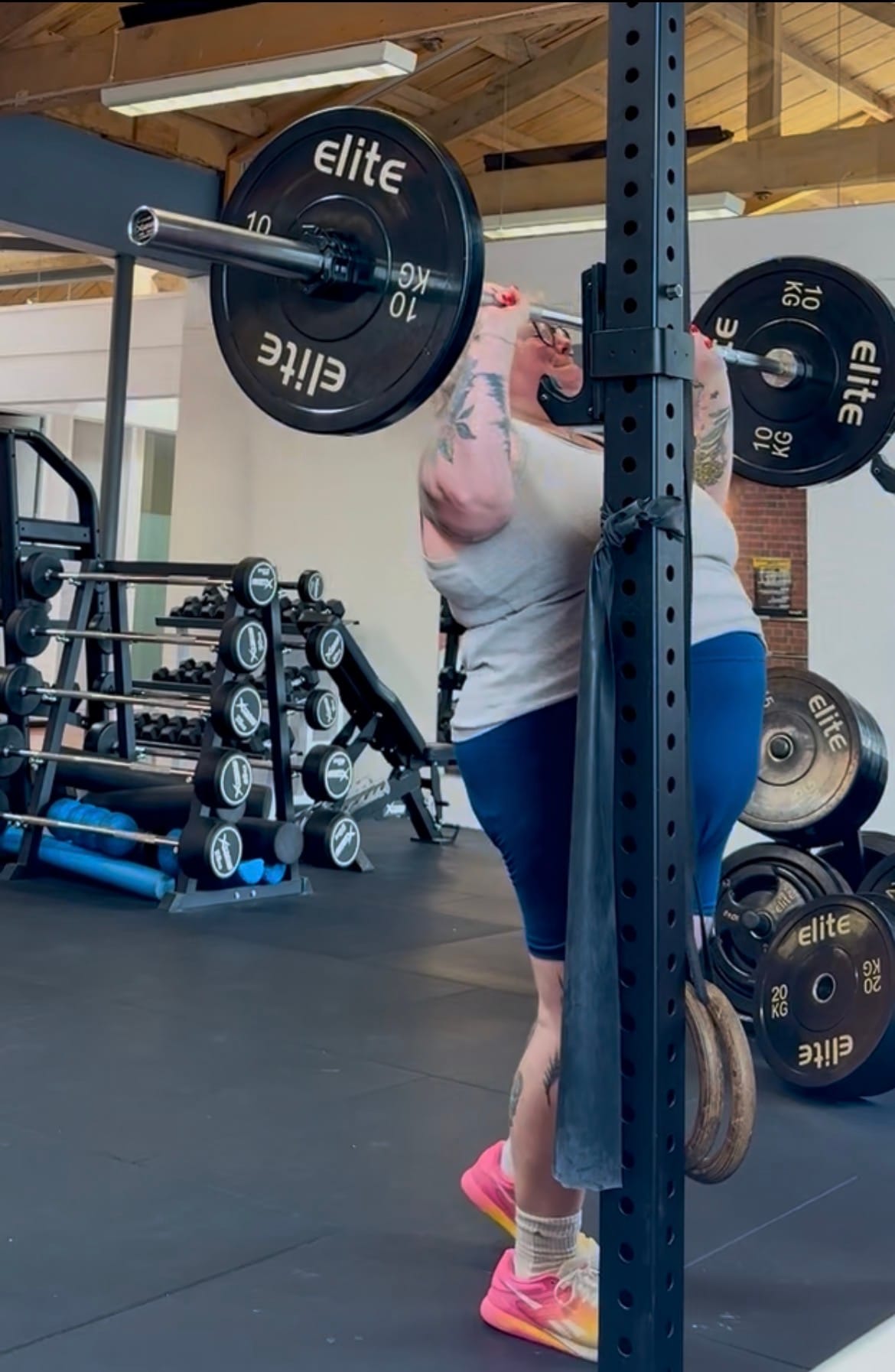
I didn’t hate exercise. I have loved it since I was a child. What I hated was the shame I felt for having a body that couldn’t possibly live up to the ideal I could see everywhere around me. And so I stopped exercising because that shame outweighed the good it did. And then starting again came with too many assumptions about why.
I don’t lift heavy because it makes me smaller. I lift heavy because it makes me capable. Strength, it turns out, is far more interesting than compliance.
This is very much a hate-the-game-not-the-player moment. I am stoked for those people that they have found movement they love. Exercise is easier when you weigh less. You quite literally have less to move around. Being on any medication is a choice between you and your medical professional.
GLP-1s seem to be extraordinary drugs that are helping a lot of people. But they don’t exist in a moral vacuum, distant from the rest of our culture.
They are not a panacea that will fix every ill in society. They can’t fix the health care system. They can’t make vegetables affordable. And they certainly can’t bankrupt a system that profits from making us feel shit about ourselves.
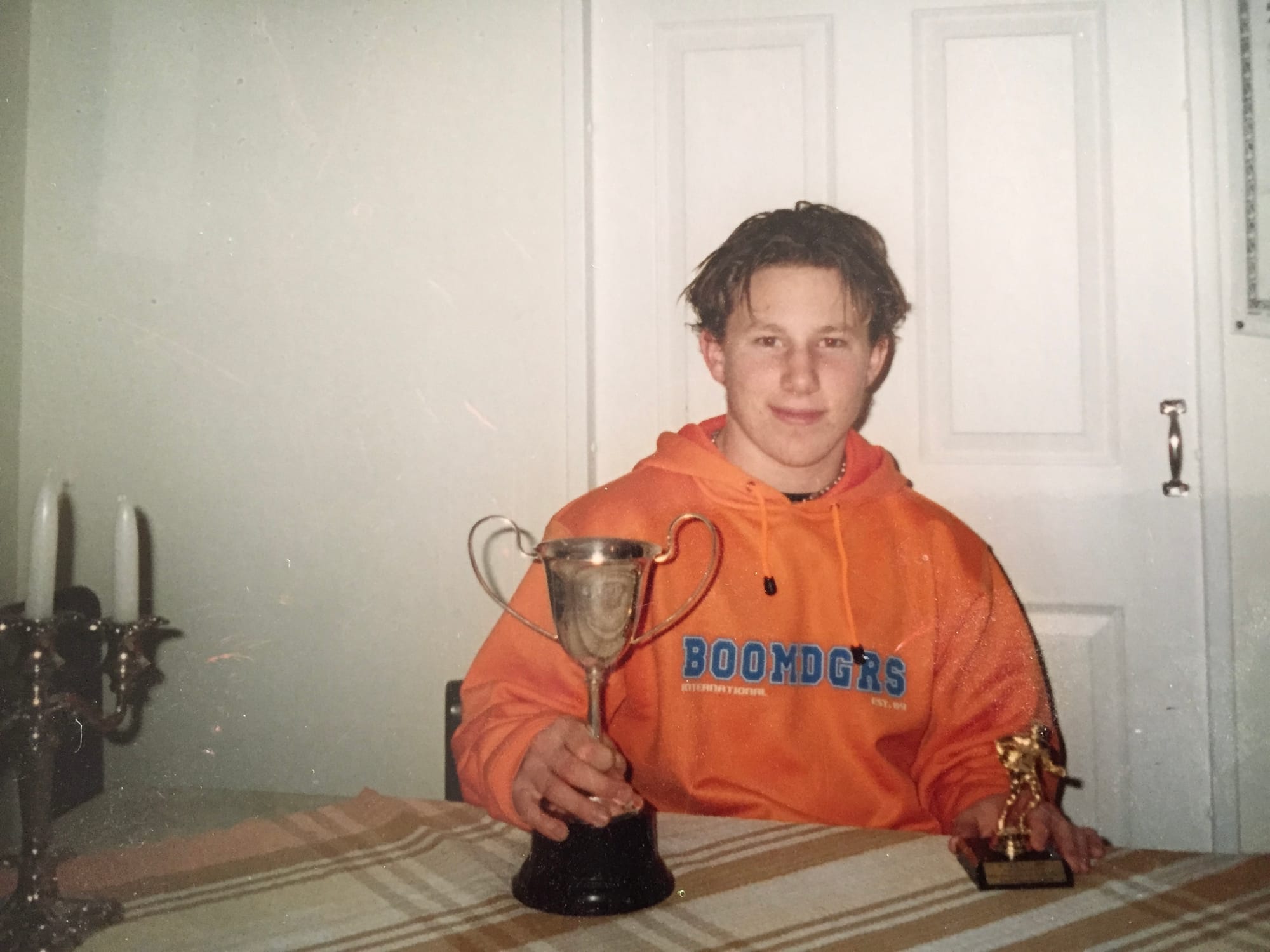
Carl here. This is confronting for me, but for a different reason. I am part of this industry and, when I was younger, active, naive and, dare I say it, genetically blessed with a body made for movement, I based my map of the world largely on my own experiences. Like many young people, I projected that view onto others, I’m sure. I was a part of this problem.
Now, a bit older and arguably wiser, and having coached many people from all across the spectrum, I understand just how different the health and fitness journey can be for each person. Now I feel like our role is to help people discover joy in their movement and what cool things they are capable of.
One of the biggest lessons you learn when you coach long enough is that health behaviours don’t happen in a vacuum. They are shaped by biology, psychology, environment and culture. Access to safe spaces to move, affordability of food, time, sleep, stress, childcare, injury history and prior experiences with the fitness industry all shape someone’s relationship with movement. Public health research has repeatedly shown that social determinants such as income, environment and access to care account for a large proportion of health outcomes, often more than individual behaviour alone (Marmot et al., 2008; WHO Commission on Social Determinants of Health, 2008). I see people that seem stuck in ruts, where many of the above factors are present.
And the industry itself hasn’t always helped.
For decades, exercise has been marketed primarily as a tool for shrinking bodies rather than building capability. When movement becomes framed as punishment for eating, compliance drops and shame rises. Behavioural research consistently shows that intrinsic motivation, doing something because it feels good, meaningful or enjoyable, is far more likely to sustain long-term behaviour than extrinsic motivators like weight loss or appearance (Deci & Ryan, 2000; Teixeira et al., 2012).
So when people say they hated exercise, I often wonder whether they actually hated exercise, or whether they hated the story that came with it.
If every message you’ve heard tells you movement is something you must do to burn calories, shrink your body or fix something “wrong” with you, it’s not surprising that the relationship becomes fraught. Shame is not a sustainable coaching strategy.
Side note: I love discovering those modes of exercise or the exercises themselves that spark joy in people! Sometimes it's a warm-up ball game, sometimes it's a handstand, sometimes it's a bench press or even a bicep curl pump, and I have yet to meet someone who doesn't enjoy one thing!
There is also a biological reality here that is worth acknowledging. Bodies that carry more mass quite literally require more energy to move. Mechanical load increases with body weight, which means joints, connective tissues and the cardiovascular system are working harder during the same activity. That alone can make movement feel more difficult or uncomfortable.
When body weight decreases, movement often becomes easier simply because there is less mass to move.
This is part of the reason medications such as GLP-1 receptor agonists have generated so much attention. Drugs like semaglutide work by mimicking gut hormones that regulate appetite, satiety and blood glucose. They influence brain regions involved in hunger and reward, which can reduce energy intake and lead to significant weight loss in many people (Wilding et al., 2021; Drucker, 2023). For some individuals, that physiological shift can make physical activity feel more accessible.
But like Megan says, these medications do not exist outside culture.
They are tools, not solutions to every problem. They do not fix food environments, income inequality, healthcare access or decades of messaging that told people their bodies were problems to be solved. And they certainly do not replace the broad physiological benefits of movement itself.
Exercise is not just about calories or body weight. Contracting skeletal muscle releases signalling molecules known as myokines that communicate with organs throughout the body. These molecules influence inflammation, metabolic health, brain function and tissue repair (Pedersen & Febbraio, 2012). Regular movement improves insulin sensitivity, cardiovascular function, bone density and mental health, while also supporting neuroplasticity and cognitive function (Booth et al., 2012; Erickson et al., 2011).
In other words, movement changes biology in powerful ways that have very little to do with aesthetics.
What I have come to believe after years of coaching is that the most meaningful shift happens when people stop chasing smaller bodies and start building more capable ones. Strength, endurance, coordination and confidence create a very different relationship with exercise than punishment ever could.
I also think Megan’s point about joy matters more than we sometimes acknowledge, and this really reinforces what I mentioned above. By the way, this isn't always just the exercise, it may be the community, the space or other factors that make it ‘playful’. You should hear the banter in the gym on a Friday morning when we have the whole crew there! I’m coaching and I want to be training with them!
When people are given permission to move in ways that feel good rather than ways that feel obligatory, something interesting happens. They stay. They experiment. They develop skills. They reconnect with the basic human capacity for movement that most of us had as kids before the fitness industry complicated it.
And that is the part of this conversation that I find hopeful.
When exercise stops being about shrinking and starts being about capability, the goalposts shift. Strength becomes interesting. Function becomes meaningful. Progress becomes something you can feel rather than something you see in a mirror. And find joy in it, somewhere. The exercise, the coaching, the community or even the environment,
In summary, find your movement flavour, get a good crew and make the shift towards having a useful body vs looking a certain way. Your body and mind will thank you for it.