Cycle Informed Training
Hello all! Happy Saturday. By the time you read this, I’ll either be stoked because the Black Ferns have made it to the Rugby World Cup final, and I can keep marvelling at how strong and fast and powerful they are - or I’ll be enduring my Canadian bestie’s endless taunting. Fingers and toes crossed.
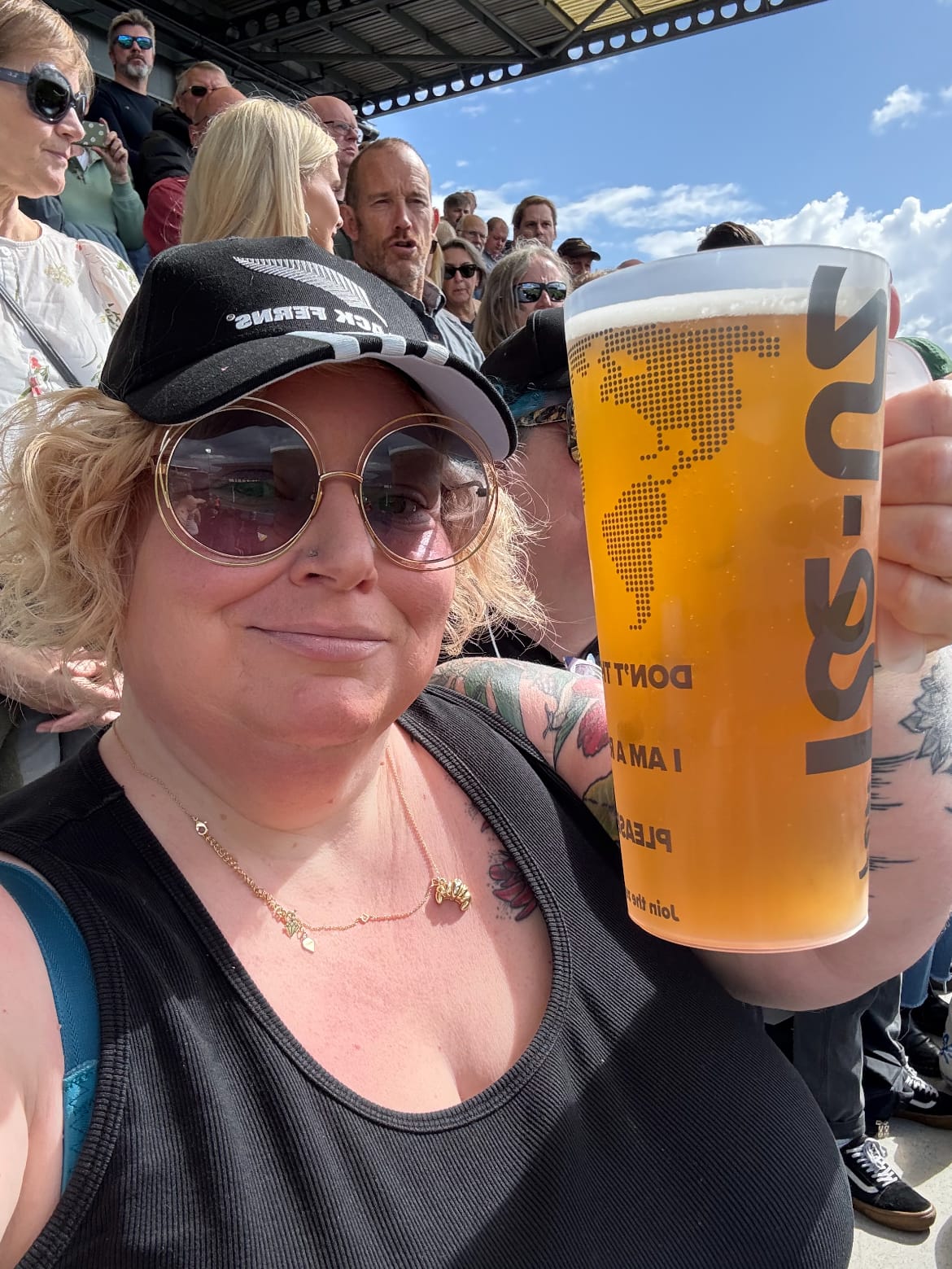
(Also, if you’ve never been into watching sport, please give women’s rugby a go. It’s…different. The hits are brutal, but the vibe is strangely wholesome. At these games you can buy beer in 2-pint cups (1200mls!) AND there’s both people breastfeeding in the stands and an official place to park your stroller.)
The BBC had a great piece this week about how teams are handling players’ menstrual cycles, something I’m fascinated by. I’ve long been an advocate for talking about this stuff more openly, and making all of us who menstruate feel a little more seen. (I was in my 30s before I learned that clots were completely normal. That shouldn’t happen.)
According to the Beeb, players track their cycles through apps and ovulation tests, and coaches adjust training and nutrition so bodies get what they need. It’s not the old “don’t do anything when you’re on the rag” line I grew up with, but about knowing when to push, when to ease off, and how to stop cramps or fatigue derailing a tournament.
And derail it can. The only time I’ve properly hurt myself in five years of lifting was during overhead press. I used to reliably strict press 40kg, something I was proud of as a beginner. One Saturday, though, I was alone in the gym, having one of those days where nothing felt right. The bar just would not move.
But I am stubborn, and I had it in my head that I'd PR that day. With more experience now, I’d have listened to my body and switched to mobility, accessories, or even just walked on a treadmill. Back then, I doubled down. In trying a weight my body didn’t have, I felt something in my lower back go…crack.
The next morning, when I went to go to the bathroom, every muscle in my body seemed to spasm. I couldn’t move. And to add insult to (literal) injury? My period had arrived. Which, of course, explained the lack of oomph the day before — and probably the injury too.
For the uninitiated, the menstrual cycle has four phases. First, the menstrual phase, where the uterus yeets its lining and both oestrogen and progesterone are at their lowest — cue cramps, fatigue, and low mood. Then the follicular phase, when follicles in the ovaries mature and oestrogen climbs, bringing better energy and recovery. Next is ovulation — the LH surge releases the egg, oestrogen peaks, testosterone bumps, and many feel their fastest, strongest, most switched on. Finally, the luteal phase: the corpus luteum produces progesterone, the uterine lining thickens, and with it comes slower digestion, fatigue, and PMS.
In short: ovulation and the follicular phase are often the “fun” ones, when you feel “sociable” (ie, horny), sharp, and strong. The luteal phase is more like those memes of the uterus happily decorating for a baby, then tearing it all down in rage when no guest shows up.
It must be nice to be one of the lucky people whose cycle repeats neatly every four weeks. Others of us live with hormonal birth control and perimenopause, which means we haven’t bled properly in 81 days and counting (and yet the cycle still hums along). Believe me, I’m not complaining.
Lots of fitness influencers would have you believe that in your luteal phase, you should simply never touch a weight and simply waft through the gym hoping not to bump against something sharp.
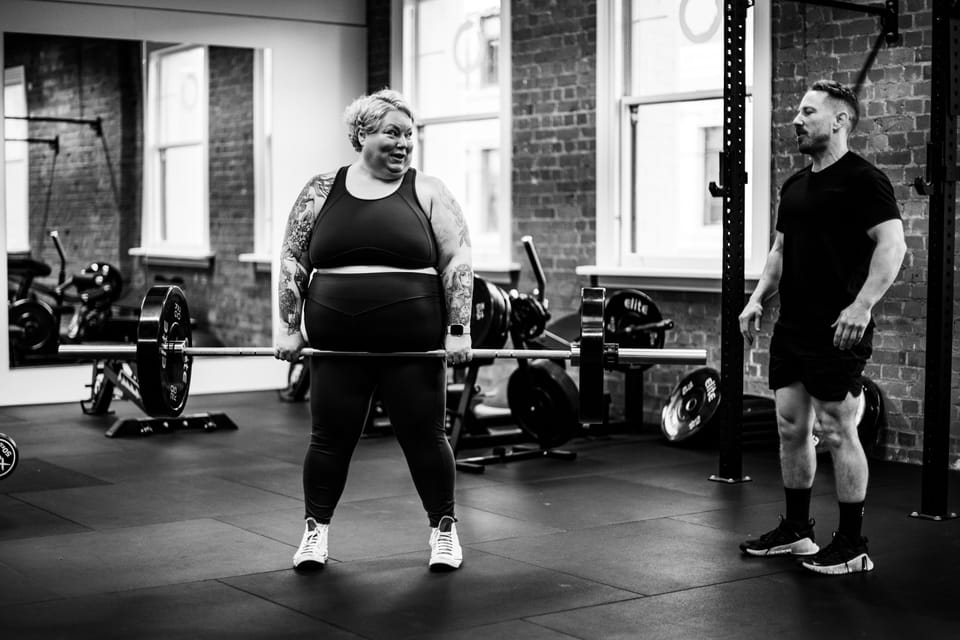
Still others want you to power through it, in the NO EXCUSES SAME 24 HOURS IN THE DAY CARBS ARE THE DEVIL vein. My experience is different: something that lifting has taught me in myriad ways - I listen to my body. Sometimes, I have the 130kg deadlift, sometimes my uterus wants me to rest.
The line I liked most in the BBC article came from USA player Erica Jarrell-Searcy: “It’s cycle informed, but it’s not as cycle mediated.”
No two period-havers are alike. There’s never going to be a recipe that works for all of us - which, frankly, sucks. But what I am a fan of is this: having the data, understanding the information, and making good decisions.
That Saturday, I had the data. I knew my body was tired and cranky. What I didn’t have was the common sense to put the barbell down. And I’ve been side-eyeing overhead press ever since.
Because sometimes strength is pulling a heavy deadlift, and sometimes it’s admitting your uterus has called dibs on all your energy.
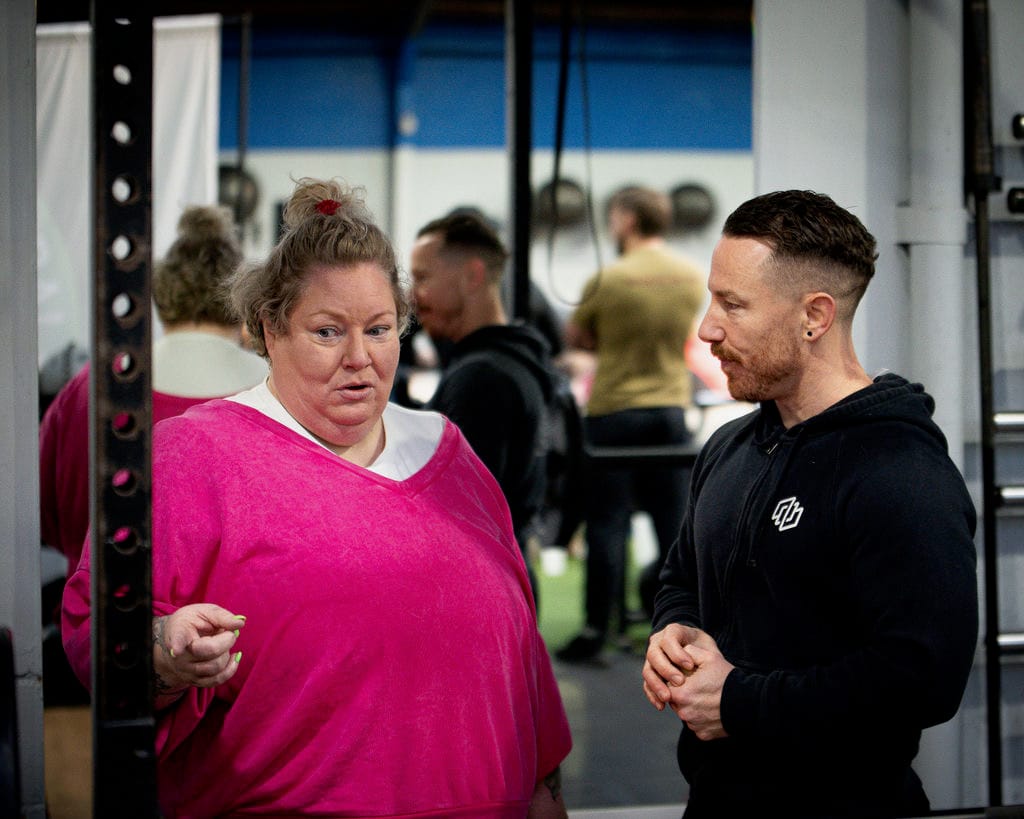
So, Carl, give us some information - what’s the science here - and what do you do when a client says it’s shark week?
Carl here. Thanks Megan. As a non-menstruater, I can’t speak from lived experience (unless you count being a coach to plenty of female athletes and a dad of two girls who already ask better questions than I did at 20). But what I can do is share what the science says, and how we as coaches and lifters can actually use it.
First up: the menstrual cycle isn’t just a monthly inconvenience, it’s a shifting hormonal landscape that can affect mood, energy, recovery, digestion, and yes strength. Broad brush strokes look like this:
- Menstrual phase (period, low hormones): energy and motivation can dip, cramps and fatigue are real, injury risk might be slightly higher.
- Follicular phase (oestrogen climbing): recovery and energy usually improve, people often feel sharper and stronger.
- Ovulation (oestrogen peak, testosterone bump): often the “PR window” fast, powerful, switched-on but with a side note that ligament laxity might creep up.
- Luteal phase (progesterone dominant): slower digestion, PMS, fatigue, sometimes rougher sleep. Not a gym ban, just a time to think about what mode, hydration, carbs, and recovery.
Considering this, something called 'cycle syncing' has become a thing, and this means that people are planning their training for their cycles based on these changes. Sounds neat on paper. However no two people respond the same way. A huge meta-analysis (which is basically an analysis of many similar studies to try and find patterns and strong conclusions), found trivial changes but not enough to write home about!
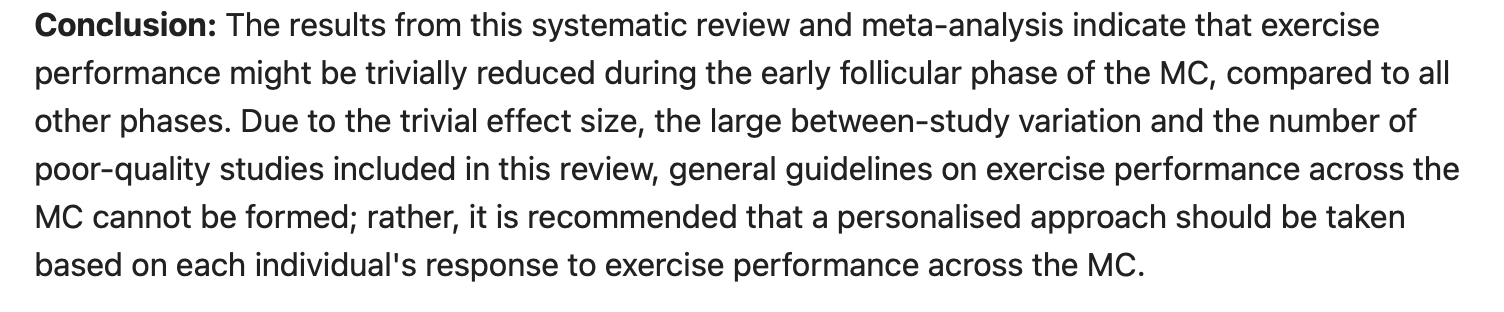
Some athletes hit their best lifts on day one, while others can barely get through warm-up. Reinforcing Erica Jarrell-Searcy’s sentiment, know your body, know the science, but don’t let an app or even a plan boss you around. So, even more reductionist, listen to your body and have a backup plan or two.
One thing that often isnt discussed is that exercise can actually have a positive impact on symptoms!
Speaking of apps — there are actually some good ones now. FitrWoman (used by Chelsea FC Women and USA Rugby) links training and nutrition to cycle data. Wild.AI does the same but also accounts for perimenopause and menopause. Even Clue is solid if you just want reliable cycle tracking without fluff. Pair one of those with wearables like Oura or WHOOP, and you can start connecting your recovery, sleep, and training with what your hormones are up to.
What about exercise effect on symptoms?
This meta analysis showd a clear link between exercise and reducing pain, contipation, breast sensitivity, and even psycological symptoms such as anxiety and anger! I would support this based on what I've seen but that it is individual and that the type and intensity needs to be considered.
What does this mean in the gym? It’s about options. I often have programmes in preparation for days or phases, just in case my client feels a certain way. Given certain cues, such as the ones that Megan explained above, it's good to know you have options. Otherwise, we proceed as usual and keep up the consistency.
Consider going heavy and or hard on days you’re feeling like Wonder Woman. Mobility, accessories, or even a walk if you're feeling more intense PMS symptoms. Iron and magnesium can help around your period, extra carbs and fluids might be your friend in the luteal phase. And the most underrated tool of all? Talking about it. Making “I’ve got cramps” as normal a training note as “my hamstring’s tight.”
Because sometimes strength is hitting a heavy deadlift. And sometimes strength is knowing when to rack the bar and walk.
Other considerations and intersting things:
Creatine! This study suggests that during the luteal phase, creatine monohydrate supplementation may help counteract performance detriments.
Another study suggest that perhaps theromoregulation is altered and perhaps during the luteal phase.
This study investigated female perspectives and asks if we are even asking the right questions in sport.
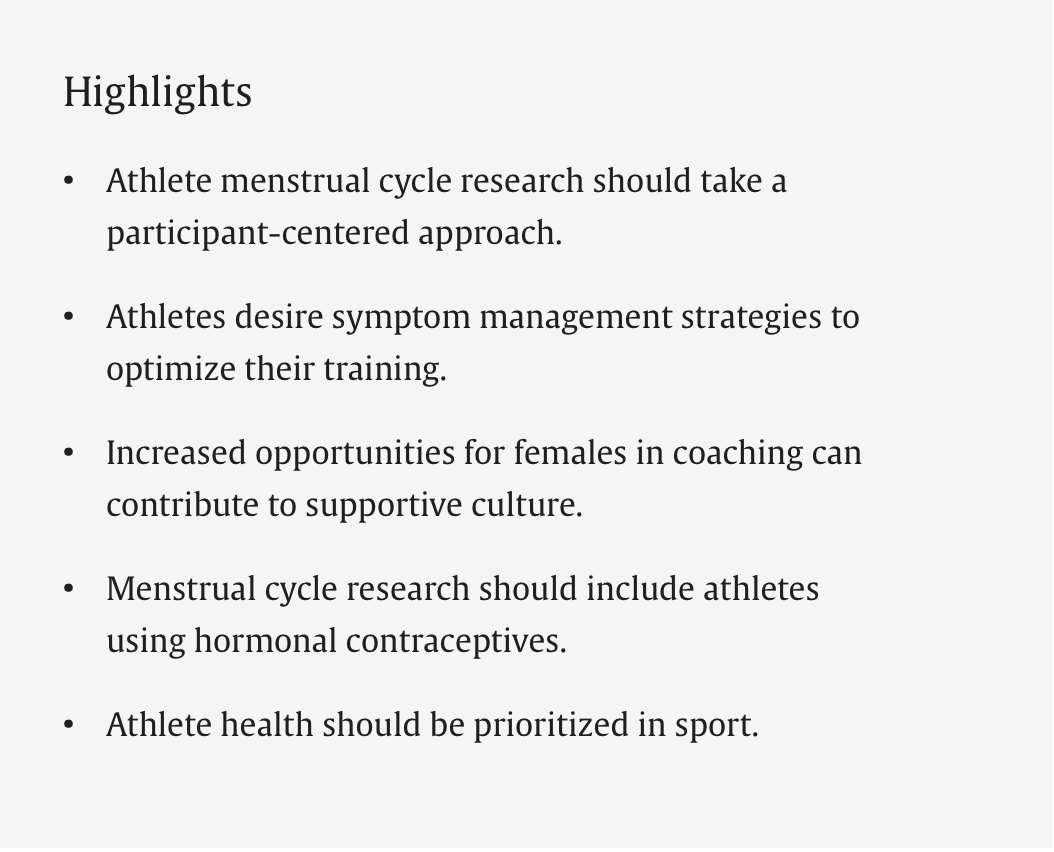
In conclusion: the menstrual cycle isn’t a barrier to strength or performance, it’s just another variable to be aware of. The science shows that while hormones can nudge energy, recovery, and even mood, the effects are highly individual, and consistent training still wins. The best approach? Know your body, use the data if it helps, lean on tools, and don’t be afraid to adjust when your hormones is calling the shots. Because real strength isn’t just about lifting heavy, it’s about having the wisdom to train smart, recover well, and keep showing up.
Cool things we saw this week:
If, like Megan, you struggle with mindfulness, these tips might be useful
Sam Bee and Casey Johnston? Yes.
Resistance training is good for your muscles, your bones, your brain…and now also your nerves.